-1.jpg?width=576&height=324&name=Leaders%20in%20ERP%20Social%20Graphic%20-%20-%20Sandeep%20Chopra%2c%20Lenzing%20(Youtube%20Banner)-1.jpg)
Everest has reached the summit and entered its next chapter as Lensing. Inspired by the forces that bring things into focus, the new name reflects Lensing’s mission to bring clarity to the complex challenges businesses face with ERP. In this episode of our Leaders in ERP series, Shawn Windle talks with Sandeep Chopra, Co-Founder & Co-CEO of Lensing, to explore the evolution of ERP in the age of AI. They discuss what makes an AI-native ERP different, how AI can help businesses become more adaptable and efficient, and how Lensing is rethinking ERP to help organizations navigate complexity and change.
Everest has reached the summit and entered its next chapter as Lensing. Inspired by the forces that bring things into focus, the new name reflects Lensing’s mission to bring clarity to the complex challenges businesses face with ERP.
In this episode of our Leaders in ERP series, Shawn Windle talks with Sandeep Chopra, Co-Founder & Co-CEO of Lensing, to explore the evolution of ERP in the age of AI. They discuss what makes an AI-native ERP different, how AI can help businesses become more adaptable and efficient, and how Lensing is rethinking ERP to help organizations navigate complexity and change.

About ERP Advisors Group
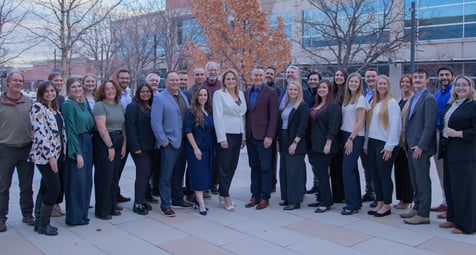
ERP Advisors Group only provides software advisory services. Our consultants only work on enterprise software selections and implementations. Therefore, they are experts in conducting software selections and know the pitfalls to avoid as they guide our clients to a successful go-live. You will find our consultants care deeply about your project and are vested as much as you are in making it a success. Ultimately, we will do just about anything to make sure you are a success!
ERP Advisors Group was founded by Shawn Windle in 2010. He helped develop the technology practice at the largest accounting firm in Denver from 2004 - 2010 by offering Needs Analysis and Selection projects. But Shawn saw that clients were struggling during their implementations, even though they selected the right software. The firm’s partners were too averse to the risk of losing tax and audit business from a risky implementation. Thus, ERP Advisors Group was born with the purpose to provide Client-Side Implementation Services.
We take responsibility for the decisions we help our clients make during the Selection phase by staying on for their implementation, ensuring they go live with their new software.
Download our free company brochure for more information about EAG.
Shawn Windle:
This is Shawn Windle, founder and managing principal of ERP Advisors Group. Thank you for joining us for another podcast edition of the Leaders in ERP. I'm very excited today. I think I'm always excited, to be honest with you. I'm one of those fortunate people that loves their job. But what we're going to talk about today is this AI native ERP area, specifically with a vendor who's making a lot of headway. And we're very fortunate to have Sandeep Chopra, co-founder and co-CEO of Everest. So first, if Sandeep, tell us a little bit about yourself, and then we're going to talk a little bit about some rebranding and things. But please introduce yourself, and thank you again for being here.
Sandeep Chopra:
Well, it's great to be here, Shawn. Thank you for having me and to share some perspective with the ERP community of yours. So yeah, my background here, I've been in enterprise software and services, especially the early stage of building out the product, getting the product to market, and getting the service out to market most of my career. I started my career at Deloitte in a new service area around security and privacy. This is post Sarbanes era and doing global implementations of security and privacy programs and ERP implementations. And Deloitte is one of the biggest SIs in the world, and certainly a big part of their revenue comes from SAP and Oracle, as you well know. So I got exposed to how really a professional services firm of that caliber brings a new service line to market. And then from then on, I went into product management, doing products in enterprise infrastructure and security, at a company that was a Solex partner to SAP, meaning the SAP sales professionals sold their software on SAP's paper as part of the kind of top tier of their partner program. And then ended up at a company called Viva Systems, which was really pioneering this idea of the industry Cloud, which is really deep verticalization of software in Viva's case. Specifically pharmaceutical companies, so software for CRM, clinical trials, manufacturing. And really there it was about bringing software, services, and data all together to serve kind of hard industry problems. And I think those were the experiences that led to founding Everest in partnering with my business partner over in Germany who's ex-SAP. We got started in 2020.
Shawn Windle:
Fantastic. Yeah, the industry focus that you come from, like we've seen a trend, I think, with some of the leaders that we've spoken to, that the deeper you get into an industry, almost the more responsibility you take for solving the issues through software. So, it makes a ton of sense that you've got that background. Now, I want to jump into the specifics of what you all are doing. But before we do that, you have to tell us about some of the exciting things that you guys having coming up that actually is here. Things are changing. Tell us about that.
Sandeep Chopra:
Yeah, it's exciting time here. We are officially changing our name from Everest to Lensing. And I want to tell you maybe a minute or so about the why. We call the company Everest. We were in stealth for about four, 4 1/2 years, which is a long time between 2020 and 2024. And the reason behind that was to give us the thing that oftentimes startups don't have, which is the luxury of time to focus on building something that we think is truly the next generation or the reinvention of this category. And while we were in stealth, we spoke to hundreds of customers, actually about a customer a day, to really understand what their specific deep industry problems were, whether it was subscription and consumption billing, or supply chain or what have you. And a lot of our roadmap came from those discussions on the application side. And funnily enough, many companies we talked to, they call their ERP implementations Everest, because it was a big project, it was a hard project, but worth it if you got over the line. And we just thought that was an authentic name to give to the company that represented the journey, if you will, to go from nothing to something meaningful. And so, we called the company Everest, but we're past that phase of the company now. We've been in market for a couple of years and continuing to get adopted more and more upmarket and more into the enterprise. And I think with all that, and with all the world changing so much in the last several years around AI, I think we chose the new name Lensing, because Lensing is really about the forces that bring things into focus and bring clarity to a complex, hairy problem. And that's what we're hoping to do for our customers with ERP going forward.
Shawn Windle:
Oh, that's awesome. Yeah, it makes a ton of sense. And I think a good place to start with our questions maybe a little bit different actually than what we're thinking about. But Sandeep, as you're talking through this, like you all had a lot of like foresight in 2020, you and your partner and your investors to say, hey, you know, we got all this stuff going on around the world, the globe at that time. Let's change ERP. Like you got to tell us a little bit about the why you did that and kind of the foresight that you all had in that.
Sandeep Chopra:
Was really trying to... and you're right, without having the right investor, the right partnership, it's really hard to even take a shot at something so big and be authentic about it. And so, what we had observed at that point in time in the world was, this is the oldest and likely the most, the largest category of software there is, right? If you especially even look at the total amount of spend across software and services and customization support, and it really has not gone through a fundamental transition. The largest companies in the world still run the same systems they ran decades ago. And even the newer players that have had significant impact in the market have been modularized, meaning they're being used for core record to report or general ledger functionality. And other solutions are being used for billing and revenue and inventory. So, there's a big kind of hodgepodge of systems out there. And we tried to kind of reason from first principles of what's led to this? What's led to this category of software that's supposed to be sort of the operational backbone, starting with finance, but it's meant to be the operational backbone of your company, like your business runs on it. How has it become so fragmented? And when we asked ourselves the why questions, and we talked to all these customers, the answers started to become pretty clear, that really the nature of business has changed so substantially, than 20, 30 years ago when this category first became this massive global juggernaut. And I think one way I could describe those changes is that you start with how a company makes money. The revenue models, even before AI, and I'm sure we'll get into AI at some point, but even before AI, the revenue models were substantially changing for years from traditionally on-prem licensing to then per user subscription to flavors of consumption and more outcome-based pricing. Essentially, the models were getting more and more dynamic. And the traditional ERPs were not able to keep up with these models. So, a lot of companies were buying bolt-on systems. For billing, for RevRec, for collections and other pieces, just to make their core financials work. The other trend that we noticed was companies were just going international so much faster, right? And why? Because I think they were hiring people internationally, but also the world is just a lot more competitive. You have competition not just from other US and Silicon Valley based companies, but you have global competition in the same markets where you didn't have that before. And so that was causing companies to get more complicated when it came to their finance, legal, tax obligations. And we felt like that would provide another impetus for us to rethink how changes happen in these systems and how a software partner can better enable those changes.
Shawn Windle:
So really focusing on market influences and what you were observing, and you had I mean, if I may, it's a bit of a luxury to sort of look at the market with a different lens. We're going to come back to that a lot, I have a feeling, because that's a great name. But to have a total different lens on what was traditionally a legacy, you know, behemoth, ERP, kind of world. So that makes a ton of sense.
Sandeep Chopra:
Yeah, absolutely. I think, you know, without that early support and that belief, if you will, that, you know, you're going to be in development for a few years, it's very hard to be able to even conceive such a thing.
Shawn Windle:
Well, and especially if you're looking at basically creating and being at the beginning of a whole new category of ERP, this AI based, you know, native AI native ERP application. So what do you think are the factors that sort of led to the emergence of this new category?
Sandeep Chopra:
Yeah, I think there's a couple of different factors. One is the factor that I mentioned. I think that regardless of where the technology, you could look at the technology in isolation, but regardless of where the technology was going, the business world was already changing due to revenue complexity, due to internationalization complexity. You know, we were born during the COVID era. And so then there was supply chain complexity as well. Like that was a big part of the talk track, if you remember back in 2020, 2021 was the constrained supply chains around the world. And so those were all aspects, I think, of different kinds of either revenue, cost, operational complexity that were indicating these systems are just not dynamic enough to keep up with how people want to run business today. That was one side of it. I think the other side of it, and I think the AI native, the other part of AI native is really what AI itself has changed, which is I think AI has made everyone to some extent into a builder, right? So it's given essentially a new kind of programming language, which is natural language, which is available to all professionals. Now, the business professionals don't use that programming language the same way people use Python or Java, but the point is they are able to build in some constrained manners some things that can help run their business function better. And I think that to me is the nature of an AI native ERP. It has to be highly dynamic, highly adaptable, so it can serve as an operational backbone for these companies that are trying to move fast. And at the same time, it has to give the tools and the technologies so that everyone in the company can be a builder, but in a way that scales and is compliant with something as rigorous as financials.
Shawn Windle:
And would you say that is a differentiation between some of the AI solutions, whether they're frontier models or other sort of, LLMs versus what you guys are doing, that you're able to kind of bring that power of AI with your native financials, right? Talk to me a little bit about that. I think our listeners are really interested in like, what's like the, the real benefit of that?
Sandeep Chopra:
Yeah, I think when you say everyone's going to become a builder, I think you do have to go one step further and clarify what is it the kind of building that you want to be generative versus the building that is like your must be 100% correct at the core not changing, right? Because I think at the end of the day, what's pretty amazing about this era of AI is unlike machine learning in the past, this type of AI really is like a person, meaning it's creative like a person. It also makes mistakes like a person. Their work has to be checked, just like a person's work has to be checked at times too. So, I do think this AI is, the new kind of AI is really great for certain, not all, activities. And so, I think what we're always encouraging our customers to think about is to understand how the ERP will fundamentally change. And if someone says to me, we're going to have agents for reconciliation, for example, well, I think everyone should do that. Everyone's going to use tools to be more productive. You could be doing reconciliations inside of Claude by exporting CSV files or just exposing your ERP to Claude and doing, using MCP, that reconciliation analysis. Or you could use reconciliation agents in the ERP, or you could use other companies with tools on top of those ERP companies that perform the reconciliation. But that to me is quite table stakes, right? That is similar to using the internet 25, 30 years ago. Everyone can use a web browser, right? That's amazing, but it's not going to distinguish us. I think ultimately what distinguishes us from the model providers and the companies, and the AI agents, is that we need to provide, as an ERP provider, you owe it to your customers that it is your responsibility that the financials of the operations of the company are running sound 100% of the time, not 98% of the time. And so, you have to be very thoughtful in your architecture to say, you know, there's a certain part, I could be using AI everywhere, but the AI that I have on certain parts of my technology stack, like my general ledger, my revenue recognition rules, my billing schedules, like those are not generative, right? AI could accelerate the development of it, but we have to take 100% ownership of it, right? That's what we call the deterministic immutable core, right? But then there are things like, you know, when you go beyond that core that has to be 100% sound, there are many things that can be opinion, right? So, for example, there are applications like how you do your vendor onboarding, how you manage your treasury operations, these are things that ultimately, these are opinions formed by people, how to run your company. And just like people, you can use the AI here to run your company better. And what that means is that part of the ecosystem, and I think that's that top 20% if you look at it in terms of technology stack, that truly can be generated, right? Your data migrations can be accelerated, but it better not be completely generated because your accounting is going to be wrong. But the data mappings for those integrations could be generated or at least accelerated by AI. So, I think you have to just be thoughtful of where to apply it in exactly what way. And that's really what we've been focusing on is giving companies an out-of-the-box ERP that really works. But also then giving them the tools to build on top of that ERP in a scalable way.
Shawn Windle:
And by building sort of the generative functionality and flexibility into the actual GL and the like table stakes, like don't mess with, like you said, account reconciliations, because if you do that, I mean, I'll be honest, people go to jail for public companies. CFOs are signing on the dotted line. I went through the whole Anderson thing decades ago, and there's a reason why we have the standards that we do for generally accepted accounting principles and for SCC and everything. So you just, you can't go wrong in those areas. You cannot do material misstatements or people go to jail. Whereas how you would do a forecast would require a different kind of AI, but you can use AI in both places. And I can see how, especially for the table stakes, as we say, you need to have a vendor who understands the requirements there fundamentally versus just, hey, let's just put an AI model on it and see what happens. Like, no, or, you know, we'll build into our prompts some guardrails. Like, no, you don't even know, right? This is fundamentally, I think, why ERP vendors in this AI race are going to win in terms of sort of applications because you're used to dealing with those problems. Now, it's interesting though for you guys because you are a relatively new ERP company of more than five years now, I think, and very well funded. So how are you sort of like segmenting the market and deciding like what kind of clients and problems do they have that really fit better for lensing over some other ERP vendors? Give us that differentiation.
Sandeep Chopra:
Yeah, you know, I think so much of ERP is ultimately not just about technology, it's also about people and culture, right? And so, I think, and that applies not just at the macro level, it also applies at the customer level as well, right? So there are companies that culturally, maybe because of the industry they serve, but oftentimes just their backgrounds. That the culture at the company is they want to buy a lot of tools. Meaning they'll buy a general ledger, they'll buy a billing tool, they might buy a RevRec tool, they might buy agent tools on top, right? So, there's no fundamental right or wrong on this, but there are, at least to a certain kind of architecture as a company, you're going to have a lot more integrations, you'll have a lot more customizations, you'll have a lot more potentially data issues because these systems may or may not talk to each other perfectly because they're different systems, right? So what we try to really figure out is, the company, from our point of view, ERP-minded or not, right? And do they have the kind of complex requirements. That we think really make it just vastly beneficial for you to have an integrated solution where you don't need so many bolt-ons to make your core processes work, right? So, because you could take certain businesses, if you have an incredibly, I'll give an example, if you run a great business, even $100 million using Stripe, and it's all credit cards, right? And it's an AI-first business, well guess what? I could argue your ERP actually is more Stripe in terms of running your core business than it is whatever GL tool that you use, right? And that's the heartbeat of your company, right? But now you take that same kind of company, but let's just say they're an AI native company, but they sell through Stripe. They also sell through other payment processors potentially, right? They're not wedded to just one. They've got multiple streams. They also sell through people, they discount their contracts, or maybe they also have a reseller, right? Now you've got multiple streams of revenue. Now your benefit to having a streamlined business process that's not in any one of those other bolt-on systems, but in your ERP, now your benefit just went way up because you want to consolidate. Maybe you bought a company, now you want to consolidate two companies worth of systems. So, the pattern that we generally notice is, as companies grow in scale and as they get multiple streams of revenue in multiple international places where they're selling, this complexity, you outgrow any one of these one tools. And then the benefit that you get over time of actual consolidation and streamlined business process is greater and greater. So we tend to gravitate toward those kinds of buyers and the people that believe in that, but also those kinds of companies that have those properties I just mentioned.
Shawn Windle:
It makes a lot of sense. And we've had clients where really their ERP is their e-comm, right? Because they're doing so many deals online and that's where the core business process is. They're notifying their 3PL to go do a fulfillment all through Shopify or BigCommerce or something. And then you got a little GL over here, but in that case, you could use something like QuickBooks just fine. I mean, we've had companies that are 100 million in revenue, even bigger on QuickBooks because they're ERP or other systems. So that makes a lot of sense, what I think you're saying, Sandeep, where if you're looking at consolidating business process around these financial flows, that's where you guys really come in.
Sandeep Chopra: Absolutely.
Shawn Windle: I love it. Now, tell me though a little bit about how AI impacts user interface. We hear this phrase headless ERP. I'm not so sure I like that. There's something about like heads being chopped off and I get this eh. But like, what do you think about that? What do you guys at Lensing really think through that?
Sandeep Chopra:
Well, you know, I think that, look, I think some of these trends started before the AI era, but I do think the AI era has in a way put a punctuation mark on it. And I think that's great, right? So I think people, when you have really focused UIs that become really clunky over time and hard to use, and the software gets really bloated, users are just users. They want to get the work done. So what do they do? They export the data in CSV and use a reporting tool, or they do an integration using Zapier and they get the data out and write a macro using an IT person or by themselves, right? Or they use Slack. And so, I think that is always the case when the software doesn't fit the needs of the customer anymore. So, I think to that extent, I think this headless movement has been great. And I think AI is only supercharging it because now a lot of this, call it analytical work, can be done in places like Claude, just like a lot of messaging communication work was being done in Slack a few years ago or even now. So I think in that sense, I feel like this headless trend or this API first trend of making the right data available, not putting rate limits on your ERP data, making the data available to customers, I think is absolutely the right thing. But I don't think it's necessarily a new trend that's happened all of a sudden. What we see is a divergence of customers. We have customers where the ERP is serving as, I like your e-comm example. If you've got a front end that you've built, whether it's Shopify or you custom built it, well, your front-end business process is running in those systems. Now, you still may need to have inventory pushed down. You may need to have the inventory then obviously reconciled with your order to cash side and your accounting side, right? But that's all kind of your more back office processing of that data. The e-comm system is like running your operation on the front side. Now, in that case, by the way, your ERP has to operate headless, right? Because all the work's being done somewhere else. So I do think that makes a ton of sense. And I think companies like ours should absolutely support running of a headless ERP. But again, at the same time, it doesn't mean that thoughtfully designed UIs that are tailored to the right processes, right? So for example, what's an example of a right process? Well, it turns out things like contract modifications and ASC 606 are really hard. They're hard on invoicing and custom billing schedules. They're even harder in some ways on revenue recognition with different kinds of modification types. That requires, in my opinion, some sort of tailored UI, because the art that you put into building a good user experience to solve that kind of problem for an expert user still matters. So I think that to me is really the trend that I see, which is there's a lot of general purpose ERP analytics and processing that can be done inside or outside the ERP. And everyone should make those tools available to Claude and other places where these tools live. But thoughtfully designed UIs, especially for expert users, still have a home somewhere. And that's a bit more of the handcrafted UI, if you will, rather than a general purpose UI.
Shawn Windle:
And don't you think that, you all, as an AI native ERP, really from the beginning of this new category, I think it's a whole renaissance for the whole industry. So, thank you. I really mean that. I think we're all getting a little whatever, fat, dumb, and happy on ERP. And it's like, whoa, we got to think about this different. Thank you. And again, like you said, AI is sort of powering this and it's been around for decades, you know, machine learning and everything else we've been developing to get to this point. Like, and even on the headless side, I can remember being back in the day at JD Edwards and our founder had bought, I don't know if this is, I don't know how he did it, but he did it, basically code base for a company called Web Methods. And integrated in the ability to do integrations back in JD Edwards in the late 90s from any app. He was very much ahead of his time. It was Ed McVeaney. He was an incredible visionary. And now we're delivering it. You guys are building from the ground up on all these phenomenal lessons that we've learned as a civilization around ERP. But what do you think about like industries? Now, and again, give, especially given your background, Sandeep, where you've spent a lot of time going very deep in some of the most complex industries, certainly from a compliance and certification perspective, like how does that play into what you guys are doing in this AI native ERP specifically?
Sandeep Chopra:
Yeah, you know, I think what's really, this is, I think in some ways the multi, multi-billion dollar question, which is, I think traditionally industries have been, you could see that some industries have been more biased toward best of breed, right? And some industries have been more biased toward best of suite. And in terms of the ER, like how much is the GL or the accounting, core accounting, HR purchasing, how much is it connected the whole business as one integrated solution versus, you know, industries like in financial services, they've traditionally just custom built a lot, right? They've custom built their claim systems, for example, and their banking systems. So I think it's going to impact both. It's not yet clear, though, as to whether, you know, to what extent you're going to have the impact. I'll give you my opinion on it as to where I think it's going. I think industries that are inherently best of suite are best of suite for a reason, because they've always found value in a manufacturing company is a great example of this. You know, inherently, your inventory, your operations, your order to cash, your accounting, internet, they're all linked. You can't run a business if they're not linked. Like what are you going to do when customers place order and you can't deal with inventory problems? And so I think, I don't think the nature of that can, that's how the industry runs well, and I think it should run well that way. I think in a lot of the best of, in the best of breed industries, if you will, I think companies have some choices to make. They're going to look at their entire custom stack of applications in both sides, but especially in the best of breed industries. And I think they're going to say to themselves, that is a lot of cost. What are my options with all those 20 years worth of custom applications that I have? I do want to become AI native as a company, right? But what are my real choices? And I think some of those companies may choose to custom build with Claude code. But I think some of them will say, you know what, that's not where I want to, I don't want to maintain an army of developers and consultants just building and maintaining applications for me in this new world where applications can be generated. If there's a platform provider willing to provide me some guardrails. Is that an ERP where the ERP still, the scope of the ERP might still be more toward the general ledger accounting the core processes, not the expanded processes. But the other applications you're able to generate much more quickly because of AI, and they are inherently custom anyway. So you want them to be specific to how your business runs. And so that's really where I see the main benefit of AI, especially in really replacing applications, is a lot on custom applications, analytics applications, and some industry specific applications that are so niche. That people have not entered those markets because the market hasn't been that big. That market may be too small for big players to get the solution right, but the market is actually exactly the right size for AI.
Shawn Windle:
I love that answer. And your viewpoint is different than some of the other vendors that we've talked to, frankly. But I think it makes sense, given sort of Lensing's unique view of cloud, I should say AI native, of course Cloud, that's how old I am, but AI native ERP with an emphasis on maybe some of the larger systems, enterprise systems that you and your co-founder have worked on, because that sounds like SAP is ripe for that kind of, the ecosystem is ripe for that kind of solution. I mean, we've had clients that we've been doing headless ERP in the SAP industry for years and years, entering time into time entry systems. And you have like 5 users in SAP, but it's still running the business because all the data is going in and transaction processing from beginning to end. But what you're just talking about there with industry specific solutions, kind of a customization platform, I think from some of the other work that you've done was around maybe the Salesforce platform. I think we talked about that, last time we talked, and you see huge mammoth companies being built on these solutions that start off maybe on Salesforce, but then they go to their own systems. Is that, would you say that's a differentiator for Lensing specifically when you look at other AI native ERP vendors? If not, I want to know more about what really does make you guys different.
Sandeep Chopra:
Well, I think that I think it is certainly a differentiator, especially the more upmarket you go toward the enterprise, right? Because I think that even if you could do something 10 times better, a company just doesn't want to willy-nilly change its general ledger. It's got to be tied into some business initiative at the company. Even just the benefit, you couldn't justify the cost associated with the benefit. And so I think that in the enterprise, one of the things we're seeing is by making our platform available as a service, a product that we call AI specify, you can, in the mid-market, we're seeing a lot, we're seeing more and more ERP deployments. Where they buy our ERP, but they also want the ability to extend the ERP using our platform, right? So it's a phase one and a phase two. The phase one is ERP. I want to redo my processes. I want to get the consolidation right. The classic ERP story that we mentioned earlier. And in phase two and phase three, there are these 20% of these applications that talk to my ERP today that I have point solutions and bolt-ons, I want to replace them, right? That's the mid-market play. The enterprise play is actually, well, we could certainly talk to customers to replace their ERP, but actually we're also talking to customers that say, you know what? I've got 50 applications around my GL, okay? And that's, by the way, I'm being modest when I say 50. The real number is much, much bigger than that. And so, they're saying, well, I don't want to change my enterprise system. That's A 10-year bet I made three years ago. I built my entire team around that. The amount of change management I would have to go through would be so incredible. I'm never going to go through it. And I don't have the business justification for it, frankly. But I do clearly can see value in replacing, for example, as I mentioned to you, like a vendor management system or a purchasing application for a company I bought. Let me start there. Let me become AI native on my overall transformation journey toward AI, if you will. Now that system can talk to my SAP system, right? And actually work within this overall ERP landscape. And then over the next many years, I'm going to continue to become more and more an AI native company.
Shawn Windle:
Yeah, it's, I'm just kind of thinking through like 20,000 like use cases, maybe not that many, but like eight of clients that we've worked with where the other factor that comes in again for our listeners, you're dealing with this when you have a more complex ecosystem is the cost, right? Like your ERP may be, you know, 50 bucks per user, it's probably not that, but 50 per user per month, whatever it is, right? Whereas your tax systems are a lot more or some other, micro business process, just because there aren't that many solutions that are there and you got to get it because it integrates in with the ERP already, you might not have even known you had an option. You guys open up a market here and it is something that we look at for our clients when they've got custom developed systems or they've got a lot of point systems. Let's do a framework. Look at ERP as a framework, a conceptual framework that runs the enterprise. But you get, like you're saying, in your case with Lensing, you get the GL, kind of the table stakes already. And now you have a platform that can build and that does have full integration. And I'm sure you can even leverage AI.
Sandeep Chopra:
In fact, I would say one of the best, the use cases for AI are evolving all the time, but there's just no doubt that specifically, where does all the time and the headache happen in all these projects? I would imagine the number one thing is migration. At least in my career, that's what it always was. That's the thing that everyone wants to avoid doing. Your software vendor doesn't want to do it, your integration partner doesn't want to do it, but you have to deal with the actual data. But I think that's actually, no, you can't just have AI run the data and give you the answer. But I do think in the context of implementations and migrations in particular, AI can really supercharge the analysis and the discovery of your data. It can make recommendations, especially when it conforms to a new system that implements processes in a defined way that match those processes. It can really accelerate the adoption process, especially I would say for those mid-market companies. that haven't, they're complicated, but they're not complicated like the Fortune 500 where you've got hundreds of applications around your core systems.
Shawn Windle:
Right, I love it. Is there anything else you would say about, maybe what should we expect from Lensing over the next several years? What's to come for you guys?
Sandeep Chopra:
You know, I think for us, you know, our mid-market business is continuing to grow and we're spanning, and we started in more, about a year and a half ago, was early adopter industry to start, of course, as the software technology industry, because people tend to take a bet on new solutions there. But at this point, about half of our customers are not in software. They're in financial services. We come to some inventory-based industries. Even healthcare and others, real estate. So I think that customer base is diversifying because we're able to, to your point earlier, you start with the right foundation and be able to extend those other applications that sometimes are industry specific. So I think that's one trend you'll continue to see from us. I think the other thing that you're seeing from us, as I mentioned already, is these enterprise customers that are able to adopt our platform as a service as a play around their existing ERP. Maybe the one thing I could say is, what's truly differentiating, there's something that I can hang our hat on beyond, I think, obviously, being an AI native company, is I think the way we, the problem we're really focused on is the hard problem, the hardest problem in all these systems is change management. And there's change management on the human side, but there's also change management on the software side, right? It's getting the data out. It's migrating the data. It's figuring out if I were to make changes, how many environments do I have to build and test and promote those changes before the change becomes real? So the technology that we really invented, really near the start of our company, but now it really benefits from this AI trend as well, is this idea that you never ever need more than one tenant or one landscape for the entire history of your company. But we're able to do that because we are able to run all changes and simulate them inside the system. So a contract that hasn't closed yet that's dirty, you can simulate. And an integration that's not working yet, you can simulate. A migration that's in progress that hasn't touched your financials, you can see the would-be impact on it on your financials. You're able to run your entire ERP kind of in a what-if mode, which if you are interested in changing your business, is the thing that you're worried about that's preventing you from making ERP changes in the 1st place.
Shawn Windle:
You know, you all had done a demonstration for us, for us to learn more about your application. I was actually just watching it to refresh for our call today. And my main technical guy here at ERP Advisors Group, Quentin DeWitt, of all the things you talked about, the nested sandboxes.
Sandeep Chopra:
Yes, that's exactly right.
Shawn Windle:
I was like, oh my God, this is. This is going to change everything. It's like you can simulate what you're about to do versus actually doing it and changing everything for this core data. So that is a big differentiator you guys have thought through.
Sandeep Chopra:
Yeah, I think so. And I think it is one of those like hard technology or deep technology investments that you really should make at the start of the company because when you have customers, you have to respond to their needs and otherwise you're not serving your customers. And so that was one of the key platform investments we made. And these sound like technical words like nested sandboxes, et cetera. But we really today, it's not just the IT and the technology people. We have controllers at companies saying, right, I just opened up a sandbox, I created a journal entry, I saw the impact of it, and then I merged it inside the system, which are only words that have been in the technical vernacular for like decades. But they're in the business vernacular now because I think in this AI era, people are builders, right? But again, the tools for a controller for building are very different than the tools for a software developer for building, but they are both builders of a different kind.
Shawn Windle:
Yep. Well, it's clear to me that I think you all have contemplated these kinds of changes from your background, your co-founder's background, for the rest of your team's background. And you kind of start with those concepts in mind that then you have a platform for some very exciting things in the future.
Sandeep Chopra:
Right.
Shawn Windle:
Sandeep Chopra, you are the co-founder and co-CEO of Lensing. Thank you for your time. I really appreciate you joining us.
Sandeep Chopra:
All right. Thank you, Shawn.
Shawn Windle:
Yeah, you bet. And thanks, everybody, for listening to another episode of Leaders in ERP podcast.
.png)
.png)