.png?width=576&height=324&name=Leaders%20in%20ERP%20Social%20Graphic%20-%20Evan%20Goldberg%2c%20NetSuite%20(Youtube%20Banner).png)
In the new age of AI-empowered ERP, the industry’s greatest minds are developing the next evolution of solutions meant to transform the user experience and business productivity. In this episode of Leaders in ERP, software industry pioneer Evan Goldberg provides invaluable insights into the future of ERP, including the groundbreaking release of NetSuite Next.
In the new age of AI-empowered ERP, the industry’s greatest minds are developing the next evolution of solutions meant to transform the user experience and business productivity. In this episode of Leaders in ERP, software industry pioneer Evan Goldberg provides invaluable insights into the future of ERP, including the groundbreaking release of NetSuite Next.

About ERP Advisors Group
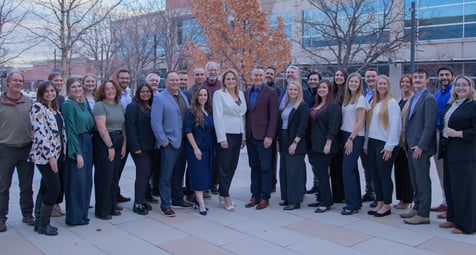
ERP Advisors Group only provides software advisory services. Our consultants only work on enterprise software selections and implementations. Therefore, they are experts in conducting software selections and know the pitfalls to avoid as they guide our clients to a successful go-live. You will find our consultants care deeply about your project and are vested as much as you are in making it a success. Ultimately, we will do just about anything to make sure you are a success!
ERP Advisors Group was founded by Shawn Windle in 2010. He helped develop the technology practice at the largest accounting firm in Denver from 2004 - 2010 by offering Needs Analysis and Selection projects. But Shawn saw that clients were struggling during their implementations, even though they selected the right software. The firm’s partners were too averse to the risk of losing tax and audit business from a risky implementation. Thus, ERP Advisors Group was born with the purpose to provide Client-Side Implementation Services.
We take responsibility for the decisions we help our clients make during the Selection phase by staying on for their implementation, ensuring they go live with their new software.
Download our free company brochure for more information about EAG.
Shawn Windle: This is Shawn Windle, founder of ERP Advisors Group, and thank you for joining our podcast, Leaders in ERP. We've been very fortunate to talk to some of the industry's leading experts, the best minds in ERP. We definitely have somebody that we're grateful to have today. But I think what's really cool about these podcasts is that you really hear from leaders like what's really happening and how the market's being shifted and changed and the patterns that are coming through, especially with some of the AI. So, we have the best expert, I would say, in mid-market ERP, one of the true pioneers in Cloud, Evan Goldberg. You are the founder and executive vice president of Oracle NetSuite. Thanks for joining us today.
Evan Goldberg: Oh, thanks so much for having me.
Shawn Windle: Yeah, this is a treat. Why don't we start off by you giving a little bit of background of yourself and kind of how you got to this position that you're in today, and then we'll jump into some more questions.
Evan Goldberg: Yeah, sure. Well, NetSuite was founded really at the dawn of the cloud era. We were really actually the first sort of Cloud provider in the sort of business management software space 28 years ago. And it grew out of some of my kind of interest longer term and how can systems be used to help people on their daily work, accomplishing their daily goals, whatever their definition of success is, how can we help them get their get further, faster. And also out of my experience running a company for the first time after I started my career at Oracle, and so you could say I've made no progress. But I did start a company at the dawn of the internet age and learned a ton about running a company. It was sort of my mandatory Silicon Valley failure, but I did learn a couple different things. One is there weren't great systems for people running companies, small companies, entrepreneurial companies back then. And that's really where I wanted to focus my time. And so that really grew into NetSuite. Fortunately, I was still working with Larry Ellison, and Larry really had the vision for this idea of web-based software and running everything in the Cloud, though it wasn't called that at the time. He liked to say, we've had mainframes, we've had client-server, now we have this web-based software model, and this is what people are going to be doing for the next 1000 years. I don't know what's going to happen after that, but so twenty-eight years later, it seems to have caught on, and then I was really focused from my perspective on building, a complete suite, really everything you needed as you grew your business sort of all in one place. And the Cloud obviously made that much easier because wherever you were, you could get access to the key information you needed to make great decisions about your business. And that principle has animated us ever since. And really bringing those two things together, helping people in their daily work, helping them achieve their dreams, what they define as success as entrepreneurs, as leaders, and putting that together with this notion of kind of bringing everything together in one place, making it accessible through the Cloud, that remained the same. And I think a lot of the reason we've been as successful as we are is because we really stuck to that vision over multiple decades.
Shawn Windle: Yeah, makes sense. I think one of my first customers, we were reflecting on this earlier, was a running shoe company called Newton Running Shoes. And we got them onto Net Ledger and ASP model, I think it was called.
Evan Goldberg: Right, application service provider, that's right.
Shawn Windle: Exactly, many, many years ago. So yeah, it's been incredible to see many of our clients be able to flourish and prosper to new levels that they couldn't have before your application.
Evan Goldberg: Yeah, that's been, you know, the two most exciting things about building NetSuite has been seeing the success of our customers and how they're able to leverage this great information they get about their business into success in so many different industries and so many different regions, focused on so many different types of dreams, but all are really wanting to see, make their dent in the universe. And we're just a part of that. Of course, they have to run their business and they're the ones that come up with the great creative ideas, but without that information that tells you how things are going and helps you avoid some of the pitfalls and hopefully find new opportunities, I think it's a lot harder. And so, in our small way, it's really exciting to see the impact we've had on these dynamic companies around the world.
Shawn Windle: Yeah, it's incredible. It really is. The impact is, it's immeasurable. So, thank you for that. I really mean it for all my clients.
Evan Goldberg: It’s been a passion and something that, we used to joke that Larry and I, that we were a company designed by entrepreneurs for entrepreneurs. And, entrepreneurs exist in all stripes. They exist in all places within big companies, obviously, leading tiny companies, but running small organizations that really want to make a difference in wherever they are. And so, NetSuite has such a broad footprint of companies that might be relatively new. Just starting to see their sort of hyper-growth or companies that have been growing for many years and are now very, very sophisticated companies going public. That's one of the promises of NetSuite is we can really take you all the way along that journey.
Shawn Windle: That's great. Well, let's jump into some of the questions, because again, I think this Leaders in ERP series is really geared towards maybe those that have a little bit of a technical bent to them. And so, loving to pick your mind here about, if you think about where Cloud ERP has been and how that's sort of shaped the enterprise software industry just in general, what do you see about sort of the last 10 to 20 years and the foundation that that's laid for what's to come in enterprise software?
Evan Goldberg: Really, there was kind of 1 animating principle for NetSuite was to help you run your business without you having to manage software and without you having to tie lots of different systems together. And keeping that work away from people building companies and allowing them to focus more on the real work of building, of creating and delivering their products and services, acquiring new customers, growing their existing customers, and use of their products or services. The more we could get that out of the way, the better. And so, the Cloud allowed us to get much of that out of the way. The suite allowed us to get much of that out of the way because they didn't have to worry about stitching different systems together. Really, everything they needed, all the information they needed, all the business process, automation that they needed was all in one place. And what AI does is that it really takes it to the next level, in that we can actually, rather than, we're helping, we helped them before avoid managing software. Now we can help them avoid managing a lot of those processes. AI can do that in the background. It doesn't, you know, it doesn't become such a sort of foreground thing in your business where you're in the system all the time. The system is doing things for you. It's reaching out to you when it needs some information. It's reaching out to you when it has key information that you might want to know. But again, taking a lot of the pain and suffering of using systems, of trying to manage these processes away and letting you focus on what's important in your business. Really get to a lot of those, people ask like, what are you going to do with all this free time? Well, I guarantee you that everybody that is running a company and building a company has a list and their arms long of things they'd like to be able to do, and they never get to them. That's sort of the important list versus the urgent list. And if AI can help you with a lot of those daily routine things that keep coming up and give you time to start tackling some of those more foundational, changes that you want to see in your business, that's just going to help you get to your goals faster.
Shawn Windle: And I think that's sort of a perspective that you have about AI really elevating employees. Tell us more about that, because there is a lot of news. Oh my gosh, everybody's going to be, I think of that Disney movie where they're all cruising around on those little robot things. I hope that's not our future, but I think we're going to be doing more. But what have you seen for real in the industry and how some of these AI scenarios are going?
Evan Goldberg: Well, I mean, obviously, historically, every major advance in automation from the Industrial Revolution on, has resulted in some shifts. There's no doubt about it, some dislocation, some disruption. But at the end of the day, people have found new ways to add value and do things better than ever before. I expect that this is going to be very similar, but nobody knows right now. What we are seeing is that our customers are taking the AI capabilities that we've been rapidly adding to NetSuite and using them to automate things that are saving them a bunch of time. And we're not hearing back from them, oh, now I have all this leisure time. We're hearing from them that again, what I've mentioned before, that I can get to a lot of the initiatives that I wasn't able to get to before. And especially on this, sort of the centerpiece for this initially is the sort of office of the CFO. One of the first capabilities that we've released in AI, the first of many, many, and this is already a couple years old, is our financial exception management. So, the ability to see anomalies that you normally would maybe be finding at the end of a quarter when you were going through reports and digging through all the data, those getting surfaced really early, like as they happen, being able to correct them. Ultimately, it can suggest corrections. And that's a kind of time saver that can be translated into other tasks that maybe have higher value. So that's just a simple example. And those are the kinds of things we're seeing. I mean, we have this incredible platform in NetSuite. You may be aware of this, that it really makes it so easy to extend it and make it work for your business. And the fact that we have that and that AI can now kind of latch onto that to be able to peer into the system, obviously with all the same permissions and roles that you have as a user. Now we're seeing people take huge advantage of that because of the power of that, not just inside of NetSuite, but also using tools like Claude and ChatGPT to do their own automation. And in the office of the CFO, we're seeing so much creativity about people taking tools, these chatbots that, at first were there just to answer basic questions, now have so much power to create agents that can do things like automate accruals. And there's so many different ways. And we're going to add a lot of those features, but our customers with our platform, with our AI connector service that lets you use these tools directly with NetSuite and the power of what we've built into that AI connector service, already we see literally thousands of customers using them. And they trust it because they know we have decades of experience in securing your data. Oracle as a whole, obviously, their first contract was with the CIA. They're very focused on security, and that's sort of imbued us, especially over the last 10 years that we've been part of Oracle. So, our customers feel like the way we're releasing AI, they know that we have a security team that is being really careful and they can trust that it will be secure and their data will be secure and they can build these incredible automations knowing that they're going to be able to rely on it in this sort of trusted environment in which they run their financials.
Shawn Windle: And with 43,000 customers, that's a lot of customers that are already relying on you and your company to ensure security, integrity within their financial data. You've proven your abilities to do that. Now, there's also some AI-native ERP vendors that are coming onto the scene that are well-funded. We've talked to some of them. So, you have sort of this blend, right, of different kinds of enterprise apps. And then you have, we have some of our clients and prospective clients that are going right to Claude and they're going right to ChatGPT. And we're kind of freaked out for them. Like we're like, whoa, where's the guardrails on that? You're putting your enterprise proprietary data into these large language models. And we were just chatting with an agentic AI platform provider last week about the small language models, that are coming in and sort of forking off from these large language model tools. How do you see NetSuite's position specifically in this area and differentiation based on where you guys have come from and where you're going?
Evan Goldberg: Well, the 28 years, the 43,000 customers, the incredible partner ecosystem, the incredible extension marketplace that we have, a Suite App marketplace, all of that can't, you can write code really fast in AI, there's no doubt about it. Is it the right code? That's what takes years to build up the subject matter expertise, to work with your customers, iterate with your customers to make sure that what you have is right for their business, to build an extensibility platform that is, you know, stress tested and by thousands and thousands of applications that people have built on top of it. That takes time. At the same time, as we understand that we need to move faster and we need to use, we need to think AI first in everything we do. I think the companies that don't survive these kinds of tectonic shifts, you know, the big meteor hitting the earth and destroying the dinosaurs, the companies that don't survive that are the ones that sort of make this assumption, prove to me that the world is different. Whereas all these new companies are more like, prove to me that the world isn't different. And so that's more of the mentality that we have to have, an AI first, like this can be accomplished with AI and go without fear about where that's going to lead us. Because I do believe that ultimately, it's going to lead us to be able to build much more powerful capabilities for our customers, to much better deliver on the promise that we always had, which is that we're going to do a lot for you so that you can focus on what matters. And so that's the mentality that we have. And again, that juggernaut of all of that subject matter expertise, everything we've built with our customers, our customers spanning industries, geographies, they've already expanded to 265, something like that, countries and territories, that's what we're going to mine to make sure that we remain a leader in ERP for fast-growing companies for years and decades to come.
Shawn Windle: And it seems like the migration to Cloud was a very big deal. But as I went through that and experienced it from my little neck of the woods, it seemed more infrastructure-based, like it was technical, as well as giving remote accessibility to applications more easily. This AI revolution or renaissance, I think it's exactly what you said, where we're actually delivering what we've been trying to do for decades and decades. And so how do you see maybe some of the more recent kind of advancements with AI? Like it seems like, you know, what time is it, right?
Evan Goldberg: It's like, week and every week is like a month and every month is like a decade. I mean, it's incredible the advances. And obviously there's been hope for it for a long time. I personally went to MIT for grad school in AI. I dropped out. I'm not as good as Larry. I did actually graduate undergrad, and I only dropped out later, but we can't all be overachievers. But that was decades ago and looked like it was going to be a long, road. Now I'd be in my heyday. But so, I've been really interested in AI literally for decades. We have worked AI into NetSuite as a really important component, doing things like helping suggest new products that your customers might want to buy. One of the most important things you have to do as a company is figure out how do I make sure my customers have visibility into all the great things that I can upsell or cross-sell to them. And so, we've been thinking about this for years and using more traditional machine learning capabilities, for example. Now, the world's turned upside down. The things that we're seeing these systems be able to do, you could only obviously dream of a mere five years ago.
Shawn Windle: Definitely.
Evan Goldberg: And we expect to leverage it to the absolute hilt for our customers' benefit. Every single person at NetSuite is thinking about how to leverage AI, and it's showing in the types of things that we're delivering. NetSuite Next, which is already in the hands of customers, and it's coming out to all our customers rapidly, has incredible AI capabilities, and every month, a bunch more. And I've seen the roadmap, and it's absolutely spectacular. And that we could do these things for our customers and have them get a system that really, really helps them 24-7, wherever, whenever. It's kind of an extension of what we always talked about anytime, anywhere. And it is also, it struck me something you said a few minutes ago, which is like, customers are, it's funny that it's very sort of customer-led to some degree. I mean, the Cloud, there were certainly a lot of companies that were innovative and using the Cloud, and they were the early adopters. And then there were other companies that we had to convince that it's okay, we're actually going to safeguard your data, believe it or not, better than you do. And so, these kinds of concerns that in the Silicon Valley bubble, you think, of course, just use AI for everything everywhere. In the real world, your concerns are exactly right. And it's, again, being sort of a trusted provider that's earned our trust over literally decades, that has had dozens and dozens of companies go public and have incredible lives as public companies, having started NetSuite when they were small and riding it all the way to success in the public markets. That's something that I think our customers are relying on and relying on us to bring these capabilities to them in a way that they can trust that they're secure. And also, that just letting them not worry so much about, am I taking advantage of AI? We'll just keep using NetSuite and we guarantee you every month you're going to get more AI and it's going to, and it's AI that kind of has self, not true self-awareness, but like you can ask, you can ask, ask Oracle, which is the key core of sort of conversational capability in NetSuite Next, what are some things that have come out recently that might be relevant for me, for my company, because it knows your company. And that's super, super exciting stuff because in the past, one of the problems, you know, when we delivered tons and tons of new capabilities is customers would come to me, and they'd say, you know, I know there's so much more I can do with NetSuite. Well we're going to make it very, very easy for the system to work with you to help you figure out what are things, more things you can do with NetSuite to take advantage of all this power that we're building in month in, month out.
Shawn Windle: No, it makes perfect sense. I still think, sir, I'm just going to say this, that you should have named your AI Ask Larry. Surely somebody came up with that.
Evan Goldberg: You know, that's not really his MO.
Shawn Windle: No, definitely not. So, let's take what you've said here and boil it down to today. I'm a CFO. I'm on a legacy product. I don't know about you, but I still think there's at least 50% of the market out there is on a legacy app that was custom written 20 years ago, or they're on an old version of whoever, that they didn't upgrade because of the customizations, or they're even on some of these products that are being sunsetted because they're now going to Cloud, not like a multi-tenant Cloud, but some instance of Cloud. There's a lot of folks out there that are looking at what to do, and some of them are waiting. So, if you're talking, which you probably are, even right after this call, there's some CFOs around the country and the world, what do you tell them to do now about this AI kind of quagmire as it's all being about?
Evan Goldberg: Well, I mean, it's a great time to implement an ERP system. We are using AI to make our implementations much more rapid, much more tailored. It's super, super exciting the things we're seeing about how AI can help. You can examine the processes that you followed before and kind of, basically AI can help analyze how do we get you from there to the best practices, the best practices that we know of, because we've already implemented 5,000 companies in your industry. We know what those best practices are. We can look inside our whole kind of our history of implementing and know what's the best way to do things, and adding in all these capabilities with agents that can make these processes run in the background to take a lot of the grunt work away from you, again, so you can focus on what matters. So, I think it's an incredible time to sort of get on the AI train. NetSuite is 100% focused on bringing the most powerful AI capabilities in a relevant way, in a useful way to you, again, based on our years and years of experience with companies like yours. So, it's going to be less expensive than ever before to implement an ERP system. It's going to be easier than ever before. You're going to have much more, it's going to be more tailored to your company. It's going to have built-in assistance for all your users, making onboarding and adoption much, much more effective. That's what I'd say. I'd say there's really never been a better time.
Shawn Windle: Yeah, makes sense. I'm thinking of a couple of the implementations we're doing right now with NetSuite customers and the amount of work on just cleaning up data, getting data migrated from legacy systems into NetSuite, setting up NSAW with integrations into NetSuite product, planning and budgeting. There's so much like precursor work, I think, that has to be in place to then be able to leverage this capability. So that makes a lot of sense.
Evan Goldberg: Yeah, I mean, every single part of implementing NetSuite, but just as importantly, making sure that beyond go-live, that your users are getting the most out of the system and monitoring that and making adjustments to make sure that this is a system that's going to really, really improve your productivity, your visibility into what's important, your flexibility and adaptability to change, because there's so much change. The NetSuite platform is really, really adaptable. Now you have sort of this always-on assistant that can help you make these adaptations as your company changes. So, it's a super exciting time, but of course, it's a complex problem, as you say, and we have a lot of different products that we're working on to improve these capabilities, but as I said, the entire organization, the thousands of people that work on NetSuite are all singularly focused on making this transformation. We are an AI-first company. It's not like about becoming an AI-first company. We are an AI-first company already. We among our entire team think about the first thing we think about is like, how can AI solve that? Because that's really what a company has to think now. And we are very, very optimistic that that's still going to lead to amazing things for people to work on, things that they never could even imagine that they would be working on in the past because agents and things like Ask Oracle and all of these powerful capabilities that have been unleashed by the LLM revolution are working behind the scenes on things that used to get in their way.
Shawn Windle: Yeah. We were having lunch before we came to our interview with you with some of the people that we've worked with over the years. And they were talking about their own usage of several of the models. And I was kind of blown away that, you know, it's like I used to say when I was way back with Ed McBeaney with JD Edwards, eat your own dog food was an old ERP phrase, right? And I think that's what I see you all doing, is you're using AI internally, thinking with it every day, and then bringing that into the products. You have to do it.
Evan Goldberg: Yeah, I mean, well, it's an incredible time, again, when you have numerous providers, of course, OpenAI, Anthropic, Google, X, all these companies building these incredible capabilities and kind of, I mean, competition is good. There's no doubt about it. We've experienced plenty of competition in our time. We still experience competition. And all of this leads to moving forward and developing great new capabilities. And so, we're both practitioners of that and beneficiaries of that.
Shawn Windle: That's great. Well, I think you have a more unique view than many others about this concept of AI replacing the workforce. We've talked about this at the beginning of our interview, but I want to go back into that. I don't see that. I actually see the exact opposite. I think you've said the same things. Like how does that AI functionality not displace the workforce? Like what have you actually seen even with maybe some of your early NetSuite Next customers on how they're leveraging that?
Evan Goldberg: The nature of work is definitely changing. You can look at how you develop code. You can look at how you implement customers. You can look at how you are selling a product. All of these areas are massively changing. And when people lean in and think AI first and think the first thing I'm going to think about is how can I solve this with AI? And when they think that way, what ends up happening is they do discover great ways for AI to do things, but then they also discover how they can make it even better with their knowledge, with their experience, with their subject matter expertise. And there's no substitute for that. And again, our consultants, for example, that have helped customers over literally decades, that information in their head is still incredibly valuable. And now they can use it sort of in higher level ways. They can use it for more customers. They can push customers further to try new things. They can experiment more. And so, far, there's nobody sitting around twiddling their thumbs because the agents are doing things in the background.
Shawn Windle: Right, there's such an opportunity, I think, frankly, as a civilization to really tap into the human mind at a whole nother level that we just couldn't do before because we were dealing with basic transaction processes. Right, exactly. No, that's great. All right, so for real, how would you say that NetSuite's AI strategy differs from either other similar kinds of companies that have been in place for a while, some of these new emerging native AI companies, ERP companies? What do you think?
Evan Goldberg: Yeah, well, one of the biggest differentiators is that we, from the very beginning, have viewed ourselves as a suite. We never viewed ourselves as sort of just financials or even really financials first. We've, for years and years now, we've thought about solving our customers' biggest problems in four big areas. You might call them value streams. And those are acquiring and growing your customers, creating and delivering your products and services, really the heart of what your company does. Hiring and empowering your team. You get nowhere without a great team. And then, of course, optimizing cash in profits. And I don't say that last because it's the least important, but it is not necessarily the most important. These are really all four kind of value streams are incredibly critical. And we've looked at all of them as very important. And that's why we've built capabilities across all these value streams. And that, again, that takes a long time to do, figuring out how they should, all the pieces should work together. You can really only do that by working with customers over years and years. So, I think our differentiation ultimately is the suite and then the experience we have in all these different areas, leveraging that, leveraging the knowledge of our ecosystem, all our partners that also in their area, if they're a vertical provider that's built on top of NetSuite, they have incredible, incredible knowledge in their community and their people and their customers, that we're leveraging that. And that asset, I think, is certainly a big differentiator. And we also have great scale. And scale can be an advantage or a disadvantage. If it's slowing you down because so many people have to check with other people and people are just sitting around waiting for someone else to do something, that scale is going to slow you down. And we know notoriously big teams can be lumbering. So, we have to, but scale can be your, if you can get over that and instead have very, very nimble teams within your organization doing lots of different things and coordinating when necessary and using AI everywhere, basically to make sure that coordination happens, that things are being built together, because everything working together is a critical part of what makes NetSuite different. If we can work that way, then our scale can actually be a huge advantage. And we can cover so much ground so quickly with these new tools that are available to us. So that's sort of how I look at what we're doing as a little bit different than others.
Shawn Windle: Yeah, makes a lot of sense. There's another topic that I really want to bring up with you. We're pretty far into the interview, but I hope as our listeners are continuing, they're running on their treadmills, driving them to work, whatever they do. Headless ERP, or just headless enterprise software. I think there's another gentleman that you know quite well who's kind of forked off.
Evan Goldberg: Yeah, our fast follower, Salesforce.com.
Shawn Windle: There you go, exactly. Like, for real, what does that mean for a controller, a CFO of a $100 million business, or even smaller, maybe a little bit bigger. Are we going to be interacting with applications like the computers on Star Trek anytime soon?
Evan Goldberg: I mean, if you had shown people what they would be doing with Claude and Gemini and ChatGPT a few years ago, it would definitely seem like a science fiction movie. And as someone who uses Claude code and Codex now, I can tell you, do feel like you're living in a science fiction world. I think the notion that a lot of what used to happen on ERP on screens and people doing it and typing and pulling down menus and dragging and dropping, a lot of that is going to happen via agents in the background. And to that degree, yes, it's headless. But that's okay. We think that some of our users, for certain processes that they do, the appropriate place for them to do that will be inside NetSuite. But we have a, really, we're giving users choice. We have an incredibly powerful AI connector service that has all the power of the NetSuite UI. And so, agents basically have the same power as users. And so, the ability to work in tools like Claude and ChatGPT, if that's how you want to work, because they have an advantage of having great access to lots of different things. And a lot of what happens in the ERP is information comes in, and hopefully it comes in sort of in an automated fashion, and then it alerts you and says, oh, I see something that came in that needs your input, and would you want me to send an e-mail for you? So, the fact that these tools have great access to other parts of your sort of business life gives them a great advantage in being able to solve some of these problems in the kind of most satisfying and most efficient way for users. And we have no problem with that whatsoever. They can use NetSuite for certain things. They can use other tools for other things. Underlying it is this powerful database, a suite of sort of all your business information and how it ties together. The business logic that makes it all work that makes sure that when a customer orders something, that the right things happen to make sure they get that order quickly and reliably. That's really what we do. And then it's up to users to decide what is the best way. We're going to give them lots of choices of the way to leverage that powerful functionality under the hood. And you talked about it being infrastructure that some of the, I do think that to some degree, ERP systems will move to being a new type of infrastructure, very, very powerful form of infrastructure that's used, again, behind the scenes to make sure everything in your company is running smoothly. Customers are getting the products that you deliver. The financial statements are correct, and you know your cash position all the time, and your employees are getting what they need, and you're addressing your existing customer base and making sure they know about your products, and are getting the help they need to kind of move up the value chain of your offerings. All of these things ultimately are what you're using these systems for. And the infrastructure of the ERP system is incredibly important to make it all run, but it's not something you want to be in the foreground, ultimately. It's probably been too much in the foreground. And in the future, you want it to be very, very much in the background. And you're being the creative entrepreneur, building your business, your organization, sort of the way you always dreamed of.
Shawn Windle: Yeah, makes a lot of sense. So, you've got to tell us about NetSuite Next. How does everything you've talked about sort of get wrapped into this solution, platform, vision? Tell us about it. Like for real, this is a good opportunity.
Evan Goldberg: Well, NetSuite Next has been several years in the making, and it's centered around AI. It's centered around a robust architecture that lets us build these incredible agents that gives, you know, this amazing access to the system to other AI systems that has a powerful conversational system at its center called Ask Oracle that can do everything from telling you how you can better use the product, to telling you some ways that you might be able to reach more customers, to telling you what are some things outside your normal field of vision that are happening that you need to be alerted to. That can bring up just a beautiful dashboard of whatever metrics you want to know about right now. That's at the heart of NetSuite Next. But the beauty of it is, it's really just another upgrade of NetSuite, like we've been doing for 28 years. And your customizations all survive completely intact. Everything works the way that your key processes work the day before you started using NetSuite Next or the way they work the day after you start using NetSuite Next. And yet you have access right there. The UI does change because we have to give you the access to some of this incredibly powerful capabilities. It's much more powerful in searching because, again, it uses AI to do search, and there's so many different ways in which we've extended the power of NetSuite, but it's completely 100% compatible. That was incredibly important to our customers, and they're going to get the benefit of all this powerful new AI functionality without the disruption that might come if we did it a different way.
Shawn Windle: And certainly, with the concept of security, when we talk about AI, we think about data getting into the wrong hands. I was on a call last week with an industry analyst and there were some stories coming up about employees doing things that weren't necessarily sanctioned. I think that's one of the benefits of what you're saying of being in the NetSuite Next product is, we're used to relying on NetSuite Oracle for security, for reliability. This product sort of brings the best of both worlds.
Evan Goldberg: No, thank you for saying that. And that's absolutely right. I mean, we are part of Oracle. We've been part of Oracle for almost 10 years now. I come from a background of starting my career at Oracle. So, security is really central to everything we do. It's the first thing we think of. And that we use OCI generative AI service with part of Oracle OCI, Oracle's Cloud Infrastructure. That's how we access all these powerful LLM capabilities. It's the same way that Oracle Fusion, which is their ERP system for giant companies, that's the same way that they access it. And so together we are using a system that's designed around using LLMs securely. We base everything that you can do in NetSuite Next and in the AI connector service on our roles and permissions architecture, which is battle tested. For 10s of thousands of customers for decades have been using the system. And customers can rely on it, and they can rely on it in the AI world just as well as they could rely on it in the Cloud world. So that's some of the things that we're really, really excited about with NetSuite Next.
Shawn Windle: This is great. Thank you so much, Evan, for your time. So, Evan Goldberg, Founder and Executive Vice President of NetSuite Oracle, thank you for your time.
Evan Goldberg: Thank you so much for having me. It's been great.
.png)
-1.png)