-1.png?width=576&height=324&name=NEW%20Leaders%20in%20ERP%20Social%20Graphic%20-%20Indy%20Bains%2c%20Workday%20(Youtube%20Banner)-1.png)
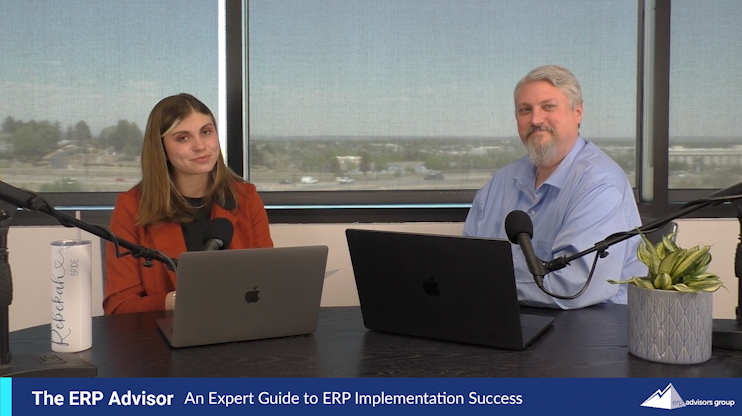
On this episode of our "Leaders in ERP Series", Shawn Windle, Founder and Managing Principal at ERP Advisors Group, speaks with Indy Bains, VP, Global Industry & Vertical Solution Marketing at Workday. Windle and Bains discuss software industry trends, the trajectory of AI, and what businesses should be doing RIGHT NOW to leverage the new era of software.
On this episode of our "Leaders in ERP Series", Shawn Windle, Founder and Managing Principal at ERP Advisors Group, speaks with Indy Bains, VP, Global Industry & Vertical Solution Marketing at Workday. Windle and Bains discuss software industry trends, the trajectory of AI, and what businesses should be doing RIGHT NOW to leverage the new era of software.

About ERP Advisors Group
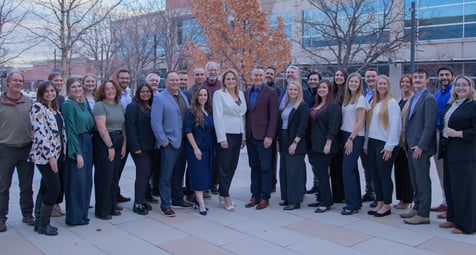
ERP Advisors Group only provides software advisory services. Our consultants only work on enterprise software selections and implementations. Therefore, they are experts in conducting software selections and know the pitfalls to avoid as they guide our clients to a successful go-live. You will find our consultants care deeply about your project and are vested as much as you are in making it a success. Ultimately, we will do just about anything to make sure you are a success!
ERP Advisors Group was founded by Shawn Windle in 2010. He helped develop the technology practice at the largest accounting firm in Denver from 2004 - 2010 by offering Needs Analysis and Selection projects. But Shawn saw that clients were struggling during their implementations, even though they selected the right software. The firm’s partners were too averse to the risk of losing tax and audit business from a risky implementation. Thus, ERP Advisors Group was born with the purpose to provide Client-Side Implementation Services.
We take responsibility for the decisions we help our clients make during the Selection phase by staying on for their implementation, ensuring they go live with their new software.
Download our free company brochure for more information about EAG.
Introduction: This is the ERP Advisor.
Shawn Windle: Hi, everybody. This is Shawn Windle, I’m the founder of ERP Advisors Group. And thank you for joining us for our podcast, Leaders in ERP. We've been very, very fortunate to have some phenomenal people join us for these discussions. Sort of a fun, informal, but also extremely informational conversation about what some of the top software vendors are doing in the market today as things are evolving and changing, and as I believe going through even a renaissance. So I'm very excited to have Indy Bains, the VP of Global Industry and Vertical Solution Marketing at Workday, join us. So, Indy, thanks again for coming in today.
Indy Bains: Thanks, Shawn. It's great to be here. Looking forward to our conversation.
Shawn Windle: Yeah, I think it's going to be really informational. And I hope we will have some fun with it too. I'm sure we will. Yeah, but maybe we can start off Indy. Give me a little bit of background for our listeners about yourself and, and sort of where, where you are today with Workday and how you got there.
Indy Bains: Sure. I think my story has three chapters. The first chapter is, that of a finance practitioner. So my first few years of my career as a finance guy, budgeting, forecasting, using ERP solutions pre HTML screens, I must add. And, then I went into the next phase of my career, which was solution consulting, working with organizations across many different industries, different segment sizes, geographies to really understand how ERP was designed and rolled out and adopted in these different markets. And from there, I then moved into the third chapter of my career, I would say, which has been in various product solution industry, go to market roles, which has really given me a front row seat to how ERP is being adopted in different industries and segments. And I think now is a really, opportune time for us to be talking, because the ERP market, I do believe, is at an inflection point. because the ERP market, I do believe, is at an inflection point. And I think my experience has also taught me that, you know, ERP has never just been about software. It's about how a business runs. It's about how value gets created. And at this time, the paradigm shift we're seeing with AI is giving every business model an opportunity to be reimagined, which means ERP has to be relooked. And that's creating a lot of great conversation in the market and every industry amongst executives about ERP.
Shawn Windle: Yeah. It's it really is a fascinating time to and especially with your background as you've looked at, and seen and experienced so many changes in the ERP market over the years. What do you really think is fundamentally different about this moment compared to the last few years? Or we had this cloud evolution and before that we went from mid-range to, you know, to, you know, windows based machines and others. Like what's really different about this evolution, do you think?
Indy Bains: I think quite simply, cloud changed where ERP runs. AI is changing how work gets done. That is the fundamental difference. If we click into that, what, feels fundamentally different now is that ERP is no longer just the system that records what's happening. It's about what's happening, what's around the corner. It's about actions that can be taken by ERP. And the conversation we see in the marketplace is not hey, I need a faster ERP. Executives want, technology that's going to allow them to see what's around the corner, drive real productivity. And this is a moment where I think when I look back, and earlier ERP waves, you mentioned 1 or 2 there. They tended to be more about standardization and control. Companies, wanted, to really bring data together to run core processes in a more centralized fashion. And then the cloud wave changed. The economics, I would say of ERP. It reduced the, infrastructure burden. It gave customers access to innovation faster, created more agility. But now we're at a moment where AI is going to raise that bar again. And it also creates a conversation, I think, in the market right now where AI also exposes, whether you have the right foundation to actually take advantage of it. And I think, organizations look at do we have the right data foundation to become a more AI enabled organization and take advantage of AI capabilities that are coming to market? And that's driving a lot of conversation. It’s driving a lot of changes in opinion. This ERP decision is more about that operating model as well, and not just another technology, decision.
Shawn Windle: This wave really is more about how do we really help clients and customers with their real business issues. Well, maybe you can talk a little bit more about some of that, the role that AI is playing in sort of how ERP works and the flexibility and capability that it gives customers. Like, for real. I mean, you all are, I mean, you all are, I think one of the leaders in the industry, for AI adoption and what you're doing at Workday, like, what are you really seeing the role of AI being?
Indy Bains: I would first say very simply, AI is moving ERP from a system of record to a system of action. That's a fundamental point. If you had asked me three years ago about what I was seeing from an AI perspective over the last 3 to 4 years I think we've seen a spectrum of AI capabilities that have been rolled out to organizations. So our customers, for example, four years ago, we were talking about automation with machine learning. So we were talking about automating, you know, how they were processing journal entries, anomalies, things that might have taken hours and hours, sometimes days when you collectively added all the labor that went into it globally at every month end and quarter end, and how machine learning was reducing that and starting out with capabilities that automated that by 75%. And then as they intervene manually, we were then able to automate that closer to 90, 95 and take it all the way. You know, to Automation Point, that was kind of state of the art, you know, 3 or 4 years ago. Two years back, we were talking about generative AI. And that was then another move in the AI spectrum, if you will. And now we were talking about the ability to publish content. And, you know, we were talking about, hey, what about this amazing, collections letter that just gets published when you hit a button again, incrementally. That was great. We could do that. But now, fundamentally, what's, different is now we're talking about the most evolved state of AI, in that spectrum, which is agentic, and with agentic AI, we're talking about how we're able to now not just automate tasks, but a sequence of tasks, tasks that then become end-to-end workflows. And we're able to basically create, units of digital labor here. And what these agents are able to do is actually do real jobs, real end-to-end jobs. And it starts out with tasks. And if you take everything we do in the enterprise down to its most basic element, it's all jobs to be done in different roles that are done in sequence, and then they connect into workflows upstream, downstream. So when you think about ERP, you know ERP is in a phenomenal place to look at the business processes and the workflows you have in your enterprise. And we look at it by industry, too, which we'll talk about later, I'm sure. But the agents now are allowing us to, look at these workflows and say, how can we automate actual, workflows end-to-end? You know, being a finance guy myself, when I started, most people in finance spend a lot of time doing a lot of drudgery, right? They download data, they, process it here. We can now automate that. We can look at how we can use agentic finance to automate that kind of drudgery, but then go beyond that to use business context to launch jobs, to see, you know, what our agents can do whilst we're sleeping. But at all times, be in control and I think what's happening now is in our industry, we're seeing, a lot more conversation about what the promise of agentic finance is. You know, we've actually rolled out agents we've got for example, a contracts agent, we've got a recruiting agent, and we're rolling out agents quarter by quarter across kind of the back office. And these agents work together. I'm just talking about the finance function, but everything I'm saying, you could apply it to operations, to HR, to procurement. And in that conversation, fundamentally, a question that comes up is, well, first, in order for agents to work, you've got to have a clean set of data. And for some organizations, they're sitting on multiple ERPs. So let's say that data is not a clean set. If they get past that problem, the next set is, well, how do we make sure the agents are aligned to our policies, our rules security model. And we call that the Enterprise Rail Guards. Workday was, created, naturally in the cloud. It's a cloud native solution. We built it from a clean sheet of paper up. The Workday platform is very differentiated because of the architecture we have from the very beginning. You know, it's been real time, within memory object data model. So the data is connected. So when you look at your general ledger, it's like a giant pivot table. Everything, all the data can be sliced and diced without any additional work. We have capabilities like the Intelligent Data Core, which allow us to bring in data from other sources. So we've had this platform where we've been able to apply it to use cases, but then we've also built into it, native agents, so that the agents that operate natively on the Workday platform, they can take advantage of things like org definition, roles, responsibilities. So the rail guards are built in. They already know what they can and can't do. And that's really important because just like your workforce knows what they can and can't do, your digital labore actually needs the same understanding too.
Shawn Windle: An organization that's been through all these technology transformations. You've worked through the guardrails before. I mean, you know, where it's safe to go and where it's not. And I just I really can't make that and stress that, point enough to the people that are listening.
Indy Bains: In fact, can I give you a little anecdotal example? Imagine if, you were going to hire hundreds of employees and you didn't have a HR system. There's no record, no employee ID. No one's told them what time they should start or finish, who they should work with, who they shouldn't work with. It doesn't take long to see the chaos that would create, but we need everyone to think about agents with that context. And we've actually in the Workday platform built in an agent system of record, which is, going to allow you to manage all of your agents, not just the native Workday agents, but if you bring on any other agents that require any data from Workday, they will be authenticated. They will also then, they will essentially have a passport to go in places where they're allowed to or not allowed to, and they will know what your constitution is because your, org, design, your policies, all of that is what defines you as an organization. And that would sit in Workday. So we've thought very deeply about a world in which organizations are going to have agents. And over time, many agents, potentially from different sources, they are going to need, that digital constitution. They are going to be, in a place where they will know what they can and can't do. And very importantly, you in the business are going to feel comfortable that there's no lawless agents roaming around in your digital space. And I think just getting your head around that and understanding that, we spend time, you know, making sure our customers understand how we think about responsible AI. And if you go to our website, you can read as much as you like at every technical level. But that is really critical, because if you don't have that, then you're going to run into issues and problems. These are these are new things to think about, but if you don't have the technology that's going to enable it, you actually can't get there. And I think that in itself is also a big driver right now, in fostering interest in, business transformation and the role that ERP plays in that.
Shawn Windle: It makes a lot of sense. And even as a very small example, if you think about a system that's architected, I think that's Workday is that's what we've seen with our clients where, you're logging every transaction that happens regardless of who's doing it or what's doing it. And so having this infrastructure that's built to handle this sort of incremental requirements of agents versus a revolutionary approach, I think those are the kinds of things that we tell our clients you really need to have those conversations with, the ERP vendors to understand, as everybody says, they support AI, but it means different things to different platforms based on where they bend. So I think those are great examples, Indy. Thank you. Right. So then when you think about, I think a great topic about that sort of related in here too is industry specialization. And you know, ERP came from a more of a general sort of a horizontal solutions to now we're seeing more vertical focus. But, what are you guys seeing and, and where do you kind of hope to see this industry specialization. And why does that matter so much.
Indy Bains: So today Workday’s view from the beginning has always been our view has been that ERP is adopted in industries. So, my team, for example, you know, we focus on looking at these markets and over, the 20 years that we've been in market, we've looked at each industry to see what the right, value proposition is. So, for example, when we looked at the higher ed, industry, we found that in order for them to drive back office transformation, they needed the right cloud solution for managing their students as well. That was really their key customer. So we went on to build actually a full suite for the student lifecycle. So today that is a market leading suite. It's the leader in the Magic Quadrant. It's the only end-to-end complete student cloud suite available today that is in a leadership role that it is in the market. But that was that was important for us to serve the higher education industry because without it, they weren't able to arrive at an end-to-end solution for their industry. Then we went to healthcare and said, okay, you know, it's very important that healthcare has the right inventory capabilities. But when they talk about inventory in healthcare, you know, they're talking about, things like, PAR management for floor stock. They're talking about, consignment or bill only workflows for surgery. That's very different from supply chain for a warehouse. And a lot of the general ERPs built out there were more meant for larger manufacturing types of organizations. So we purpose built, supply chain management for healthcare. And today, for the last nine years, we have been, considered as the market leader for ERP by, the KLAS analyst firm. So in each industry, we look at these different, use cases, and we've designed capabilities out of the box so that our customers can benefit from that right away. We also observe different behaviors in adoption. So for example, within our banking community, we found that, you know, banks have a landscape of solutions in their back office environment for things like loans, other commercial interests. And they're not trying to move everything to cloud at the same time. So we created we looked at what their, you know, key need was. And really that key need was they needed to bring in data from these other systems. So we developed, something that we call our Intelligent Data Core that allows organizations actually in any industry now to ingest data from any of the operational systems, bring it into Workday, and then it's part of the Workday security model, part of our data model, so they can generate reporting and analytics within Workday with, the full context of finance and HR as well. That was critical to us succeeding with financial services organizations, insurance, you know, banks as an example. Then we looked at retailers and again, for retailers, their definition of ERP is very different. They also include things like merchandising. They include other areas like, you know, e-commerce. And whilst there were some legacy vendors who would say they did everything, the reality was they were, sort of a mix of different acquisitions, which were different, technology standards. They didn't actually work together. So the right, move forward for that industry was to think about the deep needs of interoperability that a retailer has. So we developed very strong ISV strategies so that they can still continue their finance, and their HR, transformation, but very easily connect to the solutions that they need in their environment. And, you know, for a grocer that's different from, a quick serve, or in hospitality, there are multiple sub verticals, lodging where they have different solutions. So we think very deeply about industries where they need our partnership to actually build out, more complete, industry capabilities and industries where their adoption pattern is such that it's about, creating value around those. But, in all cases, though, you cannot have an ERP conversation today without that industry context. So if you today anyone listening, if you sit in whichever industry might be, let's say you're a tech company or professional services company, you will talk to folks at Workday who know that industry. We will talk to you about your use cases. You will talk to a community of peers from that industry as well, because we fundamentally believe we are innovating with the industry, for the industry. And whenever we, do that, we have found great success. So we're continuing to, drive that with our customers.
Shawn Windle: Well, and it's important to that, that as, as people are looking at new systems, that they're talking to people that understand their needs. But often we see partners can kind of fill that gap, too. Especially as sort of the, the platforms are becoming or the ERP applications are becoming more like a platform. So maybe talk to us a little bit about what that partner ecosystem is and how that's sort of reshaping how customers are getting more out of their ERP investment.
Indy Bains: So the strongest, ERP offerings today don't just give you a product, they give you a platform and an ecosystem to provide value way beyond you just going live. So, I'll talk to you about our approach to that. So with Workday, we think about our partners. They're part of the team. So as we go, as we look at any industry, they use cases our partners are able to in addition to the innovation we're driving for our customers. And we're delivering those updates through our cloud architecture to our customers. And they're up taking it every six months. Our partners are also looking at use cases that are maybe so detailed, so deep, so out into kind of the roadmap that they can bring to our customers as well. And they're building their applications, their agents as well, on the Workday platform, so that the experience our customers will have will be seamless. They won't think, oh, this is it looks different, or the security model is different. It's the same security model. It's certified, it's connected to the data model. When we go from one release to the next, everything's designed to move forward. And these solutions are available, to our customers on our marketplace. So the marketplace has become a really important part of the experience. A very important part of the solution discovery experience. So especially for our IT and CIO friends out there, you know, they can go to the Workday, Google, Workday marketplace, and they will see whether they look at it by function, finance, HR, operations, IT, or whether they look at it by, industry. They can see all of the additional solutions and capabilities that they can take advantage of in addition to the native Workday platform. And what's key is that we are doing this on the same platform, because what you don't want to do is you may have, a vendor who has a platform and, and they may have partners who create add ons, but if they aren't actually of the same, if they don't connect to the code, if they're not actually part of the same security model, you're actually going to recreate a problem you probably had years ago, which is fragmented. You know, data sources, solutions. You know, you go from release to release and things don't work. And that is that is the world you left behind. So the world we're moving forward to is true platform capability, extensibility for you as a customer to also build out, use cases. If you have something that is your secret sauce and you want it to connect to the Workday data model security model so your users can access it seamlessly. So, so the ecosystem now is, an amazing advantage for our customers. And I think actually, as we move forward, I think customers, when they evaluate ERP, they're not just going to be evaluating the vendor, and what they have today and their roadmap. They're evaluating actually the whole ecosystem offering. They're evaluating platform capabilities and evaluating this marketplace investment. And then what that now means is the vendor is just the floor for your innovation. The ecosystem means that there is no ceiling. It's sky high. And we're really excited about that because we have some of the best minds across all of these industries right now innovating, you know, on the Workday platform. And, with and they're able to take advantage of native AI, capabilities. The APIs we offer, the extensibility. And I think it's just a wonderful place to be today, compared to maybe where the ERP looked like, like or years ago before the ecosystem really took root in the way it has today for ERP.
Shawn Windle: And I totally agree. We've actually had some really interesting conversations with some with some Workday partners. Again, we're independent objective. We don't get paid by anybody. But our clients even for calls like this. But like we've had some, some great conversations with, Kainos as an example, focusing on sort of midsize companies and the way they're thinking about ERP it is just different. And looking at even how implementations can change in this AI world. So I'm very excited for what's to come. And what actually is already available in the partner ecosystem for with Workday, for sure. So, as we're getting close to the end here now, I have a feeling we could, continue this chat. I would actually like to, because I love talking about this. And I think a lot of people, you know, they'll listen to this, they'll be on their treadmills and stuff driving. And so if we've gone too long, just come back and, you know, put pause and you can pick it up on your way home. But there is a couple more questions I do want to wrap up with, because I think they're important for us to talk about. So if you're a CIO or CFO and you're hearing this and you're thinking you know what, we're months from an ERP decision. Our legacy systems are okay. We want to wait. We want to watch. We want to see what evolves. We don't want to make a bet and make the wrong bet, frankly. What should they be doing in the next 90 days?
Indy Bains: I would say the most important thing you do in the next 90 days is first, be very crystal clear on the business outcomes that are important to you and be brutally honest about your readiness. So if we break that down and, I think there's at least three points there that I should get into. First of all, from, an alignment of outcome perspective, you're not just adopting technology, you're adopting technology to enable business outcomes. But what are those business outcomes? So we see in many evaluations where the customer has gone live. And then they're saying, okay, what was our value realization? Well, what were you measuring it against. So what we recommend is the leadership team. So at the OCFO level, CHO, IT, operations, you are connected and determining where do you think you are three years from now. What are the business outcomes you're trying to enable? So from an operating model perspective, you're going to do more M&A. You need the ability to do that at scale. You're going to enter global markets. You need the ability to you know, close faster. That may actually be an outcome. You're seeking because you've got a, some crazy long, close time going on whatever those, outcomes are, be clear on that. Determine what those outcomes are, because they will actually then help you talk to the vendor and understand how their capabilities, how does AI actually help me with those business outcomes? AI is amazing. It's very powerful. But again, it delivers value only when you measure it and you align it to your business outcomes. So that's one, business outcomes very clear. What are those business outcomes. Secondly I would say is, assess your data and process readiness. You know, no ERP can magically fix fragmentation across your organization. You're going to migrate data to whatever platform you go to. So have a realistic view. I like to say no where the bodies are buried. Right. So that you have a sense of how much work would be needed to get to a point where you're able to get your data to your new platform. There's a migration process there. So the data, and the process around it is really important. And then the third thing is, again, you know, ERP is the technology we're talking about here, but the people and the change management is really critical. So think about your people and their skills. Think about what kind of operating model do you need to understand. How are we going to manage this? We've got our outcomes. We know how to migrate our data. But during the, during the evaluation, as an example, who are the decision makers? If something needs to be escalated, who's a D on that? If you wait for something to come up and or something will always come up, invariably. And then you say, well, is it, is it IT who makes this decision? Is it finance who makes a decision? You know, then you spent or weeks figuring that out. Have that in place. And again, this is the benefit of talking to anyone. For example, at Workday, if you are in the early month period and you haven't even started yet, we'd love to talk to you right now. This is actually the best time to talk. We'll give you our opinion. What we're seeing, you can, you know, connect with the peer community, set yourself up for success. So those are three things I would recommend you do right away. There's also one thing I recommend you don't do if I drop it in there. The one thing I recommend you don't do is simply make a feature function list and say, okay, this is our evaluation criteria for the RFP, because when I see organizations do that, what they invariably are thinking is that they're going to copy paste the old way of doing things to a new technology platform. And now all you end up with is you're doing the same thing, but you're just doing it a little bit faster versus stepping back to say, let's go back to the outcomes and put on the table what is the art of the possible? How can we get there, leverage these new capabilities. And now is the time to absolutely be open to the art of the possible, because agentic AI is going to open up new ways of doing things, new ways that will save your, talent, your valuable talent from spending their time on more strategic things. So those are the things I recommend you do. And also that last thing I recommend you don't do, I think if you do that in the next three months, you’re in a good place to move forward.
Shawn Windle: I mean, of course, that's what we've built our business around is exactly those things that you just said. So I appreciate you actually bringing those up. I think a lot of times folks go right past that point and, and we're even so vehement about what you just said, that we say if you're using Excel in your selection process, you're already behind. Let's wrap up with one last question that I'm excited to get your viewpoint on, given your kind of view across the different industries and, and your position at Workday, what's going to happen to the ERP market like what are some of your predictions?
Indy Bains: I have more of a hypothesis. This is more of a hypothesis than a prediction. When I have more data, I'll go from hypothesis to prediction. So maybe next time we can talk about that. But my hypothesis is this I think in the next 18 to 24 months, you're going to start to see incredible value being delivered by agentic finance. agentic HR, agentic planning. And what that's going to do is it's going to pull the demand curve in from all of those organizations who perhaps aren't in that month window. You just mentioned. I think what we're going to see is that we've had waves of technology where it was actually fine for folks to wait it out, and we had a bell curve of adoption. I think we're going to see in the next three years that bell curve adoption, that top is going to flatten, because once there is, enough, value, evidence points out in the market, I think organizations are going to see, wow, this is about changing how we work, and now we can't change how we work and define the new finance function if we don't have those capabilities. This is not about just moving from on premise to cloud and, you know, having additional mobile capability or getting some updates every six months. This is fundamentally changing how we work. And the longer you stay on the camp where you are not changing how you're working, you are going to start to feel like the blockbuster team, right? Versus the, the Netflix team. And I think that's going to pull a lot of folks into the demand curve. So in the next 24 to 36 months, I think we're going to see an absolute golden age for this ERP industry. I think it's going to be critical that we share, we have conversations like this to help folks think about what's possible. And, there is time still for people, you know, to kind of, still look at things, and do it in their own time, but stay plugged in. At the very least, I will say stay plugged in, even if you think you're not going to make any moves anytime soon, stay plugged in. I think you're going to find over the 18 months, you're going to be very pleasantly surprised and start to see that the value pull is going to be so strong that we're going to see, a very big, migration to agentic platforms where they have the benefits of both what SaaS offers today, but agentic built right into it with responsible AI and the ability to actually really drive business outcomes, that to me is very exciting. And as I said to you, I've got a front row seat into each of those industries. And, I honestly can't wait to see where we are in 12 months from now and 18 months from now.
Shawn Windle: I couldn't agree with you any more. And I'm, I've been thinking about this concept with, renaissance of ERP, but I think you said it perfectly. Like, even if you look up the definition of golden age, it's the period when a specific art skill or activity is at its peak. And I truly believe we have arrived it. Well, we're like, right on that, right on the footsteps where like right at the end of the corridor. Okay. That's the door to go in.
Indy Bains: Good picture to paint there. I agree. That's exactly right.
Shawn Windle: But it is important that people are opening door and joining conversations like this. Hopefully as individuals and CIOs, CFOs are listening to these conversations, you're learning and understanding more truly from the inside out of what's happening. And it's again, it's a great time to be looking at ERP and have we can't just it's so important I get so enthusiastic about this to have these kinds of informal conversations. So Indy Bains, thank you so much for your time today. VP Global Industry and Vertical Solution Marketing at Workday. Really appreciate you sharing your insights. And we'd love to get you back here. After some of these things unfold over the next several months, it'd be great to, to bring you back in.
Indy Bains: Thank you, Shawn. And I would love to do that. Thank you.
Shawn Windle: Yeah. Thank you for your time.
.png)