
.png?width=600&height=338&name=Leaders%20in%20ERP%20Social%20Graphic%20-%20John%20Glasgow%2c%20Campfire%20(Youtube%20Banner).png)
On this episode of our "Leaders in ERP Series", Shawn Windle, Founder and Managing Principal at ERP Advisors Group, speaks with John Glasgow, CEO at Campfire. Windle and Glasgow discuss how the ERP market is evolving due to the emergence of AI-based solutions, the importance of a software's foundation in the age of AI, and how customers are achieving value through AI-based solutions.
On this episode of our "Leaders in ERP Series", Shawn Windle, Founder and Managing Principal at ERP Advisors Group, speaks with John Glasgow, CEO at Campfire. Windle and Glasgow discuss how the ERP market is evolving due to the emergence of AI-based solutions, the importance of a software's foundation in the age of AI, and how customers are achieving value through AI-based solutions.

About ERP Advisors Group
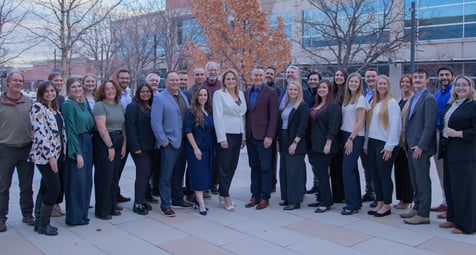
ERP Advisors Group only provides software advisory services. Our consultants only work on enterprise software selections and implementations. Therefore, they are experts in conducting software selections and know the pitfalls to avoid as they guide our clients to a successful go-live. You will find our consultants care deeply about your project and are vested as much as you are in making it a success. Ultimately, we will do just about anything to make sure you are a success!
ERP Advisors Group was founded by Shawn Windle in 2010. He helped develop the technology practice at the largest accounting firm in Denver from 2004 - 2010 by offering Needs Analysis and Selection projects. But Shawn saw that clients were struggling during their implementations, even though they selected the right software. The firm’s partners were too averse to the risk of losing tax and audit business from a risky implementation. Thus, ERP Advisors Group was born with the purpose to provide Client-Side Implementation Services.
We take responsibility for the decisions we help our clients make during the Selection phase by staying on for their implementation, ensuring they go live with their new software.
Download our free company brochure for more information about EAG.
Introduction: This is the ERP Advisor.
Shawn Windle: Hi, everybody. Thank you for joining us for another one of our series in leaders in ERP. I'm Shawn Windle, the managing principal for ERP Advisors Group. I'm very excited today to have John Glasgow, the founder and CEO of Campfire, to join us today. So John, I would love to jump in, and maybe you could start with an introduction of yourself, and then let's go into some of the questions we have.
John Glasgow: That sounds great. Shawn, I just want to first thank you for having me on the show today. Really excited to be here. Tons of respect for you and your firm, and been following your story as well over the years since I founded Campfire. My story really comes from a 15-year finance career and working in corporate finance at places like Adobe. But the genesis for Campfire really started when I was at Invoice2Go. We were a mid-size business, had outgrown our ERP, and really did not see anything that got me excited. I mean, just candidly, there was really nothing in the market. And so, I'm really excited to be on the show and tell the story and share more about the platform.
Shawn Windle: This is great, John. And as you and I were talking about a little bit earlier, you all have really come onto the scene with a lot of steam. And we had chatted even a couple of years ago. And at that time, it was pretty interesting because as we were sort of monitoring the market and seeing some of the new and upcoming vendors, you all, of course, were getting some traction. But frankly, even from then to now, I've had to, I don't know if I would say eat crow, but I've definitely realized how fast that this area that you're in has just evolved. And it's continuing to evolve. And there's really nothing that's stopping the momentum that you have. So yeah, it means a lot to me to have you on the call today. So thanks again for doing that. And I think we're going to have a great time going through the discussion.
John Glasgow: Great. No, I mean, yeah. I mean, since we first chatted, you're absolutely correct. Things have changed a ton, and excited to talk through that today.
Shawn Windle: Yeah, and I think one more thing I'll say on that too is, especially for our listeners who are looking at ERP systems, it can be this sort of dull, mundane, just like you said, John, you go to the market, there's these vendors, there's some in particular that everybody says you should go with. And I think that's been true, right? We think we had a sort of established market, but it does just go to show that things with technology, especially, and in artificial intelligence, they can change. And I really think it's for the good. That's what I'm the most excited about from being in ERP for too long, almost, it feels like, that we really have some great options, and especially you guys. So I'll remind our listeners, we are independent, objective. John's not paying us. Even for this call, it's nor did any of our other participants that we've had on these calls, but it's just, I think it's really important that you, as you're going through your selection processes, you're thinking about things that you look at firms like Campfire, for sure. So again, John, thanks again. Let's jump into it. So how have you seen the ERP market evolve to better meet the needs of users?
John Glasgow: Yeah, I mean, look, as a former user of the legacy ERPs, I think first, just choice is good. New options are good. It was time for something new. And that was really the founding story. I was a customer of these systems and a lot of reasons why I was frustrated, but really went out to build the ERP I wish we were on as we scaled our company. Things have really evolved fast. And I think thinking through my own pain as a user, it was the usability of the system. I think just the ease of building custom reports, for example. And then another big one, and this is where AI has been incredibly valuable, is just taking a lot of the manual workflows. And there's, of course, we've always had rule-based systems and we've always had, you know, OCR and technologies that were helpful. But now in the era of AI, we've seen a whole nother level of help and support and superpowers that the ERP is able to give to finance and accounting teams. And so I think that's really the pain I felt, is I was spending way too much time preparing data, preparing numbers, pulling together a chart, and not enough time delivering value. And so we've really shifted the time of the role to be much more strategic. And I think that's where our customers tell me is the biggest gains that they've seen.
Shawn Windle: Yeah, it's pretty exciting when you think about the amount of just manual, like trench digging, it seems like, that people have to do through these systems to pull up the data. And that's, in a limited amount of time that anybody has. And, by the time they're done with that function, then there's the analysis, then there's really the value add that most of our clients don't even have time to do. And so we talk about, oh, AI is going to replace jobs and everything else. Every day, something new comes out. I think there was even something new from one of the CEOs from one of the banks, even yesterday, talking about different positions, truck drivers, getting eliminated. I think there's definitely some changes for sure. But John, haven't you seen this already, that the effect of your software that actually enables people to do more value add, just like the vision was for why you founded it? Is that real?
John Glasgow: It really is. Yeah. So we are seeing a lot of the manual work just be completely truncated. And it's AI with control. I think control is the keyword for me because finance and accounting teams don't want AI running wild on their general ledger, on their systems. So we provide incredible control where it's essentially a new member of your team. And I think most folks are saying like, I'm not getting more headcount. No one's giving me another staff accountant. The business is growing. The number of invoices is going up. The number of transactions to reconcile is going up. So there's like this linear growth in the manual work. And we're able to essentially flatten the curve. And then what that does is the gap between like the linear and kind of called the flattened curve is now time that they can spend on different levels of work. So very tactically, in a legacy system, you will manually reconcile the bank feed to the bank statement, and then at the end you'll upload the PDF of the statement to confirm your work. In Campfire, you upload the PDF at the beginning, and we will reconcile it for you to the bank feed with Gen. AI, and it'll do fuzzy matching, and it'll say, here's the 10,000 transactions that we reconciled, and here's the three that we're not able to reconcile. So as opposed to manually going through a longer list, and rule-based automation has been great. But for the one transaction, you're not going to build a rule for, like you just manually code it. But we're seeing the long tail of transactions. AI is able to get to that call last 20%, that there's no rule, there's nothing historically. Like so many customers tell us, accruals was very manual and painful as a part of their close process. And we have an AI accrual agent. And the AI accrual agent has a sub-ledger. It's auto-drafting accruals. You're still in control. And so these tasks that historically have been very manual and incapable of being fully kind of automated, Gen. AI has gotten so powerful that they say, we're now just reviewing all of these accruals that AI is generating. We're approving of them. And so our role has moved from data entry to data manager. And now we've shortened the close. And so now we have a lot of, and the AI is generating a lot of financial insights. And so then they can take these insights, they have more time from a shorter close to go actually action and meet with sales, go meet with folks internally into this strategic work that I'm describing.
Shawn Windle: Yeah, I love that. I mean, that's the promise, I think, of what enterprise software has been looking to achieve for a long time. So the fact that you guys are doing this is, it's great. It's really, it's time.
John Glasgow: It's really exciting, honestly, because I think everyone's like, I'm giving up PTO. It's like there's just a lot of sacrifices, nights and weekends, working late. And so we're here to help give them some time back.
Shawn Windle: Yeah, that's awesome. Well, and I think even going back to our conversation over the years that we've had now, at least a couple, There's been this major shift with investors. I think I can even remember five or six years ago, even before COVID, where ERP was sort of looked at as a legacy market, even from an investor's side. But boy, that's not the case now. Maybe you can talk a little bit about how investors are so interested in AI-native ERP vendors, but then how that also sort of substantiates solutions like yours.
John Glasgow: Yeah. I mean, when you think about venture investors, that category specifically, they're looking for what they call the power law, where it's a category that they can fund such a large business, it can return the entire venture fund. And they look at the ERP category. Morgan Stanley calls it the largest category in application software. And so they say, if we can fund a business in this category that's successful, there is a very deep market for a company to go build a massive business and deliver on that power law. So the enthusiasm was always there, but the question was always, why now? And we saw on-prem to cloud was just a generational transition for ERP. And now they're saying the why now is the AI era, from cloud to AI native. And so this is that next tectonic shift in the largest category in software for folks to go fund another massive business that theoretically has the market size to return an entire fund. So they were, you know, when we went through Y Combinator, there's 24,000 applicants per batch. And they said, like, we've been looking for somebody to fund this in this category for a long time, the ERP market. But we actually could not find anybody that was so credible. And so this is the third accounting software company I've been an executive at. Spent a lot of time here. I know that General Ledger as a customer and as a partner incredibly well. And so raising money at the time in the early days, when we first chatted, it was like, this is kind of crazy. But I saw and felt the conviction at such a high degree that I was willing to just power through the massive build that it took to get to where we are now. And so I think Y Combinator was like, we're really excited to fund you. It's just the time is now. We've seen the right folks to fund and the market size is there to deliver something massive. And we have more than doubled our revenue each of the last six quarters. I've been told we're the fastest growing AI native ERP. And so with that, I think there's just been incredible momentum that you saw. We raised $100 million in funding last year to further accelerate the growth of the business into this market.
Shawn Windle: Yeah, it's incredibly well done. But hats off for sure.
John Glasgow: Thank you. No, it's been a fun ride.
Shawn Windle: Oh, I bet. I bet. Well, and it's just beginning, too, it seems like. Okay, well, let's shift a little bit over to sort of the architecture side, a little bit of the technology platform. How is Campfire different from a typical transaction processing ERP?
John Glasgow: Yeah, I mean, when building the product post the launch of Gen. AI in the end of 2022, it was really, how do we rethink every process truly in an AI-native way with this new, very powerful technology that was not available when the prior systems were built from scratch? And so going through and thinking through like, what is the AI native way of performing every action? Like we talked about AI acruels, AI reconciliations, AI flux commentary, right? AI everything, the entire close, everything done through the month and down to the reporting. Folks are now saying instead of downloading a bunch of reports and merging a bunch of data together in Excel, we can build a very custom report in Campfire. AI will pull together all of these different tables and build a very custom report, like average days to pay by customer segment. It was often previously not available in a legacy system. It was multiple reports that were being merged. So every task has been rethought of we now have this very powerful technology. And so I think for us, the other fascinating thing that I didn't candidly acknowledge up front was AI needs incredible amounts of data. And so the scalability of the platform is incredibly important. So many of our customers are summarizing data into the ERP. And so maybe you summarize a revenue entry or a prepaid entry or something's coming in from another system summarized. And maybe it's because the ERP can't handle the volume or maybe because it can and you don't want to summarize. At Campfire, we have very painfully and intentionally, we pull every row of data, every millions of rows for some customers, hundreds of millions of rows of data into Campfire. And then the AI has incredible value because it's combing through millions or hundreds of millions of rows of data that previously humans were unable to do. So summarizing data into the system made a lot of sense. So even architecturally, we've had to think about scale. To serve the AI that is. ready to consume literally unlimited amounts of data in ways that were physically and previously impossible for a human to do. So then when it's writing flux commentary, when I was at Adobe, I'd write flux for earnings. And I was kind of looking at some summarized data as I wrote some analysis because I couldn't go through 10 million rows of data, right? AI is going through the 10 million rows of data and preparing the same commentary, but it needs that very rich data set with all the context, with all the line item descriptions, with all of the metadata. So we have unlimited custom dimensions in Campfire. We've unlimited nesting of objects. And so it's been painful, but it's been a way that we've been able to really deliver incredible value that the legacy systems have been unable to do.
Shawn Windle: Yeah, makes total sense. Again, it goes back to this enterprise software specifically enterprise resource planning, but we've also heard this and seen analyst reports around some of the other kind of enterprise software categories, but especially ERP. It's so rich in data. There's so many transactions that are sitting out there that, like you said, from your own standpoint, there's just no time to go through at that level. So there's the Gen. AI side of it too, but where else are you seeing some value coming in for customers through the AI-based solutions?
John Glasgow: Yeah, I mean, even taking, if it's a sales business with order forms, AI can read a very unstructured document. It doesn't need to be OCR. It can read a very messy order form. Maybe the sales representative did a complete free form object, just handwritten. It can ingest, when you think about accounting, ultimately the source of most accounting is actually some PDF or some file like an order form or a PO or an invoice. And so auditors and others are looking at that as a source of truth. We're able to feed large amounts of PDF data, of source data into the AI, and it can actually operate off the source. So you think about a CRM sync, it's typically working off of data that's human entered, like a closed one object out of Salesforce is looking at the sales rep entered data. The AI, we sink in for just very tactically, we sync in the sales data objects and we sync in the PDF. And then the AI can comb through the PDF and actually go to the source of the order form. And so it's even of a different way of thinking about accounting from a foundational level, which is, we also want to look at all source documents, and we can actually rebuild and verify data or just go entirely from scratch off of source docs. And so I think that has been fascinating revelation for us as well.
Shawn Windle: Yeah, yeah. It just seems to me like we're really on the very, very beginning stage of understanding the power of these systems. I mean, that sounds so cliche, I think, to say. But if you think about all of the business processes within the office of the CFO and like you said, even the earlier sort of tentacles that go out into the rest of the organization that ends up feeding into accounting and then probably out of accounting. Like, if you don't mind me asking, like, what do you think is like the craziest business case that you've seen your customers use your application for? Because it just sounds to me like it's a very strong tool. That you're providing these sort of end-to-end cases for sure out-of-the-box, but the flexibility of the tools are so pervasive. It could go in so many directions. What's been the wildest thing? We're like, whoa, you're doing what? That's amazing.
John Glasgow: Yeah. I mean, I was literally just talking to a customer today and they said, we're very transparent, like a nonprofit, for example, they're typically very transparent with the employees over the financial data of the nonprofit, all employees, unlike some where they're very sensitive. And so they're giving everybody at the company a read-only license to Campfire. And the AI is so powerful, literally anybody can ask about any donor, about any pre-funded grant. You can ask anything of the data. Now, we don't pull in like employee level wage data for them. So we obviously have to abstract a level of some sensitive data. But for the first time, people are saying like, I just want more, I want to democratize the access to some data. And some say maybe it's just like budgeting for sales leaders, or maybe it's a subset. But to your question, the most dramatic was like, everybody's getting a campfire license. We're very fencing it off. It's read-only, but they can go into the AI, they can ask questions, they can build reports, they can do anything. where previously it was ERP was too hard to learn or we just couldn't. And now it's just like a classic AI chat interface. You can build any rapport, you can ask any question. The other one we've seen is people building on top of Campfire in ways that were previously not feasible. So we have APIs and we've got an MCP, which is model context protocol. And this is essentially APIs for AI agents. And so I'm now seeing accountants say, hey, we've built, we're now building our own slides in like Claude Cowork, for example, or Claude Code off of Campfire's MCP. And they're like, hey, show me department spend, budget first, actual, build it in a slide. And it'll go into Campfire, it'll pull the data. Claude will then like build the slide for them. And going back to the, what we talked about earlier, which was like allowing folks to do a lot of this data prep, connecting Campfire to other AI systems has been a huge unlock. Whether it's an internal presentation or whether it's fundraising materials, people are just like pulling data in and out with AI and with agents. So those have been two fun use cases I've heard with using our own technology and connecting us to third party.
Shawn Windle: Wow, that's awesome. I can imagine as I'm tracking this Claude Bot activity, right? And I think something just happened today, right? This thing is evolving. It's like so fast, like by the hour, this area. But you can see using it for good that, you know, like we can really get to the point, like you said earlier, I think even why you started your organization, which again is really well done. That by having agents that we can control, we can fence off, we can keep them focused in an area, especially when you think about some of our nonprofit clients that I've worked with personally, they always want and need more information. The program managers, especially when they're like, okay, I need to know what's happening with this particular, you know, function that I'm responsible for, this program I'm responsible for. Oh, okay, well, here's your budget versus action report. And it's, you get it, you know, 12 times a year after the close. And they kind of look at you like, that's it? I'm out doing something extremely mission-driven, and that's the only information I have. Well, we can give you some preliminary information through the month, but it's not finals. We haven't done our allocations. We haven't done whatever. We process invoices or vendor bills at a certain time. So yeah, that's pretty cool to think about, getting some of these for real bots that can look at information, better yet, notify us when there is something that's unusual. I mean, I remember when in the, gosh, it was late, late 1990s and I was doing some work with an ERP vendor around, and I was on an architecture and research team, and we were looking at how the semantic web could be put in place where apps could talk to one another, but we are there. I mean, that's what you're seeing with some of these customers right now.
John Glasgow: Yeah. I mean, to your point on the 12 times a year, I mean, we always thought about you finish a month, it's the smallest unit in accounting, and then you do a close, and maybe it's five days. Some people, it was 20 days when we met with them before they got to Campfire. And then it was like, okay, how do we get the close down? And now at Campfire, we're past like getting to the zero-day close and we're into this continuous close process of like, how are we using AI? How are we getting to a point that are we constantly taking data that's being fed in on the 1st of the month and we're labeling it and it's being categorized? And so it's to your point. And then maybe a leader can look at their budget for actual in the middle of a month. And then they know not to go over because they're already approaching the budget for the month, and then they're not told they went over after the month. So it's helping redirect teams and reroute folks through the period as opposed to after, as opposed to looking in the rearview mirror, you can still impact, well, there's a forward-looking view ahead of you.
Shawn Windle: Right. It seems so maybe I'll watch the word that I use here, but it's so obvious that we should be and should have been doing this for years. And I think there's been different initiatives, whether it's even, you know, in our own business, we do sort of accruals in a way where we can see things in more real time. But it's great. Like I really feel like as professionals, frankly, to be totally honest with you, we're delivering systems now that just meet the promise that we've been hoping for a long time. So thank you.
John Glasgow: Yeah, no, of course.
Shawn Windle: Let me ask you one last question here, too. As you sort of look forward into the future and we look at sort of this new age, right, where enterprise software solutions, we're capitalizing on the same handful of large language models for now. How do we continue to ensure safety today into the future as, again, every day something new comes up?
John Glasgow: Yeah. I mean, Shawn, I think about this question literally every day. Because as a finance leader myself, it's like, there's a reason that, you know, finance teams were some of the last ones to go from on-prem into the cloud, right? It's like it's sensitive data. A lot of institutions are still keeping finance data on-prem. And so it's like, this is a very, general ledger data is not on the internet. It's not like a bad sales e-mail that was written. It's like, it's very sensitive data. And so putting AI in very sensitive data, there's a reason why AI adoption has been candidly low in corporate finance and accounting. And A lot of it is around the model. There's hallucinations. There's, you know, will it fail an audit for me? I think these are all the things I think about every day. Through common in security, we are the only ERP to my knowledge that has our own foundational model. And so here in San Francisco, we have our own AI engineering team. Building their own model, and it's not going to be good at telling you when the kids are sick or how to make pasta tonight, but it's going to be the best in the world at performing transactional accounting. And we've seen our performance is the best, but more importantly, the security is the best because literally the data never has to leave Campfire's walls, never has to leave our own data center. We can make security commitments that nobody else can make because it's our own model. So we actually don't need to feed customer data into a model. We've built it in a way that actually every customer can have their own mini model in Campfire. And your own model is actually running your own dimensionality and trained on your own data, but it's not going to anybody else. It's not training anybody else's data. It's been painful to build and it's been expensive and it's why we raised 100 million. But we've got our own GPUs. We're building our own model. And so whether it's an auditor saying, show me the work paper of this AI. We have the, because it's our own model. We can show all of the audit trail of all of the work that was done, like a normal audit paper. We can deliver on security and deliver on performance. And so I think to that question, it's something I think about a lot because I know, you know, having lived through the on-prem to cloud transition, it's, this is why they relate. And this is why AI has been slow in this category. And so I decided to just take that head on.
Shawn Windle: That definitely substantiates something that we tell all of our clients that this area is evolving so fast and there are real risks. And we don't that doesn't mean we shouldn't do anything. We need to do something. And I think, John, with what you guys are doing, you and your team, you're taking a lot of responsibility. Like you said, you're probably, some evenings, maybe even staying up fairly late would be my guess, burning green tide oil on behalf of your clients to ensure that security is in and that you're thinking about the things that they're not even going to know about for years out, that you're really leading that effort and ensuring that the security is there versus going with an LLM on their own. And even if there's human in the middle step, human in the middle, the steps that are put in place or human in the loop steps, you don't know what's happening there. So I think you guys, as you're working through that, taking a lot of responsibility on behalf of clients, it makes a ton of sense.
John Glasgow: Yeah. I mean, and I tell customers, I was you. This is why I founded the company. I was in your seat. And so, I think like you. And so, I build Campfire in a way that hopefully you feel it is built for you because I'm building for my peers. And so, whether it's security or whether it's I'm done doing bank transactions by hand, you know, it's like I'm here to kind of get out of the manual accruals. I'm here to help stop getting out of X&Y formatting on an Excel file for a bar chart. We now have AI that can build incredible bar charts for you. And so, Campfire has really built out of that 15-year labor of love, but it seems to be resonating, and it's been a fun journey.
Shawn Windle: That's awesome. Well, John Glasgow, founder and CEO of Campfire, thank you so much for joining us today for Leaders in ERP series. Again, very well done to you and your team, and thanks for joining us.
John Glasgow: It was amazing being here, Shawn. I just want to thank you again for having me, and it's great to continue the conversation over the years.
Shawn Windle: Yeah, you bet. And best of luck and excited to see what happens going forward. Take care.
John Glasgow: Thank you.
.png)
.png)