Introduction: This is the ERP Advisor. Today's episode, Achieving True ROI on Your Enterprise Software Investments.
Rebekah McCabe: Hello, everyone. Thank you so much for joining us for today's CPE webinar, Achieving True ROI on Your Enterprise Software Investments. In this CPE presentation, our presenter will teach businesses how to accurately predict ROI for software investments and actually achieve those results through proper expectation and resource management. During this seminar, we will cover the following learning objectives. What ROI means in the context of an enterprise software investment, how to realistically calculate and predict future ROI on a software upgrade, tips for allocating resources and constructing timelines for achieving ROI, how to interpret returns at each step of an ERP or software upgrade. Today's presentation is valid for one CPE credit. In order to receive CPE credit, each attendee is required to attend the full 50-minute presentation, as well as engage and answer all of the polling questions asked throughout the presentation. If you are needing CPE credit for today's presentation, please leave your name in the chat of this Zoom or send an e-mail to Elizabeth at elizabeth.jones at erpadvisorsgroup.com. For record, and you will be issued a certificate for CPE. Charlie should be sending that e-mail in the chat as well. At the end of today's presentation, there will be a short question and answer period. If you have a question for our presenter, please add it in the chat section of this Zoom. If it makes sense logically, I may also ask the question during the webinar. We'll just wait and see how it flows. Shawn Windle is our presenter for today. Shawn is the founder and managing principal of ERP Advisors Group based in Denver, Colorado. Shawn has worked in the enterprise software industry for almost 30 years. He started his career at Accenture and the and the Arthur Andersen Business Consulting and moved into the software industry with Oracle as a technology product manager. There are only a few people in the world with the practical software experience that Shawn has gained with helping hundreds of clients across many industries with selecting and implementing a wide variety of enterprise solutions. His podcast, The ARP Advisor, has hundreds of episodes with 10s of thousands of downloads and is featured on prominent podcast platforms such as Apple and Spotify. Shawn, if you are ready, I am going to go ahead and pass this over to you.
Shawn Windle: Great. Thanks as always, Rebekah, for setting up the presentation here. And let's do it.
Rebekah McCabe: Absolutely.
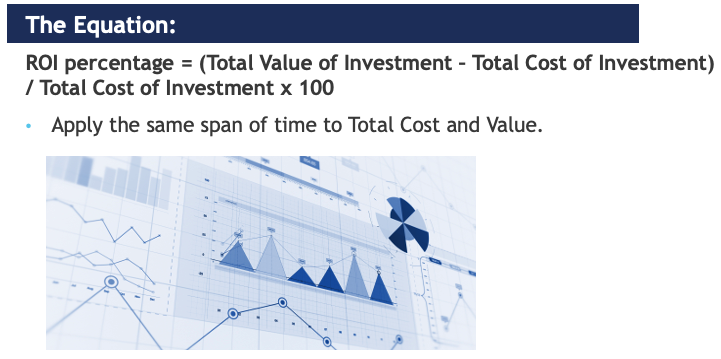
Shawn Windle: Good. So why don't I start off with a little bit of an overview of ERP Advisors Group, our firm here. And ultimately, talking about ROI, business cases, and if you should get software, and if you shouldn't, and what's it going to cost, and how much money you're going to make from it, and all that stuff. We do that day in and day out. That's actually all we do. So, we're very focused in this enterprise software space. And we are independent and objective, meaning that what we're talking about here is unbiased. The only bias that we have is what's going to work for our clients. So, we work across all of the software vendors that are out there. We work with tons of implementation partners and really have a good feel on everything that's going on in the market. And a lot of our experience comes from a big four background, most of it good. We've sort of built the firm and have a lot of folks from different types of companies, but ultimately are very focused on mid-size organizations where we can really make a big difference. And we've had some great awards too that really the team, including Rebekah and Charlie and Elizabeth, Adam, Nicole, all the folks that are putting all this stuff kind of together in the background are a big part of some of those, almost all of these awards that we've gotten too. So we're a great firm. All that being said, what I'm going to talk about here today is really based on our experience and what we've seen works. So Let's jump into it. And if you do have any questions, like Rebekah said, you can drop them in. And Rebekah, if you can monitor that, I think it's on the chat. I'm going to try not to look at those messages because they pop up like, whoa, what's that? It's like popcorn. So if you'll keep an eye on that, and then just definitely interrupt me if something comes in, Rebekah, that you think we should cover now. And if there's anything at the end, I'll make sure to leave some time. To jump in and answer the questions you have. You can always reach out to us too. We'll have our e-mail addresses later if you have any questions. Okay. It is time to talk about ROI. This is a great topic. You know, Rebekah was saying earlier that, you know, if you look across this incredible cache of information that we've built over the years, over many, many years now of being at ERP Advisors Group for over 15 years, we don't really talk a lot specifically about this topic of return on investment in enterprise software. And I think part of the reason we haven't done that is because it's really hard. And, you know, when we talk to you all, we want to make sure that, you know, what we're talking about is accurate. We have tons of experience around this. So the team did a great job of assembling this information. So I think it's really going to be helpful. So when we think about software, enterprise software, the mind goes to maybe the earlier times where we've been on projects that were really hard and they were really expensive. And, the impacts that people were really, something that one might not want for their, friend to go through, to be honest with you, like, honestly, enterprise software projects are really, really hard. But if you start from the beginning of a project and you start thinking about it analytically from the standpoint of what is the ROI that we're going to get, I love that because it puts you in more of the driver's seat, makes you think a little bit more about like what you can do to proactively actually get a return on the software. Now, sometimes just getting the software implemented is enough and getting it in place and knowing that the old legacy system is out and that we're on a modern platform or that we have software that supports our regulatory needs where we didn't before, et cetera, et cetera. But ultimately, what we're going to talk about today is how you can be analytical and go through the project and be in a situation where you can say, okay, we're actually going to make a return on this. Now I'm going to set a couple of high level things and we're going to kind of jump into a couple of models here. But this is the thing that when it comes to ROI and software, it really does depend on your operations and your needs. I think it always does, right? I had my accounting professor, intermediate accounting, said, on the test, you can basically say the answer, it depends, because that's always the right answer. Unfortunately, he wanted more than that. I did all right. But Kiso and Wiegand, I think was that book. Those were the days. I'm sure there's a very different way that intermediate accounting is taught today than when I was there. But the bottom line is that, you know, if you look at a services business, a nonprofit organization, you look at manufacturing, distribution, tech, energy, all these organizations have different operations to them, and you have software that's running those operations. So it's important that you think with your particular business and your industry and the functionality, of course, for your ROI. And it will vary for sure. And even within your organization, how you calculate and the items in which you look at cost and benefits, will be different by department. So, we might even have different viewpoints of each executive and how they're focused on the CFO being more quantifiable financial returns. We're going to put this much money in and we want this much money plus a factor back. Whereas you might have a COO, a CHRO, a CRO, chief revenue officer, or that was a chief human resource officer, I said earlier, they may be looking at different factors for why they want to do the enterprise software investment, like level of employee satisfaction, desirability for new talent. How in the world are you supposed to quantify that? We'll talk about that a little bit later on. But the point, though, is that the only way to know if expectations are being met is to establish them ahead of time across all areas of operations. So you really do need to look across all the departments and start kind of digging in on what are some of the benefits that the software is going to get. And again, it'll be different across those different areas. Let's go to the next slide. Now, again, it's sort of managing your ROI expectations at a high level. This first point is really, really important. You won't necessarily receive immediate return. So hopefully every single thing that I say is simple. That's how we built this deck. I think the team, we've done a great job of laying this information out because I really want these datums to really go in with you so that you know what you're setting yourself up for when you have to put together this model. I want it to be real. I want you to be successful with it. So if you say, I'm going to spend, say $500,000 on software, and on day one, I'm going to get $500,000 times a factor back right away, it's probably not going to happen. It does take time for the organization to use the software, to learn it. I mean, hopefully, my goodness, you've done all your training and testing and everything during your implementation, but the reality is it does take a bit. It can take upwards of six months for people to really get used to the software and be using it to get the benefits that you forecasted out of it. Can literally take that long or even longer in some cases. And certainly the monetary benefits will come later. A lot of these projects are front-loaded with costs upfront, of course. Implementation costs, one-time costs that occur early on, that over time, those are gone. And, but here's the thing is that there will be some qualitative benefits sooner. There will be some streamlining of some tasks that are getting done faster. Think about the close. Increased customer satisfaction if we go to more of a, you know, AI-driven online billing and customer sort of interaction environment. Some of our customers are moving to that. And of course, there's growth opportunities too, where we're bringing in other lines of business and expansion. And then there will be additional qualitative returns down the road as well. Some of these are listed here. And let me just take a minute here to kind of, in your mind, start kind of forming when you're thinking about this and your project, that there will be qualitative benefits for sure, like qualities, to look something up here just to share this with you, actually. So when you think about quality that comes from, I'm not going to go through all the derivation, but it comes from of what kind of such a kind, going back to the Greek origination of the word, versus quantity. I probably don't need to do this. I think you guys know this, but I'm kind of into looking up words these days and understanding their backgrounds and meanings. Means how great and how much. So when you think about qualitative, those are sort of things that are, there are benefits, but they're hard to quantify, but that they're going to be there. Versus again, the quantitative, we can quantify those. But the reason why I wanted to just kind of separate those out a little bit more for you is that it's very likely that you will have both types of benefits. Now, of course, from an ROI perspective, we're very focused on the quantitative side. We're looking at the numbers, but very often you'll have some qualitative benefits that in and of themselves may be enough to do the project regardless of what the quantitative benefits are. I hope you guys are tracking with me on these differences. I think it's pretty straightforward. But the key thing is that you will see that there will be some benefits that are so, so magnified, they're so like critical that those alone, one or two actually explain the entire project. Now, it could be something like on the qualitative side that we're on, software that's running the entire business operations that's no longer supported. We need to get on software that is supported so that if there's a problem, the business doesn't go down, right? That might be an example. Now, could you take that and quantify the impact of, oh yeah, you know, the software goes down once a quarter for a couple days and we can't use it. I mean, that's a pretty severe experience, but that does happen with some, especially with some legacy software. And what's the value of the lost productivity of that day? Sure, it gets a little bit harder, right? But when you say to a board, we're running software that goes down a couple of times every quarter. And when that happens, we can't do our work and we can't service customers, et cetera, et cetera. The board's like, oh, I kind of don't care how much new software is. We just got to do this. They might think that. They're not going to say it, but anyway, that helps you a little bit around sort of the quantitative, excuse me, qualitative. But of course, for this discussion, we're talking about quantitative. And I'm not going to bring that up again because I hope I didn't lose everybody on that. Quickly, let's go to the next slide, Rebekah. All right, let's get you guys involved here a little bit. So where should you start defining ROI goals from your project? So start with goals that other companies have used. Okay, yeah, set expectations as you go, interview stakeholders across each department, and plan for monetary return immediately. So again, if you think about your departments that are involved in an enterprise software project, you're absolutely going to want to know, you know, what's happening across the entire organization, not just one area for sure, as we talked about. These are a little tricky questions because some of them are actually not too off either. But we'll wait just a second here to see what your responses are. And Rebekah, when you're ready, when you close that poll, let's move on to find out what the answer is. I often find that when we do these kinds of conversations, that when we interview stakeholders across each department, that, man, the benefits just kind of, they just kind of like, they fall out of the sky like little snowflakes, which we haven't had in Colorado this year. But there'll be things that are said that are so obvious, right? And those are the nuggets, the golden nuggets that we want to get to build as the basis for our ROI. And it's not that set expectations as you go is wrong. Please do that for sure. And yeah, I think with that in mind, I think it'll be good there. Okay, good. And we can leave that the polling question open a little bit longer too. I just saw that pop up here. All right. So with that background, I think that's clear, hopefully more than mud in terms of my clarity on that. Let's really talk about the calculation of ROI in a way that I think is pretty straightforward. Now, here's the thing is that, one more caveat, that we have worked and there are some environments where the calculation of return on investment is required to be extensive. Now, those are usually private equity-backed companies that have pretty savvy advisors who are running them from the PE liaisons that, if I may be honest, maybe they have a lot of time and they're very financially savvy, which is amazing. I think that's fantastic. But what we continue to find is the more simple your model is, the easier it is for many, many people, including your employees, to understand how we got where we are with the model and what's the basis for our decisions here. So I'm going to go through this and kind of that kind of a vein of just simplicity. So the first thing when we're predicting and calculating ROIs Set realistic expectations. So we do this a lot with our clients, advisory firms, where we sort of say, okay, I mean, I'm just going to tell you guys this is kind of the secret sauce a little bit here. We tend to look at the income statement to start with and say, okay, where can we increase revenue? Where can we decrease cost of goods sold? And where can we decrease operating expenses? And then there's usually some other variables, but those are quite easy to kind of flesh out, probably 90% of the ROI calculation from there. How will software help us to increase revenue, decrease cost of goods sold, cost of service, and decrease operating expenses? So that might just be the foundation. Of course, there's benefits in shortening day sales outstanding on getting cash faster, basically, right? But with that in mind, then when you're interviewing people across your organization, you can sort of set goals for each department. And from the top of the organization of the departments, but also people are actually using the software, they may have very different perspectives. And both of those perspectives is usually quite valid. And you really want that. Like you really want to hear what the VP of operations is saying for how much we will be able to reduce cost of goods sold by making better planning decisions because of our new planning software that's AI-based that we're looking to implement. Okay, whereas people on the shop floor may be saying, you know, we're like spending all this time trying to find all this information because most of our clients that we go to, regardless of the software that they have, they're really relying on a lot of paper still. And, you know, if it's an ingredients company or a food company, and that piece of paper, the traveler or whatever the document is, gets destroyed. Oh, because something spilled. So you see different perspectives of people that are the leadership and then actually end users, again, most very important. And what happens when you're doing these interviews and you're talking to people is you'll start to see that there'll be some subject matter experts that kind of percolate or pop up to the top that you're going to want to bring into your implementation, even your selection process. And these aren't necessarily the people at the top of the organization. They could be people that are in the middle or even maybe at the sort of the end user perspective where they really understand your business. They understand their departmental functions and they're just like, they're just the kind of people that like you just, you just love them because you're going to be using them a lot on your ERP project. And you're going to be relying on them for driving through a lot of the departmental needs so that they can do 80, 90% of it and then bring in the rest of their teams to fill in the other 10%. Also, you want to look at your time frame too, of course, right? What is the tentative time frame to achieve your goals and keep it consistent? Often 5 to 10 years is a safe bet for accuracy. That's pretty far out. Most of our clients would want to pull in that, you know, that ROI period. You'll see later, we actually think it's usually about a year and a half. But, you know, take a look at that timeframe that we're kind of working out. So usually the ROI calculation will go out that five or 10 year period. But again, you'll see a payback starting earlier. And then set the expectations early, meaning we're probably not going to see that ROI right up front, but we should see it come as different departments are coming online and functions are coming online too. All right. We're very conservative. You can tell. That's why we start off with the simple things here. OK. Now, ask the right questions to find the real cause of business issues. So you'll see it's we start, by talking about ROI, which we sort of put our finance hat on for. And now we kind of take off the finance hat here for a minute and kind of do our investigator hat, more of an operational view, not just like operations in terms of, you know, the product side of things, but how our operations, our organizations work together to find out what's really going on here. So we point out this, is a great point about what are the bottlenecks impacting each business process. So as you're doing the interviews and talking to the departments, you'll start to hear things like, oh, our throughput is stopped because the way that we're doing planning today, we don't have the information that we need in order for the supply chain to flow through, right? We almost hear that all the time, especially certainly six years ago, when we were looking at COVID where there were crazy things happening with supply chains, we'd have some of our product-based companies were just shut down because they couldn't get product, right? We had a lot of recreation companies at that time, camping equipment, sports, sporting goods, and the bottlenecks that they would run into just on the inventory availability side were hellacious. What a time, right? But you'll start to see other kinds of bottlenecks that are obvious too. And as you're, again, doing these, asking these questions and looking at the business issues, you really should take a look at, you know, how will a new system enable growth? Are there other issues standing in the way? Meaning bottlenecks, problems, issues, are they coming from the software or are they coming from someplace else? Now you can tell, we don't make any money, but our clients actually like purchasing the software and we get a commission. We don't get commissions, cutbacks. There's nothing. There's no fees like that. We help our clients, you know, just through hours. We give a lot of hours to our clients. And so there may be, when you're doing this analysis, you may realize, oh my gosh, the bottlenecks or the issues that we're running into with the software or whatever, have nothing to do with the software itself. It could be the culture. It could be that our users lack user training and just never really adopted the system. Could be our business processes themselves are inefficient. There could be some hardware limitations. There could be some legacy technology problems, but those things will start falling out when you're doing this, this sort of departmental review and looking at your needs. We call it the needs analysis phase. So be aware of those things. And frankly, you know, I kind of hope that's the case for you. I mean, how many people talk about. ERP ROI and say, hopefully the cost is 0. Like if you don't have to change, don't change for heaven's sakes, don't do it. Like it's going to be hard. But, you know, there could be other problems is basically what we're saying here that really need to be solved. So again, I think we have tons and tons of material on that on our website. I'll probably say that 10 times through this call. Go to my site, please. There's so much information that the team, and I've done a little bit too, but my whole team has put so much information out there about studies and where clients have said, no, we're not going to move forward, where we've advised not to move forward because of some of the points that are on here. Now also, some of the other things that can pop up here around, do you have the resources to grow with a new system? It takes a lot to implement. It's a heavy lift, but then ongoing, you have to have people that know the system and are supporting it and helping others. And you have a plan for user adoption training and acceptance testing. Like some of our clients, I mean, most of the clients that frankly, they're people, I should say, that call us, They kind of know they need to do something. There's some obvious thing they need to do, but they need help kind of getting like the real why identified and doing the quantification, but they have people available to work on the project. Now, every once in a while, we work with a client and in the middle part of doing this analysis, we'll say to them, you do not have enough people available to do internal training and user acceptance testing. And we help with that, so we can do some of it. But while you're talking to these departments, you're going to need them later to do, definitely for just user adoption in general, but training and acceptance testing. So make sure that those people are available to do that. I don't want to talk you out of an ERP implementation if it's the right thing to do. I just want you to see these things. So these all kind of sit on the edge. They're sort of like adjacent to this decision of the ROI. So let's get on that. Let's go to the next one. Again, in our conservative vein here. And if anybody has any questions about what I just said, we've got a good number of people on here. Please put your points into the chat and I can dig in that a little bit more. But you know, what happens when you do that analysis, hopefully if you do this right, like thank you for being with me 26 minutes into this. I'm going to tell you something that I wish that I probably would have told all of my clients from day one. I've been doing this for a long time. If it's not painfully obvious that you have to switch ERPs, don't do it. And that will fall out on that last slide that I told you about. It will come out. And those painful things will be the basis for your ROI calculation guaranteed. And unfortunately, there are many, many organizations, especially today, that find themselves in that position where they're like, wow, we've got to do this. So let's keep moving forward here based on that. So we do want to ensure the goals that you have for your new ERP are very conservative. So you want to take a look at your minimum viable product. And what we mean by that is what is the least amount of software that we can put in that's going to get us to a successful go-live and get us successful using the software? And people aren't going to get fired. Maybe that's an easy way to say it. Maybe it's a little raw, but it's kind of true. So, okay, we want to put in a new system across the entire organization. We have 1000 people and 800 people are going to be affected by this. Let's do that all at the same time. And let's do it in a year and start. Whoa, that's a lot. That's a lot. Even if you're a 100 person firm, that's a lot when everybody's being impacted to software. Maybe we can bring that down again to a minimum viable product to start with. And that's kind of what we're trying to say here is don't necessarily just do the whole thing all at once. And you do want to plan your post-go live timeline and milestones. So with that said, maybe you do have the first phase where you're getting the backbone of the new software in place, and then we're going to add on additional modules over time. Frankly, that's what we prefer our clients to do. Sometimes we don't have a choice. When it comes to professional services firms that need to get a billing and project management, resource allocation, time and expense, and task management and accounting, right? And even sometimes HR, sometimes you just got to rip it all out and you got to replace it. Okay, fine. But hopefully we can build a bit of a roadmap with different releases that we can time on when software comes in. And you can see the reason why we're talking about this, not only, again, hopefully to save your job, that's the real reason, but when you're doing your ROI calc, you may have different costs that hit at different time. So if you think about the spreadsheet that we're basically going to build here, we show a little bit of an example later, I think with that also. Okay, let's go to our next slide. All right. I think this is pretty straightforward, but there are these hard and soft benefits that you're going to come across as you're doing your departmental interviews, your analysis, your obnosis, observing the obvious of what's going on. And now we say here that there's hard and soft benefits, and usually, the hard benefits are quantitative. So they come from process improvement, like the things that, this is exactly what I was saying earlier, right? Driving more sales, reducing cost of goods sold, reducing operating expenses, maybe having data that's available to more people so they can make better decisions on real-time analysis that today it takes them three weeks to get a report, but you know, with the push of a button, they get it in the new system. Data decentralization, eliminating silos, getting information pushed across people that they can actually have better data to make the better decisions for the organization. Versus a qualitative benefit that's more based on perception and experience. Users feel empowered to make better decisions, perception and market, future employees, et cetera. And some of those things, as you're looking at this, depending on kind of your background under the qualitative there, you may look at those. I want you to really look at those for a minute. Now, sometimes those decisions are the reasons why we will say to a client, do this. You have no choice but to switch software. Like that last point, just recently working with a client where the software that they were running was a little bit more simple, QuickBooks online. It works. We use QuickBooks online. It's great. We also use a professional service automation solution that handles the more complex parts of our business. But for this particular organization, about 500 people running on QuickBooks still, you know, that's amazing. They made it that far. But you know, when they're looking at talking to future employees, especially in the accounting department, they're like, I need, I don't work on QuickBooks, right? I like software that's more automated so that I don't have to do all of the spreadsheets that go with a simpler accounting system sometimes, to be totally honest with you. So, that was a big reason why they realized they had to switch software. There were other things that popped up too. So, you may see, hard benefits and soft benefits that are kind of broken into quantitative and qualitative by hard and soft. What I'm trying to say is there may be some hard qualitative benefits that you're going to get benefits from it also, but it's a little bit more on the touchy feely side than on the reducing cost of goods sold or operating expenses or increasing revenue side. So, but this is a good, simple model to just start with, just to give you something to think with how in the world you're going to calculate your benefits. Okay, let's go to the next slide. All right. So when we talk about ROI, of course, we're looking at the cost or what's the value of the investment. Oh, excuse me, I'm going to break those two up a little bit. I think we're kind of, in this discussion as I'm talking, I've been spending a lot of time on this last slide, of course, on cost, right? Now, the value is all of those process improvements. It's looking at getting in the new CRM enables our salespeople to sell 5% more per year because they have data to look back at customers' prior sales. I mean, simple things, right? Like we can actually close more sales because of that information. Well, Shawn, like we've had that forever. I would say, have you really? Like when you really do these departmental interviews, you're going to find out that those benefits are there and that, you know, we thought we had these things happening with the existing software, but they're not, right? So benefits equals the value side of it, right? The cost, of course, is the total cost of investment side of this sort of view. So it's, of course, simple to say, okay, here's the total value of the investment over a period of years minus what the cost of the investment is over a period of years to come up with sort of a ratio of what the ROI percentage is. And you want to do, of course, the same time span for cost or value. It's like you can think about the spreadsheet. If you look at 10 years, 10 years is a long time. I really even think like 5 should be good, but sometimes we just need to communicate over 10 years, this is what's going to be. Here's the benefits, here's the cost, here's the difference, the return, right? And then some of our clients even have to do discounted cash flow, right? Bring into net present value, those kinds of things. You can apply that. I will tell you though that the basis for this model, even though we have hard benefits, it's still like a lot of assumptions. And you can get so caught up, mired in the details of building a complex spreadsheet that I would tell you to maybe not do that. because if you have the savvy investor, the PE advisor who comes in, looks at that and asks one question and the whole thing blows up, like it was just a waste of time. So I think it's better to keep it pretty simple, but focus again on those two or three big quantitative benefits that you're basing the whole ERP project on, because those things will be the measurements that you use throughout your implementation to make sure that they're actually getting done. And when you go live, that they're done and that your users are getting the benefit there. I hope that's clear. This is it's pretty simple, I guess. But here's a here's a good example of of of something that we put together. So the total value of investment here. So determine your expected benefits and and quantify their value over a span of time, like we said. So 5 years. So the real magic isn't, where'd you come up with these numbers? Oh, that's the PMH button. Magic happens, right? I'm going to tell you a little bit about how to do this on your own, but this is a good slide because it shows, like, if we look at order to cash, procure to pay, there's, you know, design to build, there's the project life cycle, there's even in the nonprofit space, there's the development cycle. Most of the nonprofits we work with, well, we work with all kinds of nonprofits, frankly, but if you have programs that you're putting out, how do we reduce the cost of delivering the programs, right? The automating processes in this case turns out to not be that much of the benefit that we calculated. Now, this is just one scenario, right? I think our guys took this off of one of our clients that we worked with. The real benefit for this implementation would, as you can see, would be around increasing sales. And so what this comes from is a small percentage of sales increase based on using new systems where the sales team and the related parties, customer support, those types of people have better data, they have more information, they have more automation so that they can focus less on administration and more on actually going into the market and closing more business. That was what the particular kind of benefits were for that organization. But it's also good because you can see here, for reduction in cost of service or cost of goods sold, we saw that there'd be 100,000 / 5. So it's minuscule in that area. But there were some operating expenses that we identified. And then there's some increase in productivity by having the software. So basically, you add all that up to come up with the total value of investment is over, again, in this case, five years. This is pretty low, frankly. But again, the point of this slide is to show you that we're looking at all these different areas. And if you need the slides, by the way, just so that you're thinking with these areas, just put a note in the chat and we can send this deck over to you. Okay, so now we go to the total cost of investment. So again, for this particular example, the numbers are pretty low over the five-year period. I wish they could all be like this. They're usually not. They're usually a bit bigger than this. But again, I want you to see the model here that it isn't just what's the cost? No, what's the purchase price of the software? And the modules that we're buying over a five-year period. So again, you see a nice spreadsheet popping out of this. So we're going to bring on this many users in phase one, then we're going to bring on additional users in phase two, and we're going to bring on additional module in phase three that happens over five years. That's what goes into your purchase price. The implementation cost, this is maybe we even missed a 0 on this, is usually the bulk of the cost of the implementations is paying these one-time costs excuse me, that tend to happen over the first year, maybe the second year. And those costs are great because they are one time. There's, we're not talking about in this presentation about what you do with these costs in terms of capitalizing them versus expensing them. That's other information we have in other places. But that's something that should come into account too on implementation costs. Like sometimes our private equity companies that we work with, their portfolio companies, they're really not looking even at one-time costs. I mean, of course they are from the cash flow, but they're more concerned about the recurring costs. But the implementation costs are made-up of things like the technical configuration that has to happen. It's costs for firms like us to maybe do not just project management, but data migration, helping with all kinds of training and testing and everything. You know, there's lots of costs to go into implementation. That's why that number is super low. But then there's also operating or ongoing costs that occur over the span of that time period too. And that could be, excuse me, that could be things like additional enhancements that are occurring. It could be additional people that you have to bring into your organization now to support the software. So that's why that number might be kind of low too, et cetera. But those are three different kinds of costs that you'd build into your cost of investment to come up with a total. So if we go to the next slide. Oh, Rebekah, you can change the slide here if you're still there.
Rebekah McCabe: Yeah, sorry, Shawn. The internet was a little unstable, so it froze for a second, but let me move on.
Shawn Windle: Great. OK, perfect. So basically, we can come up with this pretty simple way of coming up with a percentage here of what the ROI is. And like I said, this amount, so we have the total benefits over five years. We have the total costs over five years, total investment, I'm sorry, yeah, total value and total cost over five years can come up with the difference divided by what we're spending on the software, what we're receiving to come up with a percentage. And we of course want to see ROIs that are, you know, bigger than 20%. Hopefully we're looking at triple ROI, 100% or more. Frankly, if it's not that much over especially a five-year period, definitely, a 10-year period, I'm not sure you should be doing this. I'm just being totally honest with you because the effort involved, as I said earlier, is so significant. And usually our clients, again, those couple things that fell out in the departmental interviews, those are the ones that become the basis for this change. Like in this instance, the one we just showed you, being able to increase sales very easily with just better software on lots of different things that enabled the salespeople to just be more functional. That really was the basis for the ROI. And you'll see that, that there's one or two things, one or two benefits that come in that pop through there. I can tell you, though, had we chosen a different software solution in sales and that cost would have been jacked up, then, you know, that ROI would be at risk. So I hope you see the simplicity of the model that we're talking about here. And it's really important that we don't get into, in our mind, this like huge calculation, because again, somebody can just drive into your assumptions and oh, you put in 10% decrease in inventory carrying costs. And I don't think it's gonna be that, it's gonna be 7. So therefore, or it's gonna be, it's gonna be less than what you put, yeah, 7. So your whole model is terrible. Oh, come on, like don't do that, right? Like those people that are nitpicky down to those percentages, they're the same ones that are going to get mad at you when they're having to change out their processes in their departments and say, why did we do this? I told you we shouldn't do it. Yeah, you know, maybe you shouldn't have if that person was there and was already going to be challenging about the numbers between 10% and 7%. I'm being pretty honest. You got to watch out for that. So part of this whole process is also to flush out who's on board with this project and who's really not. And I mean that. I'm not making excuses for a bad ROI calculation or a lazy ROI calculation. For heaven's sakes, don't be that. Do your work. Do the hard work here. But you'll start to see what other people in the organization are saying around, oh, I don't think that's enough ROI. Okay, or maybe they're freaked out about changing. Or they say, yeah, that's great. You know, it should be higher. Let's do more and more. Okay, cool. This person's interested and they're excited. Maybe they're a little crazy. But at least you kind of see where people are at too. All right, I hope that's helpful. It's pretty simple. We've got a couple more things to cover here. And I think we got another question coming up. Good. All right, which of these is considered a qualitative benefit? So qualitative, right, going back to character. So cost of goods sold reduced, perception of new employees improved, sales increased. Yeah. And then operation expenses reduced. Let's see what you all come up with there. We'll give you a minute. Good. As we kind of turn the corner here to the last 15 minutes or so of the deck, we're going to move out of this calculation discussion a little bit too. All right, I think we got our last answers coming in here. Yeah, it's very interesting when these qualitative benefits start, again, rising to the top for reasons to switch. It seems like, you know, that might not be enough, but very, very often that is the reason why organizations make the decision. So in this case, of course, perception of new employees improved. Although one could say that sales increase can sometimes feel like a qualitative benefit, but we won't get into that. Okay, good. Let's move on. And I hope this conversation is helpful too. So now let's talk a little bit. I'm going to shift the gears a little bit to talking about some other things kind of related to this ROI calculation, but we talked about phasing and how do you decide when different costs are going to come into the picture. What we do is we sort of look at the project across these four different phases, right? There's your upfront needs analysis where you're doing your interviews and there's some costs that are going to be related to that. There's the vendor selection. Costs are very minimal during this process. Implementation, they go way up. And most, but I would say 98% of all companies fail to accurately predict the cost of data migration. We have a ton of stuff on the website on that. Please look at that if you're looking at a project. Please, go look at what we talk about with data migration. There's so many great things that can be done there early. And then we have post-implementation optimization. So once the software is in place, what are the little things we can do to enhance it? So that's a good way to sort of think about your resource allocation in terms of those phases. It's pretty low in needs, right? You're talking to departmental managers. pulling together information, vendor selection, you're doing some demonstrations, pulling together people for that, but then implementation, you're asking your people to be more involved in developing the requirements and confirming that the software looks good, doing testing, et cetera, et cetera. So that's kind of a good way to break that out. Rebekah, we can go on. And then with costs for each one of those phases, we can look at the cost for internal resources and external resources. And internal resource cost is tricky, right? Because those are kind of sunk costs, if you will, we're already paying for those people. But some of our clients do want us to take a look at those costs, especially in the implementation. But definitely the external costs are something that you should look at across those four phases, of course. I will tell you this, the implementation partner costs, I don't care if you have a fixed fee and by gosh, there's no way that we're going to go over, says the implementation partner. It's just not true because no one's ever done your implementation before. Nobody really knows what they're getting into until they start working in your project. So this is why you want to pick an implementation partner that you feel really, really good about. And then we talk about on the internal team costs, there might be some backfill costs that you have to do because you're taking some of your people, putting them on the project. Well, who's running the daily operations then? And maybe you want to give your people some additional compensation or bonus for working on the project itself, the ERP project. And if we go on to three here, you'll look across each phase and sort of decide, you know, what does success look like in terms of taking the research that you've done from the different departments, making sure that you can track success with each of the implementation and post-optimization realization phases of all that stuff that people talked about. When are they going to see it? Make sure that that's kind of built in there too. And then if we go on to four here, yeah, that's sort of a good place to kind of pop up some tips. Yeah, it's kind of funny. I think if I haven't lost you by now, I want to bring you back into the conversation is what I'm thinking that I literally just said to you. You've got to do these things. Like got it, got it, got it. I don't care how wonderful your ROI model is. If you miss these things, that you will fail. And then it's not good for anybody. So you've got to get buy-in from the top of the company and even down for sure. But ensure you've got the enthusiasm and acceptance and it really does trickle in to other departments as well. It's not just you driving this that other departments are supporting it. It's easy to say I've been a management consultant for a long time and you got to get top-down support, but it's kind of true because usually they're the ones that are deciding or in control of the purse strings. So if they don't support this project from the get-go, you are hosed, I guess I'll say. I'll watch my language. So they do need to buy into your model. They do need to understand the realities of quantitative versus qualitative benefits. They do need to understand the investments and how it breaks out. Our cost of investment breaks out over time and be able to say, you know, that makes a lot of sense. Let's do this. Consistently evaluate success indicators to guide ongoing optimization. So as you go into the software, you go live, you really have to watch and see how people are using this new application or applications and what's working and what's not. And then tweak, tweak, tweak as you go. And then certainly on the implementation itself, you would think that this first triangle point here, this first bullet would be like obvious, but sometimes clients what happens with training is it's at the end of the project plan. And as the project pushes and other phases, other tasks within the project plan of the implementation go longer, the training window goes, it gets smaller and smaller and smaller. Okay, we got a week to train, go, that'll be fine. And then you go by, go by becomes training. And that's a disaster sometimes, but it happens. Prepare for training from a very early beginning, I think is kind of our key point there that we want to see. All right. So I think this, we might, this might be the last question here. So take a look at that and please give your answer there, especially for CPE.
Rebekah McCabe: There will be one more question just to wrap up. So don't, yeah.
Shawn Windle: We do have one more good. All right, good. These are like tips earned from the trenches, like literally from many, many, many, I mean, I think we're in like, I don't know, 30. 3-0 implementations right now with real companies, real nonprofits and organizations. And some of these things come right out of that work. We might not have enough time for extensive questions. So again, if you've got questions, put them in the chat. And if we can't get to them today, we'll get back to you with answers. So exactly, right, all the above here. Okay, good. So, when you should expect to see actual value with your software investment, I think we've talked about a lot of these points already, but you're not going to see it right after go live. It's going to take a little bit for users to adopt the new system. And the time saved on manual tasks, customer satisfaction, et cetera, et cetera, those things should be happening now after we're going live and that we're actually using the software and it gets better and better and better. And like we said, usually an ROI takes about 16 months basically to kind of get past the point of break even and now we're seeing real return, but it's going to be that long. And if the organization needs an ROI faster, It's definitely possible and it's real. It's just, giving you the orders of magnitude estimate. It's usually like a year is tight because your people are still really getting used to the application, as we said. You know, two, three years, you might not have that much time to really, you know, get the benefit out of it. You might need to do it sooner. And it's usually about when that happens. So that's a good sort of a thumb mark estimate when you put together your ROI to check and see if you're in that maybe, you know, 12 to 18 month period. Okay. And, you know, post go-live optimizations are pretty interesting because that's where you can do really the cool stuff. Once you get through all the hard work of getting your ERP, your transaction processing system in place, you can add things like AI, like crazy stuff our clients are doing with AI right now. That's making a huge difference for them. Actually, they're looking at those AI scenarios still. Many of our clients haven't implemented them, but even when we're talking to the AI ERP vendors, they're seeing some new things come up that are really driving a lot of value for their customers. And you'll see also that as you have the software in place and it's the right thing, and it's good that you're going to get more and more user acceptance, and they're going to be driving, those departments you talk to are going to be driving initiatives going to bring more value out, which is pretty exciting. I love that time. Good. And also, that's the thing, right? When we move out of the financial analysis spreadsheet world and into the real world, we want to see all year over year over year that you're getting more and more and more ROI because you are reducing costs over time and you are getting new efficiencies that unlock over time. One of the benefits of the enterprise software being sold as a subscription basis now is every year, you get almost sometimes new products. Our team was all jazzed up about Acumatica's new UI, user experience that just came out. And it's simpler to use. And so, we think that our clients that are in that app are going to gain some more benefits. But NetSuite comes up with great releases a couple of times a year with some great functionality. They're going to be very focused on verticals, industries. Oracle and all the vendors are putting out new software each year that you should be able to leverage for sure. If we go to our next slide, I think it's our last question. So you will see return on your investment immediately after implementation. I think we say this, we want you to see benefits as fast as possible. And sometimes your management may and your executives, your owners may demand it. But yeah, anyway, we'll once you get your answers in, they'll say what I was about to say there. Good. All right. Just please don't plan on it. And if you need to tell somebody, well, hey, Shawn Windle from ERP Advisor said we're not going to get ROI on day one, you know, the board or the PE or whoever's paying for this may look at you and say, what? You're crazy. Like, why would I do this in the 1st place if I'm not going to get the benefit? They just need to realize when day one is. Day one is not the day that the software goes live. Day one is actually about six months later. I don't think I've ever said it that way. I hope that makes sense, but it's kind of true. You know, it's almost like getting a new house and you move in and you're like, this is terrible. Because I had to move all my stuff. I got to figure out where I go. I got new routines. I don't know where anything is. I got to fix some things. Oh, that's terrible, terrible, terrible. And then maybe after a little while, not that long, you're like, wow, I love this place. That's because you grew into it. So grow into your software. And that ROI starting at about, you know, a little bit later, you will be in great shape. All right, these one-way discussions are tough for me. I hope I didn't say too much that was confusing, but thank you for your time. I do think there's some key things in there that hopefully helps. Rebekah's still awake. That's my biggest indicator 'cause sometimes she comes on the camera and she's asleep because I've talked too much. So Rebekah, it's good to see your eyeballs. I'll turn it back to you. Yes. Thank you.
Rebekah McCabe: I don't think I've ever fallen asleep, hopefully. Yeah, well, thank you, Shawn. You shared a lot of great information. And I know sometimes it's not as exciting as some of the other topics we cover, but it's definitely important. And I think a lot of people appreciate understanding how they can truly get the most out of their software. So thank you. And again, thank you everyone for joining us. If you have questions about today's presentation, please let us know. I know we didn't have any questions in real time, but we are more than happy to e-mail you and answer anything that you might need from us. And also, if you would like a copy of the deck from today's presentation, please let us know. We're more than happy to e-mail it to you. We've already sent it to a couple people in the presentation. And if you need CPE credit, please make sure that you answered all the polling questions. Send your name in the chat now or e-mail Elizabeth at elizabeth.jones at erpadvisorsgroup.com. And then be sure to join us for our next event, which is scheduled for Thursday, April 16th at 12 p.m. mountain, selecting the right HCM solution for your organization. Where we will be joined by enterprise software expert Carly Shube to dive deep into the world of HCM and how to set yourself up for success with your new solution. Please go to our website, erpadvisorsgroup.com, for more details and to register. ERP Advisors Group is one of the country's top independent enterprise software advisory firms. ERP Advisors Group advises mid to large-sized businesses on selecting and implementing a wide variety of business applications, from enterprise resource planning, customer relationship management, human capital management, business intelligence, and other enterprise applications, which equate to millions of dollars in software deals each year across many industries. This has been the ERP Advisor. Thank you again for joining us.
Shawn Windle: Thanks, everybody.


.png)
-1.png)