Introduction: This is the ERP advisor.
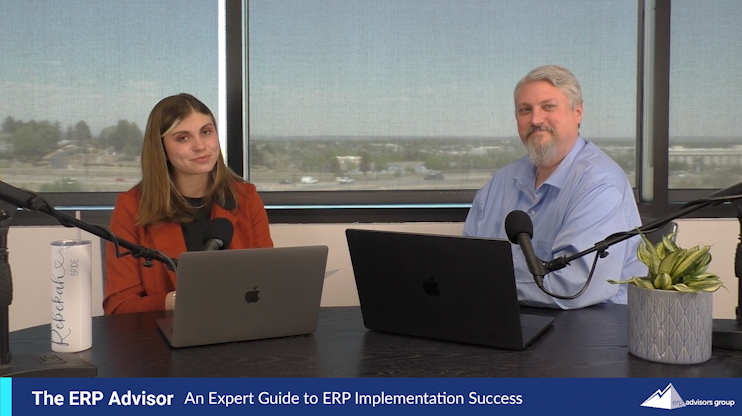
Rebekah McCabe: Hello everyone. Thank you so much for joining us for today's webinar. Fall back in love with your ERP best practices for ERP implementation and optimization. Shawn Windle is one of our speakers for today. Shawn is the founder and Managing Principal of ERP Advisors Group based in Denver, Colorado. Shawn has almost 30 years of experience in the enterprise software industry, helping hundreds of clients across many industries with selecting and implementing a wide variety of enterprise solutions. His podcast, the ERP Advisor, as well as his new spin off podcast Leaders in ERP, has dozens of episodes with tens of thousands of downloads and is featured on prominent podcast platforms such as Apple and Spotify. On today's call, Shawn will address how businesses can fall back in love with their enterprise software by giving it some TLC. Welcome, Shawn. Thank you so much for joining me today.
Shawn Windle: Hey, thank you, Rebekah. It's always, always a pleasure. Thanks for coming in. And let's talk about loving your ERP. Right. We get to do this fun thing every year for Valentine's Day. Everybody who's waiting for Saturday to spend some time with their loved ones. But unfortunately, so many people fall out of love with their ERP. Lots of that has to do with expectation management, which we're going to dive into today. But Shawn, why do businesses fall out of love with their ERP in your experience? Well, you know it's like expectations. Right. And we always kind of banter I think about, is it really ERP that we're talking about or is it something else. But we're really just talking about ERP. And one may offer did I ever really fall in love with my ERP and then to fall out of love? You have to be in love. But, you know, the reality is that, there's so much that an ERP does. And is it a necessary evil? Sure. Right. Like you can look at it that way. I've got to have one to run my business. I can't not think about like, I got to have a spouse, right? Or another significant other. But, you know, specifically with an ERP, there's billions and billions and billions of dollars every year that go into ERP. So, so we know just by that fact alone. Well, people, they, they kind of want them whether they really want to or not. And I think, I think what, what ultimately kind of happens with, with most companies is that, nonprofits and agencies, government agencies, right, entities that end up getting an ERP is that they, implement it, they get it in place. It's been hard and they, you know, made some mistakes maybe. But they kind of get through it and they just start using it using it and using it. And after a while they're like oh well yeah, you know, I'm using an ERP and maybe, maybe it's not that bad, right. I mean, hopefully it's more than that. But let's say that that happens. And then, you know, over time though, things change an the ERP doesn’t. I'm like, is this what my ex-wife was saying about me? And like, is this is the problem there? I hope not - you can call her and ask, I guess. Because it is kind of like a like a, like a romantic relationship, right? Maybe it doesn't have that much romance. But the bottom line is that that, you know, ERP really is something that, almost everybody has, like literally if you don't have an ERP, you can't compete in this, this age of the information age, which you've been in for many, many decades now. But also now with, with automation that's occurring. And I mean, even, you know, of course, there we go. And four minutes in the mentioned AI, with, artificial intelligence and everything. Like if you don't have these things, then, I mean, you're ruined. Like, you can't exist. So, there is sort of a codependent relationship maybe that we developed for the ERP. So many analogies. But ultimately, you know, when you're using a software application to run your organization, to run your business, you're going to love it to a certain extent, right? You might not you might not like it. Right. But in a way, you really are depending upon it, you need it. And it's something that can really, set you up to do really, really well. I mean, hopefully, you know, through this call and through all the rest of our calls, I think our, our hope is that if you find something that is, you know, that does meet your needs and it does well and you're like, yeah, you know, this thing's pretty good. Like I would say, I'd say our enterprise software like personally, I think, we do really well with it. I think we know where to where to get reports. I think we know how to automate the business when there's a problem, you know, you know who to call and like it's really good. It's actually a really, really good thing. So, I just I just think about all of the prospective clients that we talked to. And, you know, they're like, I don't really want to go through this. Like, this is something I really don't want to do, but fine. And I feel better about it getting some help. But hopefully through this call you will find some more hope. We’ll rekindle that romance and you know things will be better for you. We'll see.
Rebekah McCabe: Great. So, thank you as always for that great introduction to the topic. This next question will kind of touch on more specifics of the things that you were talking about. And really, what can project sponsors do to avoid unmet expectations during the first phase of their ERP implementation?
Shawn Windle: That's a really good point. And I think when we look and we really dive in with clients, like, really dive in, and we sort of are like, you know, was it a good project or was it not? Let's say we've got some, folks that call us after they've gone live with their first phase, or they're in the middle of their project and they call us and they're like, you know, this isn't going very well. It really is about expectations, right? You know, one company is failures could be another company's success. I mean, it's really actually true now. Now there's also situations where everybody's a failure and that I'll talk about that kind of secondly. But a failure in ERP success comes down to expectations. And so if expectations are set correctly upfront, you know, hopefully they're not like super high but they're a little bit lower. I had this conversation again with my wife often like you just set the expectations a little lower than I know can meet the expectations. But what does happen with ERP? And I think most of our listeners have maybe even experienced this themselves, you know, and most of the people that are on and listening to this podcast are pretty savvy about ERP, you know, as we really learn about who you are. You probably know this, right, that that sometimes, you know, enterprise software people who sell. I'm just going to say it or consultants can set a really high expectation. I think there's times when we do and, you know, you get into the project and you start doing things and it's hard. It's just really, really hard to change your people's behaviors. It just is. That's where a lot of the change management, organizational change management. Where most of the risk in a project comes from, frankly, is how do people accept this new application and sort of modify what they've been doing for years to a new way? And, that alone, you know, that, that risk is so severe that, it can lower, you know, how things actually go in the first phase. You know, I mean, here's some a quick nugget to, our listeners. You know, we look at data migration, integrations, change management and then the application itself. Right. Those are the four areas that we from a, very technical project management perspective that we focus on every client for phase one. And you can see that across just those four areas, there's a lot of opportunity for failure for the inability to meet what was expected, you know, oh, I want my application to connect with all of my other applications throughout our business, you know, our CRM and our EDI, in our warehouse management system and our e-comm. Right. Okay. Each one of those is pretty complex. So when we start implementing, you know, we don't realize how complex it is. But I've hired all these people to tell me how it is, and they're like, well, they don't really know your ecosystem until they get in and really dig in. You know, that's why we start with our clients and we’re like. We get all over all their stuff so we understand it. But just in that one of four areas, you could see how you know easily like, oh, our third party logistics provider uses some old version of, you know, Red Prairie that is really difficult to integrate with. And oh, it's all EDI. But then you get in and they use SPS commerce or somebody else for like an EDI value added network. And, you know, that organization is busy and they don't get to us until, you know, six weeks from now and then we start working with them and that doesn't go well. And then, you know, they lose somebody and there's problems and oh, my gosh, we didn't have time to do that. Right? Like it's just sand. It's like sand in your hand. These projects, it just slips between your fingers. Time the time really is. So anyway, I'm kind of bland blabbering here, but, you know, it's really phase one is important. And that's why again, that's a great tip here for phase one. We do say try to keep the scope fairly limited. So maybe we don't do all of the integrations in phase one. Well today we have you know the accounting the ERP communicates with the CRM for just some basic flows okay. Phase one let's rebuild those flows. You know, like a sales order or quote that's, accepted comes over to the new system as a, sales order and then is processed. Just build that out. Don't worry about pushing pricing back into the CRM in day one and pushing all this other information that we don't necessarily have. Build that integration itself in phase one. And then what you're doing though is you're setting the stage for additional phases to make it easier, like trying to limit your change there for sure. I mean, you know, we've been talking about these things for years, but those are some things that come to mind.
Rebekah McCabe: Right. And Shawn, you talked a lot about the system itself being a reason for people to fall out of love with their ERP and the expectations of what's to be achieved at each milestone. What role does user training and user acceptance testing play in people falling out of love with their ERP?
Shawn Windle: You know, I think that's where, so user training and you say user acceptance testing and training, right? Yeah. Just as an all-encompassing. Yeah. And again, kind of like no bull conversation here right before Valentine's Day. Like you should set up expectations and be honest. Be honest with each other. Everything's better. Right? You know, because we love you. We're going to tell you like, oh, that's right. I mean, and we do. Right. Like, especially again for the folks who are listening to this. Like the funny thing about user acceptance testing is, and I've never really said it this way over all these years. That's the first point where all of a sudden, the people that are involved on the client side with the implementation, they have to start taking more ownership because until that point in the sales process, you know, that people are sitting and watching demonstrations. Oh, what about this? And what about that? And, you know, how does this work and how does that work? And da da da da da like lots of questions. Oh, okay. Yeah. That's perfect. That's exactly the role. And then somehow you make a decision to buy software. Hopefully you've done your homework. And man we've got more stuff on our website than you could possibly understand about how to do a correct selection. So let's say you do that now the project starts. And what's the first thing that the consultant does and comes in and they say, so what do you want? Oh geez, here's what I want, blah blah blah blah blah blah. You know, doo doo doo doo doo. You lay it out in a drawing and they're, you know, they're capturing your things. You know, AI is doing notetaking and whatever. And then, the consultants go away lets say your lead consultant, you know, she's understand your business. She's taking all this time, right? And she goes away and then she builds out the app. You said, okay, let me walk you through it. You know, like, okay, this needs to change. And that's not quite right. And you know, I don't know, darling, I think you actually need to change this too, right? You know, going back to our analogy of for Valentine's Day, you need to just, you know, that looks okay. You know, honey, I think that that looks pretty good, but not quite right, you know. Like what do you mean? Is there something wrong with me? No. Yeah. I mean, you kind of get to do that, and then they get all those things done and like, okay, here's the application. The consultant says, here's the application. I need you to test it. You know, like, oh, well, I don't want to test it. Like, I'm sure it's fine. It'll work. You see, you just decide, you know, it'll be fine. And then, you know, you have your people that are supposed to use it. And let's just say to them, you're like, you know, you sat through some walkthroughs, you watched it. You'll be fine. You'll figure out how to do it. Yeah. Okay, fine. We're all fine. We got be we're really busy. We don't really have that much time anyway. I'm sure it'll be fine. Then let's just say you go live and you go into it and you're, like, using this thing for the first time. You're like, oh my gosh, why is it set up this way? This isn't the way my business works. Didn't they hear me earlier? Like, what's wrong with you? Why did you leave the toothpaste lid off again? You know, or whatever it is? That would be crazy to do a project like that. Crazy. So user acceptance testing is the first time where the client has to take accountability for what they have. And it's so easy for clients that have been in that affect point. They're not cause they're, affect this whole project to just continue to be in affect. They just say, well, this doesn't work and that doesn't work and this doesn't work, and you certainly need to do that a little bit, but you have to take responsibility. Right? Okay. This is the app we have. Like how do I make this work. How do I really, you know, put my business in. How do I put my business processes in this product. And then rock and roll go. And I will tell you that is the key to every project is that the people that are responsible for the software, there's usually just a few people it ends up being that are like the, real power users if you want, to think about them, that way, where they're like, you know, I'm going to do whatever I have to do to make this work. And I will have confessions here before Valentine's Day. You know, our success rate used to be 100% for many, many, many, many years. And then we had one client that we went through a very big selection, and we, had two software solutions, a big one and a little one that that we had gotten down to finalists. And I said, little one's perfect, it's going to work. It's going to be more, cost. It's going to be less cost. Pardon me, but more functionality than you're ever going to need. And, you know, we've got great partner. It's going to take care of you like this is going to work. Therefore we're recommending that. And the company said, you know, we're really going to grow a lot, like a whole lot. And we don't want to change software any time soon. So we think going to the bigger one makes a lot of sense. And I mean, we negotiated and we looked at all of the variables and everything else and we ultimately said, makes sense. You know, there's some differences in the deployment model because it's just bigger software, but it's cloud. And the teams, you know, got bigger clients that they've been working with were a little smaller kind of a startup energy company. But it's okay, let's do this. So then boom, we start the implementation and almost right away we realize that the way that, the software is being, deployed, like being implemented by the consultants, like, oh my gosh, the consultants work with like some of the largest government agencies on the planet, and they're working with us, you know, all related to kind of the energy sector. And this is not going very well. And then the client-side team was like, you know, I don't really want to make this work for my business. It's too much work to make it work. I just don't want to do this. And so we knew this very early on. And so we were able to sort of navigate the projects so that the losses were very minimalized. But ultimately we got to a point where it was like, this is done. Like, let's not do this anymore. It's bad for you, client, and it's bad for you, partner. Neither of them were able to do things for one another that could make it right. So I only go through all that stuff because, you know, it's user acceptance testing is where really the rubber hits the road. And if you're getting a sense from your users, like they're not happy with this, you know, you need to look objectively and understand even for yourself. If you're the project sponsor, like, wow, my end users are just being too damn piggy. Like, they just they got to suck it up and make this work right? Which is the right answer usually because to unfold every all the rest of the decisions that happen to that point is extremely expensive, unless it's really going to be just like an absolute disaster. Right. And what makes it a disaster or not is your end users doing UAT doing training and making it work or not. And if so, if they're not, then again, as the sponsor, as the person who's responsible for the project, you have to watch that. And if again hopefully there's actually there's always a solution. I actually did find a solution for exactly what they could do to make this thing work. And at that point, I think the client was just like, you know, I don't want it. Like, I don't want it like this. I'm like, okay, but this is going to be pretty expensive. Fortunately, we're able to again, limit the costs. So anyway, that one experience taught me that, you know, UAT and training like you're not listening to what people are saying and really able to gauge the severity of the situation yourself. I mean, you could be taken down a path and you could easily get fired over. I don't want that, especially before Valentine's Day.
Commercial: Wouldn't it be great if there was somebody out there who is truly independent, truly objective, and who really cared about what you needed? That's ERP advisors group. That is exactly what we do. We have a proven methodology that'll take you through the needs analysis, selection, implementation and even optimization where you'll go from being confused and upset and scared and unsure all the way through to having successful software that does exactly what you need it to do. We'd like to offer you a free consultation. Click on the button down below and let's spend a few minutes, even ten 15 minutes and talk about your project. And I bet you'll be surprised there'll be some things we can do for you, even over that call that would help you, much less talk about how we could work with you over the duration of your project, and just know you don't have to do this project alone. You don't have to face these confusions on your own. It's exactly what ERP advisors Group is here for and we look forward to helping you through your process.
Rebekah McCabe: Yeah, and I think there's so much if no one wants to use the system then it's it failed. The project failed, which is really what you're getting at in terms of like it could be the perfect solution for you. It could have started as the perfect solution for you. But x, y, z factors led us to ultimately turning our love affair into a nightmare where we were really happy to get a new ERP and suddenly it's completely gone off track. And Shawn, you kind of already talked about this. It's important to start preparing early, but, when you are preparing what should be included in your optimization roadmap and how should sponsors identify what functionality or processes should be included in phase one versus later on in optimization?
Shawn Windle: Let's see. I mean, there's again, there's sort of the canned answers of all that stuff. So, I was trying to think of like, what would be the most helpful if I was out there like, oh my gosh, I'm going to do this. Here's the thing again, I would reiterate this, that the minimal amount of functionality in phase one, the better. Yeah, always always always always always always always always always always. I could spend the next five minutes using that one word. Always always always always. But Shawn, we have this area of the business that needs change in that area of the business that need change. And we need all these integrations, oh and we have to bring all of our data over. I won't even get started on data, not before Valentine's Day. I don't want to ruin anybody's Valentine's Day. Right. But it's really, really true that getting into a new app will give you so many more benefits than you can think of. I mean, even that last example that I said, I knew that the client could make that software work and it would be a thousand times better than what they had now. I mean, I look at the other thousand clients that we've worked with over the last 15, 16 years, right? And I watched them. We had multiple clients go live recently, where they were on, you know, old archaic, systems that, you know, at any point, actually, some of them weren't even working anymore. They would just shut down. And I mean, they were at risk of the entire business failing because the software was so old or not maintained or, I mean, these are horrible situations, you know, where so much manual work that's going on that they're depending on 1 or 2 employees who could get mad and could, you know, screw things up or you know, have fraud. I mean, this is real world here, you know, but if they if they can stick with the project and, really focus in on, like, getting like, okay, let's get, you know, record to report, get the financials up plus ap. And maybe that's all they do today. They've got an old, Great Plains implementation, you know, installation that they've had for a long time. But they did a little customization, so they haven't been upgrading. Just get in the core to start with, you know, you're a distributor. Get in. Of course, you know, your order to cash process for sure. Your inventory processing, with, financials, and like, you're going to be ten times better because the new systems today offer so much more functionality. I mean, this is the truth. It's the absolute truth. And if you're looking for more advanced things, you know, even, if you look at, like, the procure to pay process that most of our clients want to do something around procure to pay. And, the three way match and automation from, digital capture through optical character recognition of vendor bills and things like that. Fine. That's pretty straightforward. But I'll tell you, though, that with every new process comes new challenges that you haven't dealt with before, even like an OCR, it's called. Well, OCR doesn't match perfectly like it's the system scans in an invoice. The systems don't always know. You have to train it on, what fields are which for each type of invoice that you get for each vendor. Right. That's a lot of work. We never did that before. Right. So now you're taking your AP people maybe away from actually paying bills and handling them. You know, invoice them. Some of our clients have thousands and thousands of invoices, tens of thousands. We've had some clients that are even more that are in certain industries. Now we're focused on really doing this advanced process instead of getting the basics in place. Right. So I, you know, I really, I really, really, really will stand by that pride for the rest of my career. That doing the basics first makes a ton of sense. Is so much change involved with that. And you get that in place and you're set. But I've said all these things before, so there you go.
Rebekah McCabe: You have. And Shawn, it's I think that's a perfect segue. OCR is a good example to lead us into like where does AI fit into the optimization process? I know we've talked about the basic things that you want to get out of your system, but I think so many more people are like, I want, AI I want, to do this, I want everything, I want agents. Perfect. Is that realistic? Should customers be at a point where they should be demanding that in phase one?
Shawn Windle: You know. No. I think I can just say that. There you go. No. Yeah, I think that's a good answer. Yeah. Don't, don't. Now, should you understand what your vendor's doing there and should you, be interested in it and research it and understand like what. It's the what's the capabilities in the futures and everything else. Like I mean for us I this is all we do day in and day out. I mean the team is involved in, I don't know, ten, 20, 30 selections literally today. And so, and all of those selections have, you know, four or 5 or 6, vendors in them. So in somewhat sometimes they're the same vendors, but there's usually different implementation teams. So we're dealing with, you know, hundreds of different solutions every single day. And man it's hard for us to figure out what these vendors are really doing around AI I mean, that's why we're we just had another call today with one of the top ERP vendors in the world, globally, to understand more of what they're doing around AI from the people that are defining their AI strategy. And, you know, they're not even totally sure. I mean, it's changing so fast. So now, you know, you don't want to just have like, oh, that's it'll be I'm not worried about that. Like you should have some attention on it for sure. And, even some interest of, of working with your vendor to get some AI solutions there. But, you know, the, truth, right? Here we are, 25 minutes in. And here's the truth about falling out of love with your ERP, you're not going to make a wrong decision on AI today. You're not going to in five years from now, you're not going to look back and say, you know, we picked the wrong ERP because the AI strategy wasn't quite right. I can tell you, almost every major ERP vendor, the ones that we work with, their strategies are very, very similar. Yes, they have they have data, right? That the data is so valuable. They have business logic that sits over the data. There's a user interface. And now they're layering AI on top of it. And some are saying they're building it and they're not, they're, it's still outside of the solution. But this year, and next year I think we'll start to see sort of AI inside out with sort of the, one of the AI ERP vendors call them the legacy vendors, right? The legacy ERP vendors. But they're all doing the right thing so that you can be into a world where, you know, I don't know about the bots like this, Claude bots thing, where they're developing their own social media and hiring humans. That was the new one I saw in the last couple days that, the AI was putting out ads for people that would go and like, you know, do things for it.
Rebekah McCabe: Yeah. Weird seriously. So dystopian Shawn dystopian, I don’t like to think about that. Right.
Shawn Windle: So hopefully we have some more controls in place, but, you know, you're going to be good, but this but I will say this with the prevalent ERP vendors. Now, maybe I'll correct myself a little bit to say, if you have an ERP vendor that maybe isn't so prevalent and where this really comes into play, and this is useful, people, please, please listen to this. That if you're looking at like industry specific ERPs that maybe aren't quite as big, right, as the general that the horizontal, they kind of work across industry ERP solutions. You really do need to dig in with them to just see if they have a decent story, and they probably will have a decent story. And we should look at what solutions they really have. And it's going to look good. I mean, we recently we did a demo with a very large enterprise software vendor. And you know, I noticed that the same person was showing up in different vendors or different demos. Pardon me for AI, but it was the same person in all these different vendor demos that were going on. You're like, oh, it's this one guy that's developing their AI strategy for real. That's a little spooky. But like if you're in the, you know, distribution business, there's a lot of different kinds of, distribution solutions for different micro verticals. And those are the people that are like, oh my goodness. I mean, they some of those have barely even caught up with cloud. Now, like AI, I’m a little worried about those that one I am a little worried about. But again, I think the bigger ones, the ones that we mostly work with them not they're figuring things out. And you know, one other thing I doubt many people on this call are concerned about. That's why you hire us for to think about these kinds of things. Like, I'm going to tell you right now is, you know, enterprise software as a category, right? Like, are we are we really going to, you know, look at, SAP and Workday and Oracle and Microsoft and Epicor and Infor and you know, so many Dell tech, so many other solutions over time or are they going to be replaced by something bigger, grander or whatever? And I really think the answer is it's not possible. Like the answer isn't just no, it's just it's not possible. They're, you know, there again there will there are already, AI, ERP vendors. We're spending a lot of time with them. And there are some use cases that are like, whoa, this really makes a lot of sense. But they're pretty minor right now. But I think what's driving a lot of that category of new AI, ERP is just dissatisfaction with the big with the big ERPs, the people just want something different. They're tired of, you know, their, their subscriptions getting jacked up. And so, they want a competitor. So anyway, those are, some things.
Rebekah McCabe: Yeah, that's definitely very interesting. And it's going to change. I think the answer you just gave is going to change in a year when we do something similar or have this call, if we have this conversation again even in six months, I think your answer is going to change. And it's really I can think of a client off the top of my head who is getting AI in their in phase one, but it was kind of an essential. Like when they really looked at it, it was this is something that we need and it's going to really give us a return on our investment, which, funny enough, is one of our events coming up in March talking about return on investment with AI. But it it's interesting. I think people are going to be coming to us even more for a lot of these answers and figuring out what the vendors are doing. And as someone who reads their strategies almost every day, you're right. Like there's not these glaring differences where you're like, okay, you can go wrong or right one way or the other. And Shawn, we're at the 30 minute mark. So just to wrap up this call, what tips do you have for project sponsors currently overseeing ongoing system implementations and optimizations?
Shawn Windle: Oh, let's see. Yeah. You know, we have to I want to say the right thing here, but I also want to say what's really the truth. You know, whatever your, stress reliever is, man, you better have a lot of it. And maybe it's chocolate. I hope it's chocolate. Don't do anything bad. That's not. These projects aren't worth that. But you know what you are about to go through and are going through one of the toughest points of your career. And, most people won't say that about an ERP implementation, but I just did and I say it from, really coming from a place of kindness and care for people that it's a very complex because nobody has ever implemented for your particular company or nonprofit, your organization with your legacy software, with your data, with the new software, with the consultants or the implementation people that the new, the new software is going to implement with and with your existing team that you have that's never been done before. So it's going to be a challenge because just working in teams and organization and technology, it's just super challenging. But very often it just has to get done. There's the transgressions of the past that somebody maybe else has. Thinking of a one of our clients recently had called, we did a project with him, over ten years ago, and, he really evolved the application and built it up and then just kind of got to a point, I think professionally, where he wanted to go out and do something different. And I think about where they were before they had their software and how disastrous, frankly, even doing financial reporting and no analytics. And, you know, it was an old app that, you know, could have crapped out at any moment. But they got in new software. And it was a very challenging project. And this you have to be brave, and you have to have courage to do it. And a lot of people do. And, you know, it's like those are the people that we do best with, frankly, with our clients. You know, if somebody is going into a project kind of half hearted or, like, oh, yeah, I do this for a living. I've done 3 or 4 of these implementations at different companies. Like, this is what I do. I come into a company, I put in the ERP and I leave. I mean, that’s great, but often times are like. So, you know, how vested are you in this for the long term? Oh yeah. I'm very invested. And they're like, oh, okay. But this is kind of what you do. Like you don't make these things work over time. You know, we've had some people that are like that. But they, you know, it's the vesting that you want to do is a selection and an implementation that's right for the organization. Yeah. So, you know, so know that it's going to be really difficult. But if you do the right thing and you go through all your homework on what do you really, really need right, and is there really a business case for it? All the usual stuff that we say, and the answer is yes. Then you got to do something right. But now everybody knows, right. And the secret to the whole thing is that you're casting the net on accountability beyond just yourself, but to others. Right. You're getting other people other shareholders or stakeholders. Pardon me vested in the process. Yeah I got to do this. And are you really sure. Should we do this together? Yeah, we got to do it. Okay, good. You know, you get like, a team approach to the ownership of the project. Then when you go into selection, you do your homework and you don't just, you know, say, well, this company over here, you know, this is, somebody somewhere come to us, pick that software. So I'm going to go with it. Right. That's not a bad way to do it. It's better than just picking something because they like the salesperson. But you take your time to say, here's my needs. Like, you show me vendor how you can meet my needs. And you pay attention and you're diligent with the whole thing. And then you do a good job in negotiations and all that kind of stuff. And you've got multiple people throughout the organization saying, yeah, you know, I kind of like this about that one and that about the other, but I think I can make this work and this is going to be the one. Okay. Good. Yeah. Everybody kind of nodding their heads like, okay, we can do this. Like let's are we really going to put the resources into it. Ask those questions before you start the implementation. Yeah, we can do it. Okay. Good. Now you got an agreement. And you also can set expectations. Like we said earlier just like in a relationship set the expectations beforehand. Then start your implementation that you're already ahead. You've done more work because most implementations fail before they even start. And so if we can at least eliminate those things, then going into implementation, we're super focused on, actually executing the project. Right. And communicating communicate, communicate. Right. I think the secret to any relationship is communication. So if any problem is coming up, you can tell somebody, remember the consultants this is what they do for a living. They actually do care. And they do want to know if something isn't right. So if you tell them something isn't right, you might be wrong. It actually is right. But at least give them a chance to find out if that's true or not. And you'll make it like you will be successful. But it really, it really is, you know, like anything else in life, it takes a lot of work. This is like Grandpa Shawn's advice to ERP on Valentine's Day. Talk about taking the romance out of ERP Valentine. But, you know, it's just it's not like, oh my God, I love this app. Oh, it's going to be wonderful. Let's implement that. Yay, and we do it. And it works like, you know, it's not like that. It does take expectations. It does take really understanding what you need, what the other party needs it’s like I'm talking to my kid right now. Rebekah. Yeah, maybe I am. These are I'm encoding all this for you, Rebekah, as your life is, you know, like, these are good lessons to learn. Don't forget these things because you the I'll end it with this. To say that you really can't go wrong with, you know, a good, solid person who's going to help you. You. Now, I'm just kidding. With a good, solid ERP vendor that has lots of capability, that's doing all the AI things, that's, you know, got lots of implementation partners. Maybe you don't like one of them. Fine. Go find another. Like you can do this. It really and it's happening all the time. But if you go in with your eyes open and, you're just in communication with all the sponsors that you've gotten sort of ingrained in your process from the get go, you did your homework, you will have a happy, romantic, you know, February 14th, Valentine's with your ERP. But it does just take work. And that's the thing that again, gets lost, especially in a, quick sales process. You know, you end up going to Las Vegas and you buy your ERP down there on a whim or something. I'm just kidding. Anyway, it's all the usual stuff for sure. But it's but there's definitely there's, you know, the heart at the end of the tunnel. The light at the end of the tunnel is that you change everything drastically for your organization. It's never going to be the same after a really good implementation. So it's worth it. It just takes work.
Rebekah McCabe: Yeah, definitely. And once you get the bones in place, you can start building off of it and do even more and more and more. And your expectations can expand. But really getting that minimum viable product is so important. And I think that's what I hope people walk away from, is not expecting your go live to change your business overnight like it's not going to completely oh my gosh for different people. This is completely new. Now we're like robots running our company don't need to do that. It is really an incremental change and people need to lower their expectations sometimes of what's going to happen. But it doesn't help when the vendors are pushing. Here's the AI agent that will now run your business, and you can retire and just have money flow into your account.
Shawn Windle: Right. Right. And I will say one last thing on that too. Yeah, that if you do get that much, push or you know, sort of hope that's being sold, I would definitely not run. I would, like, sprint as fast as possible from that because it is not possible. And maybe there's something in the future I don't I hope there isn't. I mean, humans are really, you know, kind of what this race is about. I like to help people, not replace them or eliminate them. Right. And so anybody that you start to hear, you know, all we can do, your, you know, your close and, you know, zero days and it doesn't require any people and, you know, none of the vendors that we've talked to or even some of our leaders in the ERP vendors, they don't say those things. Right. They're saying, no, no, no, no, you know, the system can help with that. And if or not now your people can go do this. This is and that's what makes the big difference. I love that story. That is a great that's a great way to end a Valentine's ERP story.
Rebekah McCabe: Yes. Yeah. Thank you, Shawn. Thank you again as always for all the insights. Definitely an interesting call that I think people will walk away with a lot. And thank you again, everyone, for joining us for today's call. Please let us know if you have any questions that we can answer. Feel free to reach out to us on any of our platforms or using our contact information, and be sure to join us for our next webinar, which is scheduled for Thursday, March 12th. How to approach ERP user Training and adoption. Where we'll break down the key factors to consider when approaching ERP user training, and outline EAG's top seven tips for successfully training your users during an ERP implementation. Please go to our website ERP advisors group.com for more details and to register. ERP advisors Group is one of the country's top independent enterprise software advisory firms applications from enterprise resource planning, customer relationship management, human capital management, business intelligence and other enterprise applications which equate to millions of dollars in software deals each year across many industries. This has been the ERP advisor. Thank you again for joining us.



.png)