-1.png?width=600&height=338&name=Leaders%20in%20ERP%20Social%20Graphic%20-%20Paul%20Farrell%2c%20ECI%20(Youtube%20Banner)-1.png)
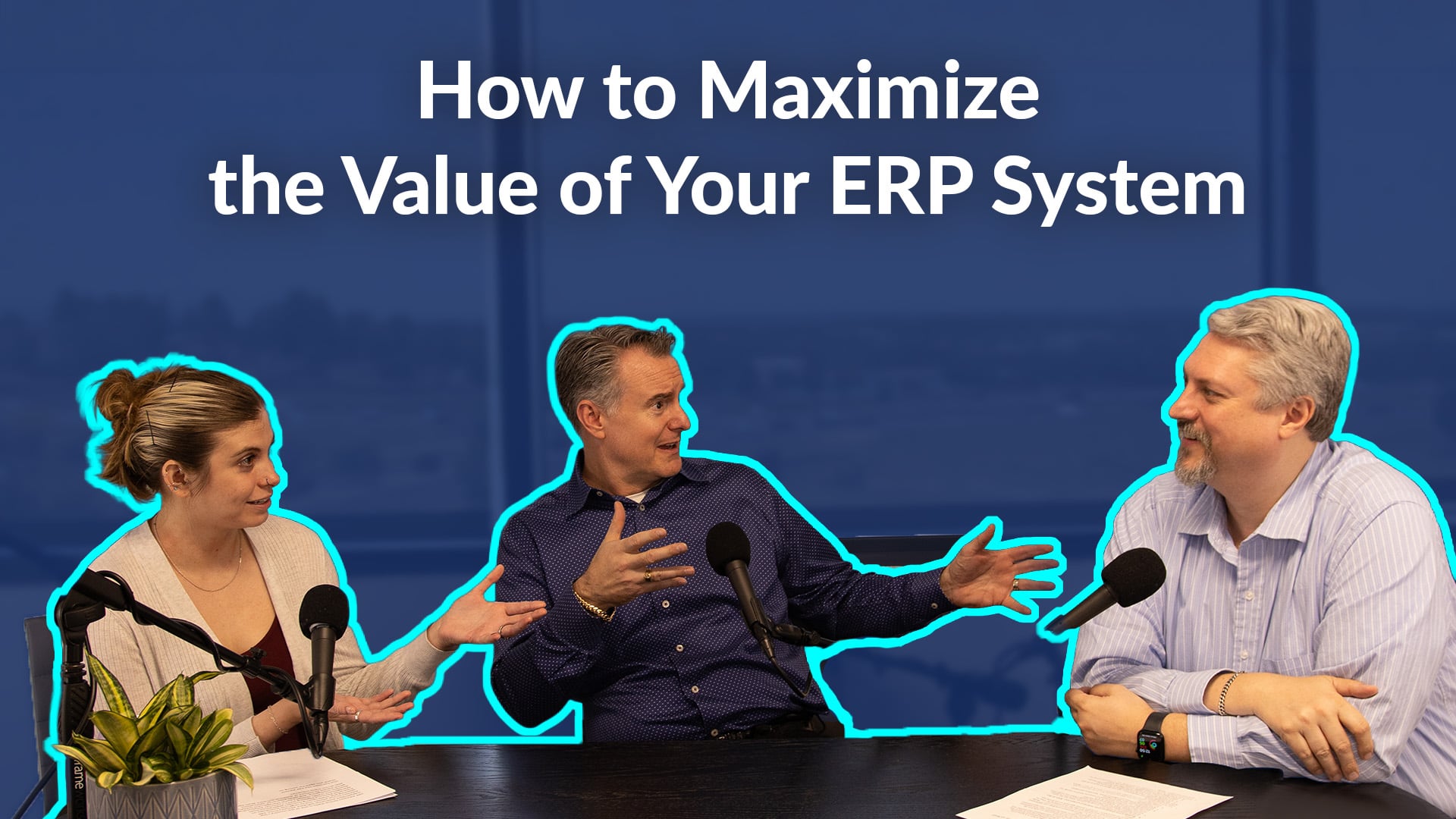
On this episode of our "Leaders in ERP Series", Shawn Windle speaks with Paul Farrell, Senior Vice President at ECI. Windle and Farrell discuss the projected evolution of the ERP market over the next decade, how Large Language Models (LLMs) and Agentic AI are changing the way companies utilize ERP, and how ECI is framing their AI strategy around industry specialization.
On this episode of our "Leaders in ERP Series", Shawn Windle speaks with Paul Farrell, Senior Vice President at ECI. Windle and Farrell discuss the projected evolution of the ERP market over the next decade, how Large Language Models (LLMs) and Agentic AI are changing the way companies utilize ERP, and how ECI is framing their AI strategy around industry specialization.

About ERP Advisors Group
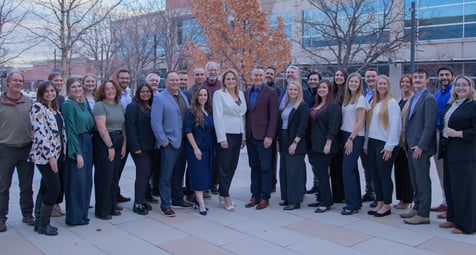
ERP Advisors Group only provides software advisory services. Our consultants only work on enterprise software selections and implementations. Therefore, they are experts in conducting software selections and know the pitfalls to avoid as they guide our clients to a successful go-live. You will find our consultants care deeply about your project and are vested as much as you are in making it a success. Ultimately, we will do just about anything to make sure you are a success!
ERP Advisors Group was founded by Shawn Windle in 2010. He helped develop the technology practice at the largest accounting firm in Denver from 2004 - 2010 by offering Needs Analysis and Selection projects. But Shawn saw that clients were struggling during their implementations, even though they selected the right software. The firm’s partners were too averse to the risk of losing tax and audit business from a risky implementation. Thus, ERP Advisors Group was born with the purpose to provide Client-Side Implementation Services.
We take responsibility for the decisions we help our clients make during the Selection phase by staying on for their implementation, ensuring they go live with their new software.
Download our free company brochure for more information about EAG.
Introduction
This is the ERP Advisor.
Shawn Windle
Hi, this is Shawn Windle, managing principal and founder of ERP Advisors Group, and thanks for joining us. We have had a phenomenal series of ERP leaders, people that are making a change in the industry and really making incredible things occur, especially in this age of AI. It only took me 10 seconds to mention AI. I'm really excited to have Paul Farrell with us today. He's the Senior Vice President of Product Management at ECI, one of the applications that we actually do several projects with. So Paul, thanks for joining with me today. I'm excited to get into the conversation, but first would love to know a little bit about you and please introduce yourself.
Paul Farrell
Great. Thank you, Shawn. Well, as you said, Paul Farrell, I head up product here at ECI for our manufacturing division. I've been in ERP or business solutions for over 35 years. Every few years I have to tag on another five years experience I have. So long it was before ERP was how they were described. They were described as... MRP systems or accounting plus systems or whatever else. And it's funny, the very first system I worked on over 45 years ago had integrated CRM, order management, manufacturing, MRP, CRP, payroll, HR, all as part of that solution. So it's amazing how some things change, but other things remain the same. I mean, I've worked in all aspects of business solutions from programming to support to project management, product marketing, marketing, but predominantly running product teams across the spectrum in all aspects of business solutions. So from CRM, manufacturing, distribution, supply chain, financial systems, and really across the board in industries as well, manufacturing, distribution, administrative services, business services, software services, high-tech, not-for-profit, but predominantly manufacturing. That's what I've worked in and that's the industry I've loved working in. Sometimes people think manufacturers are slow to take on technology. I've always found it the complete opposite. Manufacturers utilize technology if it's going to deliver value, and they are some of the leaders in that. You look at the introduction of CAD and computer-based manufacturing machines. And also, as far as business solutions are concerned, I've always found them early adopters of technology, but it has to be at real value. And that is a thing that's always attracted me to the manufacturing industries, this focus around value. So today, I'm with ECI. I'm based in Minneapolis, so we're just heading into the cold, although it's beautiful this weekend. It was blue skies, but in chilly, but we're on the cusp of wanting to stay inside. So anyway, it's great to be here today, Shawn.
Shawn Windle
Yeah, thanks. Thanks again, Paul, for, no, thanks for having us or coming on and joining us today and for allowing us to spend some time with you. It's always a pleasure. So let's jump into our questions. So I think we kind of crafted these questions to sort of go a little higher level on the industry, kind of the direction where things are going, but then also to get into some specifics about ECI, which I'm excited to do. But let's start with this. So as a leader in ERP, really for many decades, what do you personally see the ERP market evolving kind of to and over the next decade?
Paul Farrell
Yeah, we've certainly seen sort of slow evolution over the last 20 odd years. some harder things are becoming easier to do, reporting on information, analyzing things, getting access to information, personalizing what you're doing. We've seen a slow evolution in that. But we're really seeing, I think, a massive revolution today in how technology is going to be helping businesses. I think it's interesting. One of the best descriptions I have ever seen is sort of Moore's Law. If you know Moore's Law, the sort of doubling of processor speed every, you know, every cycle. And, you know, for the last, you know, 30, 40, 50 years, we've been in that small, slow incline of Moore's Law. We're now in that exponential element where technology is moving at a rapid rate. And we see that. And we're seeing that in our personal lives. We're certainly going to be seeing that in our business lives. So I think when we look at how ERP is evolving, I think the term I like is the whole area of headless ERP. So people access that business functionality in any way that they want, whether it be by voice, whether it be on a keyboard, whether it be on a mobile device. So people are able to do what they need quickly and easily. I think with the evolution, and I'm sure we'll get into it with AI and agentic AI and other things, we're really seeing technology being able to be truly give the automation that everyone has always wanted. ERP has always sort of promised incredible automation to businesses. But I think one of the things that we've always seen is we've seen people buying X amount of product and only using 20% of it. I think what we will see, certainly with the evolution of technology and the revolution of technology, is people using close to 100% of what they're purchasing. So really getting the value of what they're buying. I think another couple of things, and this is where ECI is really focused, is industry-specific solutions. So not a horizontal solution that you sort of force in to do what you want, but ERP that as soon as you get it, you can switch it on and start using it. And the way I sort of think about that is when we build solutions for our customers. And our customers are sort of job shops, they're discrete mix mode businesses and batch process companies. And we have solutions that are optimized for each one of those. We like to think of activation rather than implementation. So someone can go in and they can just, if they're an expert in planning for a job shop, they should be able to pick up on the product and use it. They shouldn't have to go through six months of implementation and training, et cetera, to sort of get some value out of the product. They should be able to pick up and use it straight away. And I think in the next generation, this generation of ERP coming out now, companies are able to do this. So getting closer to that activation of technology rather than implementation. And I'm sure there'll always be some training and some implementation time, but it's definitely changing that way.
Shawn Windle
That's fantastic. Yeah, it's exciting. It seems like we have a good 40 or 50 years of ERP, like you said, really manufacturers leading the way with material requirements planning, you know, 40, 50 years ago. And now we have this next wave of tons of computing power, too, that these awesome systems can sit on and do tons of calculations that we couldn't do before. So I couldn't agree with you anymore. I think it's an exciting time for sure.
Paul Farrell
Yep.
Shawn Windle
And what do you think about like AI, right? So we're talking about, you know, artificial intelligence and large language models, the agentic AI. We can't not talk about that, but like how really is that changing sort of the landscape for how companies are going to be utilizing ERP? Like, what does that really mean?
Paul Farrell
Yeah, well, I think there's a couple of elements to it. So I mean, again, we're in a very interesting stage of AI. And, you know, I think I think a big chunk of it today is sort of academic, where it's interesting. It's like business intelligence. I deliver you a diagnostic business intelligence tool where you can chop and change and you can view things. You can lose hours just going through the data and getting interesting things from it, but not really. Is it actually driving your particular end goal? Is it driving you up? is actually delivering what you need in order to do your job better. You can get sucked into it. And I think there's a chunk of AI which is like that today because it is quite incredible. And it actually, it sort of always sort of makes me laugh when I see a lot of AI presentations and companies and particularly the ERP space says, you know, now if you get a job late and a material late or a supply late, it'll tell you what to do it and it'll tell you which things to focus on. It'll look at all of that data and it'll say, yeah, well, it should do it. That's what a good ERP system for your type of company should do. It should alert you on what you should be doing. what you should be monitoring, what you should be chasing up, and how you should be going through it. I think what AI is definitely doing, though, is a couple of things which I think are quite exceptional. If you think of ERP, ERP is how you transact business. Once you get a sales order, into the ERP system. It knows how to take that sales order. It knows how to then calculate how to that demand, how to supply it, how to make it, what to buy, when to buy. Then it can log what materials have gone into the job, what labor's gone into the job, and then you ship it, then you invoice it and you receive payment. And you can set up rules and you can set up reports and you can set up dashboards and other things to really compress how long it takes to complete that value chain. So ERP is great at transacting business, but the whole thing about ERP is how does that information get into it? I mean, one of the biggest ways information gets into ERP is the same now as it was 30 years ago, which is the EDI. It's surprising people, we talk about the death knell of EDI since I think I almost started in the industry because of how complex it is, but it's amazing how much electronic information flows through that. But the thing about ERP, it's great at transacting business. But the way we do business, the way we do business is through unstructured data. It's through calls, it's through emails, it's through passing drawings or documents or Word documents or PowerPoints or all of these, or what we're doing right now, which is a discussion. And what AI is definitely doing, it's enabling companies to take the way that they do business and then allows that to seamlessly flow into the way they transact business. And we're definitely seeing AI there. And again, we at ECI have already provided solutions to some of our customers to do that. For example, we have an AI bomb builder. In our job shop market, a big part of it is estimating, where you get drawings and other things from customers, and you've got to then estimate how much that's going to cost and send a quote back. So being able to take that drawing or that document or that PDF or that spreadsheet or whatever else and then automatically bring that into the ERP system that you can then do the cost roll up, you can do the engineering, all of that accurately, efficiently and quickly is incredible. And we're going to see more and more and more of that. So and I think that's one of the biggest areas I think AI will have a difference, particularly in ERP. So that transactional system connects out to the way that people do business. There's some other great things around it as well. I think the way it summarizes information. You know, I always, you know, when I... When I go and look at applications and a developer or a product manager comes and says, oh, we've got this great new dashboard, this great new form, and then they start describing what's on the screen, it's like, that's already old. Right. Systems should be describing it to me. If it's not summarizing it, describing it, I think there's an issue. I think that's another big thing that I think AI is in particularly generative AI is going to make a huge change. So we're sort of beyond the beginning. We're really beginning, and many companies are really beginning to deliver real solutions. But again, what companies need to think about is just make sure they don't go down that academic route, but they're like manufacturers always have what is going to add value and let's focus on delivering those solutions. But there's lots of opportunity now. And if you haven't looked at it, you should do because it's surprising how incredible it is. And I just, the analogy I'll give you is one of the first car I had that had, you know, speech integration. I would go and say, you know, phone dial home and it would come back and say with my Scottish accent, yeah, deleting all your contacts. The interpretation was terrible and then all of a sudden it became outstanding. It really did. It's the same with handwriting recognition on tablets and other things. It went from, you know, it was more trouble than it was worth to being absolutely incredible. And we're definitely there with AI as well. And you'd be, I think companies would be surprised if they start using, you know, a copilot technology or ChatGPT or other things on just how much difference it's going to make within their organizations. But at the same time, They really need to make sure that they think of those things that are going to add value and focus on them, because you're going to be taken down a rabbit hole with these academic projects.
Shawn Windle
Yeah, makes a lot of sense. And I think we have, our clients are asking us, so what should I do for AI today? Right? And we're saying, like our standard answer in most instances is, Talk to your vendor. So if they're running ECI products, we want them to go to you and to your product management team, to your AI specialist and find out what exactly is available today, what's coming in the future because of this data security issue. And I think this is one of the reasons why the ERP platform providers like you all and others have had sort of a leg up on AI for the long term. Because for 30 years, if you think back to all these ERP products that have been built over this, the last, again, 30 plus years, we've learned how to keep security intact in these applications. And then going into the cloud, right, and ensuring that there's, we've had bots that are fighting other agents for years in the cloud, right? So that the systems aren't, the vulnerability is tested, penetration and testing, everything else is tested. So I'm excited for what's to come, but I think you're right that most of our clients, if we look at our average mid-size organization, they're asking, they're hoping there's some things there, but the business case and the use cases aren't quite ready to be delivered where it is like, okay, here's what you're going to do, right? We have some folks that are building out in agentic environments, their own bots, especially for call centers, for things like that, makes a lot of sense. But I think the real scalability is going to be in the ERP core transaction processing, like you said, because it really is transaction processing. ERP, that's what it's been about, and that's what it'll probably be about for a long time. Layered in with data visualization and being able to go in and summarize information. and then be able to act on it. It's all there. And I think the good news is we're got 90%, 95% of the infrastructure in place to do that last little piece. So we're excited to see what you guys are coming through as well as some of the other vendors. But especially, I think with ECI, something that's interesting to us is that you guys really do put industry specialization first. So how does that sort of play into all of this kind of agentic AI strategy and just AI in general?
Paul Farrell
Again, that is something that we are very specific about. The type of solution that a job shop needs is very different to the type of solution that a batch process manufacturing or food and beverage company needs. The type of capability that a small business needs where one person does 20 things is very different to a a very large business where one thing's done by 20 people. So it requires a different type of workflow and a different type of experience. And I think intelligence is the same. And it comes back to good old-fashioned design thinking, what is the problem that we're solving? Let's not find a problem, or let's not create a solution that's a band-aid. onto something else. Let's look at the underlying problem. And call centers is an interesting one because again, I think that's going to change drastically. But when I look today, generally in the applications that I use, that they're using an agent in a call center, if I can do it on the app that they provide, then the call center agent is going to handle it as well. But if I can't do it on the app, then guess what? Probably the call center agent can't deal with it either. So we're at that sort of stage, but it's definitely changing a lot. But again, look at the problem that needs to be solved. So I'll give you a couple of examples of where we're focused on. So if we look at job shops, within job shops, their biggest bottleneck, believe it or not, is not the machines and the capacity, not all of them, some of them will be, but it tends to be winning business. That quoting and estimating side is very interactive with customers, and I talked about that before, the way you do business, lots of emails, calls, documents, drawings. And then when it's all about getting those quotes in and estimating them accurately, getting delivery dates back, all of those types of things. There's a lot of admin. There's a lot of interaction with unstructured data. And that's a bottleneck a lot of the time. If people could process more quotes that they're getting, then they could drive more business, drive more revenue, drive more profitability by a new machine. So one of the things that we're working on is our quote bot, which is about automating all of that process, not taking the human out of the loop, but doing all those tedious things, capturing all the information electronically and quickly, corresponding back for the tedious stuff that you need with customers. Well, you need to tell us what date you need, or are you sure this part was right, or you seem to make a mistake here. So solving all of that, we're definitely seeing Agentic AI absolutely changing that whole area. So, and again, once that transaction comes into the system, processing it through is really what we've optimized over the last 20 years with our systems. But that doing business side is going to make a huge difference. I think the other area it makes a big difference with is I think anomalies. Things that are out of the ordinary and AI is outstanding at that. So for example, I've got a purchase order for a three-cent washer, which is going to be a week late or a couple of days late. Okay, who cares? It's a three-cent washer or whatever, but that's going to impact $8.2 million worth of business. over the next three weeks where I'm going to be a day late because I didn't get this washer in and that's going to affect profitability, it's going to affect payment terms, it's going to affect all these other things. Knowing that this irrelevant... element is going to have such a big impact that if you get it on time, it's going to generate another 1% in profitability. Those types of things are key. And the way I sort of sum it up, it's what I think AI will make a big difference with companies, is not only helping you support all your goals and what you want to do, you know, I want to get better efficiencies here, I want to drive more quotes and estimates here, but it's also unlocking potential within your system, things that you don't know about, potentials in your product line, potential in your people, potential in a particular value stream. And I think AI will be able to look at those things. And I think pleasantly surprising to people will drive this use of potential. Do you know you're selling these types of things to this customer for 5% more than you're selling to this group of customers, even though they're doing exactly the same thing? Maybe you should look at that. Or do you know that this customer that you think you're making a huge amount of profit out of in a lot of business, it absorbs 6% 60% of your administrative type. So in actual fact, it's one of your least profitable customers. So it's things like that I think AI will make a huge difference. But our customers and many customers, the... And people are starting to think about this. They really got to start thinking about their data as an asset. And I think you mentioned this with some of the security things, et cetera, Shawn, but in the same way you see your machine as an asset, your people as an asset, your IP as an asset, your data is one of your biggest assets. And you need to start protecting it, cleaning it, maintaining it, because it's going to have such an impact on what you do. And if you don't do that, then guess what your competitors are, and they're going to be more nimble and effective. But at the same time, you should be working with your ERP company, and they should be providing tools and other things that help make sure your data is clean, secure, and perfect to drive these other types of, you know, these types of efficiencies I just mentioned.
Shawn Windle
Makes a lot of sense. And I think it's kind of an unspoken benefit, honestly, of moving to a modern cloud-based ERP is that it forces us to deal with the transgressions of the past with our data. So the more that the data structures are accurate, costing models, bill of materials, like you said, even quoting and tracking costs and that. And they're standardized into this fixed format Rubik's cube that is the ERP with relational databases. And we're not going to get that technical here. But by having the data structured and going through that effort, it really sets you up then, I think, for the next level, which is like real beneficial AI, like you said, on some of those use cases that are really pretty exciting because I think overall, The thing that excites me the most from what you just said is the potential for people. And I'm not just saying that as some high level, oh, you know, AI is going to take out all the people. Like that's not, that makes no sense at all to me. And we've seen many, many evolutions of technology. Now, I don't know about these, the Optimus robots. We'll see kind of how those get mass produced. That could be different. I don't know if it's like a Stormtrooper thing or what. We'll see. I hope not. have more hope for humanity. But the concept of this next level of computing power really does put people, I think, at the center stage. I think finally, I mean, for decades back when I was a product manager at one of the other ERP companies, our promise was to automate integrations between systems so that it was easier for people to get information, easier for them to do their day job, so that then they could do their night job, which was the analysis and the planning and the real value add things. And we think, ERP Advisors thinks that AI could really be the driver for these award-winning cultures going into the future, that we're going to only have more of a war for talent. I mean, it's really beyond just You know, there's a few good people out there, like there's fewer and fewer. So to keep great people, to make them interested and retain them and attract them, having these, you know, really well-built AI solutions, especially in the accounting industry that's already seeing a lot of people that are leaving the industry. You know, would you rather work someplace that has, you know, kind of old processes and maybe a less structured database with something that rhymes with I don't know. Or do you go with something like an ECI or a solution that has this kind of automation, just makes your job more fun, more interesting, you can add more value. So it's definitely an exciting time. I agree.
Paul Farrell
Absolutely. No, it absolutely is. And again, getting back to this pursuit of value, you know, having everything you're doing. Always adding value and removing that dead cost is what manufacturers and great manufacturers have always done. And again, this is going to accelerate that. And getting back to what we said about data, those companies that are using Agentic AI solutions for doing that integration to the outside world, bringing that information accurately, it's a compounding effect because they're going to be more data, cleaner data, more relevant data. They're going to be making better and better decisions. So those people that are on those solutions that are using agentic AI for connecting to the outside world are going to be making a big difference. And I think AI is going to, some technologies are going to diminish. They are going to diminish. I mean, you talked about iPaaS solutions and the dream of iPaaS is it simplifies the integration to any other system. Now, if anyone's using iPaaS, you know, sometimes it may take this chunk of esoteric drag and drop diagrams to produce an integration to something, when in fact you could do it in five lines of code. So it is actually easier than the coding part of it. So the iPaaS had this sort of view that it was going to revolutionize all of this. But when you look at what Agentic AI does in taking a document, whether structured or unstructured, and then how that maps into your business system, particularly if your business system's a headless ERP, where it doesn't matter where it gets the information from, it's going to revolutionize that. And technologies like that will either evolve drastically or they'll disappear. I always think back to the telegraph. Telegraph was a great technology, required skilled workers, et cetera. The telephone came in and it came redundant overnight. And some technologies will, AI will remove some technologies and it will remove some skills, but the skills can translate to something else at even higher value and are more effective. And I think the way systems are evolving for people, and this is the way we think of it, that every person who logs into our system, we want them to think the system was uniquely designed for them. Not to make the controller's job easier to close the books at the end of the month, but designed for them, makes it easier for them to move inventory or to work on jobs or to schedule jobs or to interact with a customer or a supplier. It is absolutely optimized for them. And they see that in their personal consumer life when they go in. I always look at, you know, you go and look at you go and look up a movie on Google. It constructs you an application on the fly that's suited to what you need. It shows you preview of the video, reviews of the movie, where you can buy tickets locally, any deals or promotions that are there. At that point in time, it gives you something that's perfectly constructed for what you need. And again, I think these new applications are going to do that for people, but the key thing is that when you engage with the systems that are coming out now and in the future, they need to be looked at, although they're designed for you. Where I think in the past, ERP was the opposite. ERP is everything looks the same. You know, whether you're entering an order or whether you're shipping a product, it looks the same and that's going to give you the efficiencies. But that didn't work out because some people, their life was tough. It was difficult. It wasn't optimized for them. But the systems of the future, particularly the ones that are built on an AI stack, are going to be optimized for that user, and the user's going to enjoy using them, and they're going to be able to do their job far more efficiently and effectively.
Shawn Windle
Yeah, that's a really good point, too, that if you think about regenerative AI, can a user at some point put in their criteria for how they want to interact with the system, and then they build their own UI like that, right? Not just change the colors to their favorite football team or their alma mater, but actually like as a purchasing agent, this is how I want to interact with the system. Enter in some information, there's your user experience. And you don't need a developer or you don't need to go through sprints and many, many iterations of something. You just iterated on yourself. Like we can do that today with the generative AI, where you can generate a picture. Now I want to change it this way. Now I want to change it that way. Now I want to change it. That'd be pretty interesting, wouldn't it?
Paul Farrell
No, absolutely. And that's what the, that's exactly the platforms that we're building right now for our customers. And that's what, again, I call it headless ERP. So you have all this capability on how to enter an order, how that flows into a job, how that flows into a shipment, all the accounting, all of these other things sit behind it. And don't worry, we're still gonna deliver a first class experience that brings all that together, that's optimized for the user. But at the same time, the user could interact with that any way they want. They could interact it with voice. What are the next three things I need to pick? You need to pick these things. Okay, where is that? We'll go to this bin. Okay, I picked it. And that's their interaction. Or it could be, what is going on, what is going on in the shop floor that I need to look at today. And then it constructs an application that tells you what's going on in the shop floor. Today and then tells you the things you should look at and then explains to you what you should be doing in order to go and solve some of those issues or to follow them up. And that's exactly the type of thing that I think about when I think about headless ERP. Now, we have to, for companies and our customers, we have to support the muscle memory. So I remember, I won't name the name of the company, but they were building this brand new experience, this brand new financial experience that was, that they had huge amounts of design thinking on how it should work and how fantastic it should be. And then as soon as they put it in front of accountants and people that wanted to use us, like, this is not how we work. Their muscle memory is based on 2,000 years ago or the way that a double entry, ledger should work. And this is the way we need to see it. This is the way we need to interact with them. Now, maybe in the future, they might want some of that, but you have to support the muscle memory. So we would still come out with user experiences that are optimized for those tasks, but at the same time, that's built on top of a platform where really the way that you want to interact with the product is completely down to you. Because the interaction, may not, there may be a part of it that it's the customer who's interacting with the system, not via a salesperson, they're interacting directly with the ERP system via the phone or via a portal they've put together. Or in their own internal system, their system is communicating with it. So I know it sounds fanciful, but this type of automation, which has been promised with ERP, has been promised with iPaaS, has been promised with all these things, is really coming to fulfillment now with these new technologies that are built on generative AI technologies. So it is an exciting time and it is going to make a big difference.
Shawn Windle
Well, and to that point too, for our final question, what advice do you have for businesses and organizations out there that are in the market for a new ERP? Sort of regardless of industry, there's so many changes and do they sit on the sidelines and wait to see what evolves? Do they jump in now? What do you think, Paul?
Paul Farrell
Well, I mean, I think at all times, what's the problem that you need to solve and provide the solution for it? And I'll give you an example. Anyone who's heard me speak for probably heard me say this. But one of the first projects I worked on was I was working with people to optimize accounts payable. So I've shown them how to use the system anyway. The managing director was walking around and saying, what we're doing, and I explained what we were doing. He said, you don't need to do any of that. The way we pay people is we pay whoever shouts the loudest. That's how we pay. No technology was needed. It was, you know, pure, pure, I don't know, I wouldn't call it Kanban, but emotional Kanban was, that's what worked for them. So again, let's make sure that we look at the problem and you just don't focus on the new shiny thing either. I'm the worst when it comes to technology. I love technology and I always use the remote control example. We want a remote control. You go to, you know, I want something with all the buttons and all the features and all the flashing lights and everything else. But when you actually use it, use 4 buttons. So you really just want the remote control with the four biggest buttons on it. And that's actually what you needed. So again, really be focused on the problem. Don't get distracted by the shiny things. And at the same time, when you're going and looking to solve a problem, don't forget the stuff that you're already doing well. I've seen lots of companies go and buy solutions or technology where they're looking to solve a problem here. And the technology to get solves that, but it forgets about all the stuff that they're already doing. they're, the costing methodology that they're using and they get the new product and it does this great about interacting with customers and taking orders and streamlining that, but it can't do basic standard costing or cost roll up and no one really looked at it effectively. So really make sure you understand the problem, but also what you're already doing well and that the new system does that. I think the other thing is, and sort of reflecting a lot of things that we've talked about today is make sure it is a platform for the future. And I sort of look at today, there are a lot of platforms out there that have been out there a long time where AI is being plugged into it. So you've got an old platform that AI has been plugged into it. rather than a platform that's constructed from the ground up to work with that technology. The same as, in the past, you might have a product that was in flat file and COBOL where they had a replication to a SQL Server database so you could do reporting. So it wasn't really, you couldn't do it, but it wasn't really good. It's the same with this with AI. It's make sure you have a platform that's going to support you for the next couple of years, but also for the next 10 or 20 years. Because, as we talked about, these technologies are evolving drastically, and you may get left behind quickly if you don't buy the right type of technology. I think the other thing is, make sure there's a product that looks like it's been written for you. There are loads of horizontal solutions out there that say they do everything. And it's a lot of the time it's a square peg in a round hole. We're very industry specific, so you should just be able to pick it up and it should be able to solve all of your problems today. You shouldn't need 10 partner products or 10 custom solutions or whatever else to go and do this. And there are a lot of horizontal products out there that are good products, but they're going to take a chunk of implementation to make it work for your business and you're always maybe playing catch up. I think the other thing as well is, can it scale up and down? can it scale up? I get back to what I sort of mentioned before, where one person's doing 20 things to one thing, but being done by 20 people. How does that happen? If I grow, is a product going to be able to grow with me? If it shrinks as well and it happens, is it going to be able to shrink with me so I can still be effective and come out of that slump, et cetera? I think the I think the you know the final one and I we've mentioned this multiple times throughout it is I think the best UI is no UI and how much of A headless system is this? Can I use this great ERP technology? Can I access it from anywhere? In the past, it was accessing it on a Windows client, then on a browser client, then on mobile or a tablet, and that's so great, but can I access it? Voice, can I access it within my Outlook? Can I access it in any way that I want that capability to be to be presented. So again, I would think about that when you're looking at a new solution as well. And just underlining what I said before, a company that knows your industry, a company that's got thousands of companies in your industry, and don't get me wrong, manufacturing is an industry, but within manufacturing, there are 50 sub-industries when they are very, very different. So again, And again, I'm obviously amplifying ECI here, but we are so focused on our industries, whether it be job shop, whether it be discrete to order businesses, or whether it be batch process businesses. And we have a different solution for each that's completely optimized for that industry. So again, and we don't go outside of that. We don't go outside of it because it's not going to be a great solution for our customers and it's not going to be a great profitable solution for us. So again, think of companies that are that myopically focused on what you do. Well.
Shawn Windle
Paul, this is great. And I think the last thing I would add to what you said is if companies aren't going through this evolution on their applications right now, I really do think they will miss out on what is to come, much less what's here. So I think we've worked with some great ECI customers. We've had some great successes with going to the next generation platforms that you all have. And so I'm excited to continue to work with you guys into the future. And you have a great customer base, some of the best companies we've worked with. So thank you for the collaboration on projects, but also for today. And so ladies and gentlemen, this is Paul Farrell. He's the senior vice president of product management with ECI. Paul, thank you for joining us today. It's been a ball. Thank you. Great. Thanks, Shawn. Have a good day. Thanks, everyone. Take care. Bye-bye.
.png)