.png?width=600&height=338&name=Leaders%20in%20ERP%20Social%20Graphic%20-%20Melissa%20Korzun%2c%20Kantata%20(Youtube%20Banner).png)
On this episode of our "Leaders in ERP Series", Shawn Windle speaks with Melissa Korzun, Vice President of Industry Solutions at Kantata. Windle and Korzun discuss the recent developments in the professional services industry, the role AI is playing in those advancements, and how businesses in the space can unlock the full potential of AI without sacrificing confidence or control.
On this episode of our "Leaders in ERP Series", Shawn Windle speaks with Melissa Korzun, Vice President of Industry Solutions at Kantata. Windle and Korzun discuss the recent developments in the professional services industry, the role AI is playing in those advancements, and how businesses in the space can unlock the full potential of AI without sacrificing confidence or control.

About ERP Advisors Group
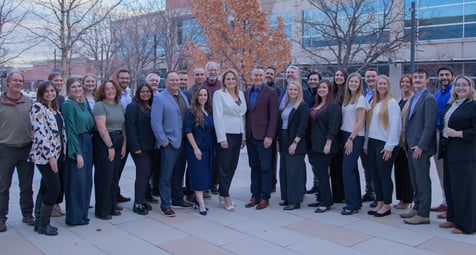
ERP Advisors Group only provides software advisory services. Our consultants only work on enterprise software selections and implementations. Therefore, they are experts in conducting software selections and know the pitfalls to avoid as they guide our clients to a successful go-live. You will find our consultants care deeply about your project and are vested as much as you are in making it a success. Ultimately, we will do just about anything to make sure you are a success!
ERP Advisors Group was founded by Shawn Windle in 2010. He helped develop the technology practice at the largest accounting firm in Denver from 2004 - 2010 by offering Needs Analysis and Selection projects. But Shawn saw that clients were struggling during their implementations, even though they selected the right software. The firm’s partners were too averse to the risk of losing tax and audit business from a risky implementation. Thus, ERP Advisors Group was born with the purpose to provide Client-Side Implementation Services.
We take responsibility for the decisions we help our clients make during the Selection phase by staying on for their implementation, ensuring they go live with their new software.
Download our free company brochure for more information about EAG.
Introduction: This is the ERP Advisor.
Shawn Windle: Hi, everybody. This is Shawn Windle, the founder of ERP Advisors Group. I'm really, really grateful that you are joining us for another Leaders in ERP podcast. It's been a great series. We've had just some incredible people that we've been very fortunate to spend some time with and really kind of pick the minds of some of the industry's top people that are really changing and really aware of some of these new trends, especially around AI. It only took me five seconds to say AI. But I'm really excited about our discussion today. We have Melissa Korzun, who is the VP of Industry Solutions for Kantata, which is a professional service automation solution. So, Melissa, thanks for joining us. Would you mind introducing yourself to our listeners?
Melissa Korzun: Yeah, absolutely. Thank you so much for having me here today. I'm really excited for this conversation. As you said, I'm with Kantata. I've been with Kantata for a couple of years. Prior to that, I was a Kantata customer for many years and have been in the software space for much of my career. This started out completely adjacent to software, and the way that I got into it, interestingly enough, was I was in training, learning, and development, leading learning teams, and we had this behemoth piece of enterprise software at the company I was working with that we were struggling with. There are all these questions about what it could do, what it couldn't do, how we could make it work better. There are a whole lot of people saying, no, it can't, it can't, it can. And I said, I think it can. And I had a boss who was willing to take a vet and say, okay, prove it. And that was my step into enterprise software at a global company of about 40,000 people around the world trying to figure out how to rationalize the big systems for health and safety. And I've never looked back since then. I've really, I love the intersection of where technology helps to solve business problems. And so, I've lived in that space for the majority of my career and love being able to continue to do that at Kantata today. What an exciting time to be in this space, navigating really like this new revolution with the application of AI. So that's me in a nutshell.
Shawn Windle: I love it. Thanks again for being with us. And I'm really excited to talk to you, Melissa, because you guys, you really focus on professional services. That's the space that you guys are spending day in and day out with lots of different companies, organizations, and folks in that. And maybe just tell us a little bit about just generally some of the clients, the firms that you're working with?
Melissa Korzun: I mean, we really support or create a purpose-built software for, we call professional services, but that means a lot of different things across industry. And that could be embedded professional services organizations, meaning you sit inside a software company, for example, and so you're doing implementation services or education services. We also support agencies that are delivering services as a product and have deliverables out there. And then standalone consulting firms, whether that be business consulting or IT consulting. So really across the gamut of agencies, consulting firms, and then your embedded professional services. We run the gamut. If you're using professional services as a way to run your business, we're here to support you and help you do that.
Shawn Windle: That's awesome. And I should do a disclaimer for our listeners. We use Kantata ourselves and have for several years for our professional service automation solution. You know, that says something about the product.
Melissa Korzun: Absolutely. We're in the business of doing this. Nobody's making any fees or cuts or whatever is normal. We're independent objective. But I've been fortunate to watch, I think, the evolution of your firm, too. So again, I think you're just in a great space to really help our listeners, especially that have either services functions within their business, like you said, or are in professional services of the multiple kinds of types of services out there. It's crazy. I'm excited. Let's jump into the discussion if you're ready.
Melissa Korzun: Yeah, absolutely.
Shawn Windle: Okay, perfect. So, we have to start off with the kind of the tech advancements and market trends that are impacting the professional services space the most. What really are those?
Melissa Korzun: I mean, the obvious answer, but I think no one has to guess AI, right? But I would say, you know, the biggest shift that we're seeing is that AI has rapidly moved from experimentation to execution, right? You know, we have our state of professional services industry report that we do every year. And, you know, no shock that we're talking a lot about AI in that. And companies are not grappling with asking the question around whether AI is going to impact delivery anymore, they know it will. Now they're starting to grapple with, how do I operationalize that alongside people, right? And so, some of the trends that we're starting to see stand out are rise of a hybrid workforce. So, the majority of organizations that we've talked to are starting to think about, how do I manage an AI agent as a part of my delivery? And how do I really change the way I think about resourcing and capacity planning, right? How do I schedule an agent, how do I predict how that's going to impact my margin, my speed to be able to deliver, right? So, this hybrid workforce is a trend that we're starting to see. Companies grapple with and figure out how that looks and how that works and how we plan and measure and predict and all of that. Thinking about outcome-based delivery. I mean, in professional services, we've been talking about outcome-based pricing, outcome-based delivery forever. And the reason I'm categorizing this as a tech advancement is because doing outcome-based pricing and delivery is really hard. With the advent of AI, it's unlocking the ability to do that in ways we've never been able to do it before, because it's allowing us to have efficiency in our execution, predictability in the way a service is deployed. It's improving our quality, our ability to learn from what we've done to improve it from the future. And so that's helping us get towards outcome ready, because what we're finding is a lot of firms are saying, close to half in our study, that we're doing outcome-based pricing, but then they're also saying we're not outcome ready operationally. And so, I think AI is going to be a big disruptor to help people get there. And then the last one is, again, margins are always a focus, but the predictability of margins, I think, is going to be really important. A lot of services firms struggle with predicting margin, right? We start off the year with really big plans for where our margin's going to be. And then we go on a journey throughout the year. And especially in an industry where they've been underserved from technology, right? Services has traditionally been underserved when it comes to the tech market. Usually, the last in an organization to implement robust software that's going to help with this. This pressure on being able to increase revenue without increasing headcount, thereby getting a better margin, is becoming a big player here. And there's a lot of people that are like, AI is just going to solve that problem. But we need to be really intentional about what that means and how that's going to work. So, when we think about the trend, it's that AI isn't just speeding things up. It's really redefining what a services organization looks like, what good looks like, and how we're going to get work done in the future. So, the tech, I think everyone knows what it is. It's right, but how we apply it is probably the biggest disruptor and trend we're looking at today.
Shawn Windle: Okay, it makes a ton of sense. I mean, even with my firm at 40 people, we're really looking at like, how do we really take AI, and like you said, the pricing model, the revenue side, and even the margin side with costing is so different than you're living that day in and day out. So maybe I don't feel so bad that I haven't solved that for my own firm quite yet.
Melissa Korzun: It's a question everyone's grappling with. I mean, we could spend an entire hour just talking about outcome-based pricing, right? I mean, it's a huge one. And I think there's this pressure of, from a consumer perspective, our consumers are going to think, oh, we're using AI, it should be cheaper.
Shawn Windle: Exactly.
Melissa Korzun: Right? Because it's faster. And the question I always come back to, and sometimes I like to think about parallels in other parts of our lives, but think about any other service that you ask for. If you want it faster, is it cheaper or more expensive? If I want something delivered faster, it's more expensive, right? So, in every other industry, faster means more, but we are somehow scared that faster with AI is going to mean cheaper because we always price services based on cost per hour of human resource, right? And not based on the value. And speed is something that customers value, right? So, outcome-based pricing, I think, also makes us think about value-based pricing. right? What is the value of what we're providing, right? Because the AI may be able to do it faster, but what is that AI based on? It's got to be based on our IP, right? We can't just be using generic Chat GPT models and thinking that we're doing something great for our customers. These AI capabilities need to be based on the IP of our organizations, right? And that is the value, that inherently has value, and we can't say, oh, just because we can get to that faster means that it's cheaper, right? You're paying, what's the quote, right? You're paying for the years of experience, not for the time it took for me to deliver that to you. And so, we have to be willing to push back on those conversations that people think that because it's faster, because there's less hours, therefore it's cheaper. We also have to recognize that AI isn't free, right? We have to implement solutions, and technologies that we have to pay for to be able to utilize these capabilities. So yeah, we could talk about that one all day long, but I think nobody's quite figured it out yet, and it's a big topic that everyone's wrestling with.
Shawn Windle: Yeah, I think from my own standpoint of working in very large professional services firms and then having the back of my own, or my own firm being on my back for several years, I really think that we're going to be able to add like probably five times more value in the time that we had before with this level of automation. And so, I think our pricing actually does go up, but the quality of what we're able to deliver is going to be like next, next level. I'm really excited about that. But I do think though, you said it perfectly, that the cobblers' children have no shoes, sometimes the professional services firms. They don't adopt technology. They're helping everybody else, if that's the business they're in. But what do you see as the industry's greatest obstacle to AI adoption?
Melissa Korzun: Yeah, so I think capability isn't the issue here. I mean, quite honestly, if you've implemented AI tools, we just implemented one at Kantata through one of our vendors. It was the easiest implementation I've ever gone through. It was integrations. It had AI assistants to help me implement the AI technology. It wasn't capability, and it wasn't difficulty of implementing an AI capability. It's confidence. The biggest obstacle is confidence in the solution that you're putting in, right? And so, a data point that we have in our state of professional services that stands out to me, there's two. We have 88% of our services professionals saying trust AI outputs enough to make operational decisions. But then we have almost identical 89% saying they still spend significant time verifying those outputs. Right? So, we trust it, sort of, right? We trust it, but we're still in that trust but verify cycle, right? And so, it's the confidence part that we have to figure out how to get over it. And so that's showing up in things like in our study, 12% of leaders say that they trust the data in their systems. It was 24% last year, it's gone down. Not up. I think that the reason that we're seeing that is as we're implementing AI solutions, and we have to think about the maturity. Think about queries that you did with AI a year ago and the amount of hallucination. I feel like that word isn't saying that right, but how much we saw the AI models hallucinate, right? Versus now. confidence in what we see in our queries as the model has learned over the past year, as it's gotten a massive amount of feedback in, yep, that's right. No, that's wrong. Our ability to trust the results that we're getting back is higher and higher. Now, as you're starting to see purpose-built solutions that are running not on large, massive data models, but that are running on small curated data models of your information within your organization, right? The accuracy is starting to increase. So I think that lack of trust in data, we're going to see that go up significantly, but it is a learning cycle. Just like when, you know, analytics tools were released. We spent more time talking about whether the report was correct than the results of the report itself, right? Where did you get that data from? How did that number get calculated? You know, who input that? Like, those were the conversations we were having in analytics. Now we're having them about AI inputs, right? We're also seeing gaps in things like the inability to forecast ahead, again, because we're not trusting the data just yet. We're not trusting the visibility into the future. And then really figuring out from an adoption perspective in that confidence realm, how to manage this hybrid workforce and what does that look like and how do we trust, when we think about our resource forecasting rate, that's something that personal services has been really focused on over the past 10 years is how do we predictably forecast our resources, right? And we've gotten pretty good at it. I've gone in my career from having a rear-view mirror, looking at utilization in the past, to being able to forecast a month ahead to three months ahead, to six months ahead, right, to start to see into the future what my resource utilization is forecasted at. Now I'm going to start throwing agents into that. What does that do to my whole forecasting model, right, in terms of forecasting revenue? How do AI impact revenue recognition models? How do they impact our ability to forecast our margin to forecast our resources? So again, it comes back to like, how that's going to disrupt the confidence that we have as we move toward adoption. And I'm going to say this is just a really basic thing, but it's a change management challenge. And I think change management is going to be still much more important within AI adoption than it is with any other type of software that we've seen. I've experienced it myself. We've released AI tools. It's starting to generate insights. Every single person that had close native access to that information looks at it and goes, well, that's not quite right, right? And so, what is it about it that's not right? Well, it missed this detail. Well, how critical was that detail, right? So really getting into change management so that people understand, why should they trust this output? Where's the data coming from? How was this decision made? Those are really important aspects that we can't discount because again, the tech implementation was easy. It's the confidence and the change management that's going to be incredibly hard.
Shawn Windle: Yep. You know, it makes a lot of sense. And I mean, we've always dealt with change management and adoption issues with systems implementations like professional service automations, like with what you guys are working through, the systems we're advising our clients on. But how does this all sort of compare and differ, I should say, from a typical systems migration when you look at this big component of AI being in there?
Melissa Korzun: So, I think the fundamental difference here is that Let's say you're migrating, right? We have a ton of customers that will migrate from spreadsheets. We're doing our margin calculations. We're doing our resource utilization planning and spreadsheets. And now we're going to bring that into a system, right? With AI, we're no longer just migrating systems. We're actually shifting decision-making authority. When you get to an AI agent, you're, if you're doing it right, you're empowering an agent to make a decision. So, it's not just determining success for an implementation around data accuracy, process standardization, user adoption, right? Success really needs to think about is the AI explaining what it's doing? Is it providing transparency and context? And do we trust the decisions that it's making. If we're continually overriding or ignoring the insights, then it's not really providing a whole lot of value. And so, I think that's the biggest shift is we have to have this rigor that's focused on that trust and that explainability because AI is now influencing decisions much more, but it's actually making them. And so I think one of the things that we gloss over a lot in implementations is we all start off with, we're implementing software, we're migrating, we have our project plan, we have our beautiful RACI, our stakeholder map, and then we have this governance model of how we're going to govern the system. And one of the first things that goes out the window is the governance model, right? We stick to it for a couple of months, and then it starts to fall by the wayside. We really need to treat this as like a delivery intelligence layer. And the governance around that has to define, for example, where are we going to accept a decision where AI is recommending versus assisting? Or where are we going to allow it to actually act autonomously? And if organizations don't have a handle on that, then that's a pretty big risk, right? Because you actually don't know where the decisions in your organization are coming from. And so now having a RACI where you have an agent that's listed on that line, right? So, like your CEO, your CFO, your head of services, and some agent that's sitting there that may have decision-making authority, in that RACI and maybe informing someone out through it. It may be owned by another thing, but that to me is the spot, right? I mean, tech implementations are tech implementations, but now it's like you're hiring someone who's going to make decisions to come into your organization as a part of it. And so that's where I think we have to treat it differently.
Shawn Windle: It makes a ton of sense. I think, I even just noticed today that Grok came out with a business solution specifically for businesses. So yeah, so it's limited. So, I don't know if we call these small language models, taking the large language model. concepts and learnings, if you will, and then being able to apply that, like you said, with sort of a singular data set, a focused data set specialized, like your professional services data, your projects, your time entry, your expenses, your billings. I mean, I feel like, I like this. Like, I think that we have promised for decades. Frankly, it's confessions of an ERP advisor here, that all systems are going to do this, this, and this, and here's the business case, and here's the monetized benefits and the ROI with an IRR and EIIO, here we go. And then we're like, oh, this didn't quite do that. But you got a lot of value out of this still, because inevitably, we've sort of as a, I can go off on a tangent here, anthropology, but as a civilization, we had to digitize so much, not just our data, but also our business processes and now our thinking, right? And so now these AI agents can go and the large language model system specifically can go and learn. But now if they can learn for, again, ERP Advisors Group, if I use that example, maybe we'll get this on the product roadmap too, Melissa, we'll see. But if when we do, we use allocations, resource allocations in Kantata specifically, and we go out as far as we can with our project. But if we could do some scenarios, what would happen if this occurs, or that occurs? I mean, those are things we're doing today in spreadsheets when we have time. So, to think of my people having the time to be able to like, use and work with an agent who can put together the super, really critical information. And maybe it doesn't have to be 100%, but then the AI can learn my business and can learn how we operate. I mean, it's really, really exciting. I mean, this is why there's the billions and trillions of dollars going into the infrastructure of AI is that the promise is there. But I'm excited really even about what you guys are doing. Maybe you can talk a little bit about how you guys are helping businesses overcome these obstacles when adopting these new solutions.
Melissa Korzun: Yeah, absolutely. I mean, I'll say this quietly. I'll admit a bit of challenge that we have as a company is we have customers that come to us and say, hey, we've been a customer of yours for 10 years. We have fed you every project that we've done. What can you tell me about my business, right? And we can put up reports and we can put up dashboards and we can do consulting engagements where we really dig in and look at it and that sort of thing. That's not what they're asking for. They're asking for, when I set up a project and I've delivered that project a hundred times before, tell me what I'm missing. Tell me that every time you run this project with this segment of customer, you go over on data migration. Every single time you're going to lose on data migration. And by the way, tell me that when I'm scoping the project, not as I've already sold and booked it and make me go back and change order a customer because that's never fun, right? Like you have all this information about the way that we work. Give it back to us in a meaningful way, right? And so that's really the premise of what we've been building, and I'm not sure if you've heard about our Kantata Expertise Engine, but that's the foundation of why we've built the Expertise Engine is not about just taking all the information of all the world, but how do we take the information about you at your company, we have your project plans. We have all your hours worked. We have the way that you deliver. Now we're going to start to bring in things like, let's bring in your phone calls. Let's bring in your emails. Because the fact of the matter is, when you're working with a customer, how much of that is captured in the calls that we have and the emails that we share with that customer? There's so much insight available in those areas, right? So let's couple that information. Let's couple the way that we're delivering. Let's take your deliverables and your assets where your IP live and bring that into a model so that it is surfacing insights to you. At all of the times that you need it the most. And then let's put that to work through intelligent workflow capabilities, through AI agents that we have in the system, and that you're also going to be able to build on your own and create an ecosystem where you can go in and say, hey, I like to say, hey, Kantata. No one's catching on to that for me yet, but hey, Kantata, what would happen if this particular resource had to be removed from the project and I needed to bring someone else in. Or, hey, Kantata, how can I get this done in six weeks? Or how can I shift this out three months? Right? Or what's the resource scenarios am I missing that could help improve this project? Right? You've got your skills in there. You've got resources in your platform that the AI can go back and look and say, how many hours has this particular resource spent doing this type of deliverable with this type of customer, right? And start to surface insights that you may miss because you just aren't able to look at the big picture, right? And so that's really what the purpose of the expertise engine is, is to be able to unlock all of those insights that are sitting in the system so that that can be put to work for you. You know, a really simple example that I like to talk about is lessons learned. Every professional services organization believes that lessons learned are absolutely critical to managing risk, to improving efficiency, to improving delivery. I would say every two to three years, every professional services organization gets burnt because something happens and somebody goes, why does this keep happening over and over and over again? Where is our lessons learned program? And somebody pulls it out and dusts it off and there hasn't been a lesson learned, logged or shared in months, right? No one's been using them and then they try to resurrect it and everyone gets busy and it falls off again, right? It's really hard, to keep that program going, to capture the insights, and then to have people go and look for those at the right time when they need them, because they don't know what they don't know. But imagine Kantata running in the background and surfacing a lesson learned for you, because it sees that coming. Hey, you know that we've had this problem before, and here's how we've solved it. That's massive, that ability to see those risks and provide insights on how to resolve them. I think those are the types of things where we're thinking about what good looks like. We're analyzing patterns and engagements and not just tracking activity. We're applying proven expertise at scale so you don't have to reinvent best practices. How long does it need you to upskill and onboard a consultant? What about a senior consultant? We're not talking about weeks, we're talking about months going into years. And when you have new people that join, they're like, what are our best practices? Where do I find this information? Well, guess what? You have to sit side by side with other people. You have to sit on calls and shadow. You have to gain that. We want to be able to take that tribal knowledge and institutionalize that expertise and make it available through our platforms. So, that every consultant can be your best consultant in weeks and months, not 6, 8, 12 months a year. So, there's a ton of different ways we're going to see that start to, and there's ways that it's already showing up in our Kantata applications. It's where we've invested a ton of our R&D budget building this out. I'm very excited about this. I think that what we're doing is really the industry's only place where we're building a purpose-built solution around a very curated model that is capturing expertise and using it to help our customers be the best at what they do every single day.
Shawn Windle: Love it. It's so interesting for us as we are evaluating different solutions in the market, right? We're independent, we're objective, we look across, we're trying to figure out what's going on with the, you know, latest and greatest AI native applications versus the incumbents, blah, blah, blah, all that stuff, right? We have other calls and other education, just to the CPE actually on that too for our CFOs and controllers. But here's my take, and this is, I think it's important. That the data model itself, which I think you just said, is really the most important thing. Then you have people at Kantata, and again, maybe other services firms, and we won't talk about those other guys, but you all have worked for decades on real issues that real customers have around their professional service automation solutions. And you've been asked these questions, and I think even the analytics tools. I think we've had some, the insights tools, I think it was called, and some other things along the way that were really helpful. But I think ultimately the advantage that you all have of having the model, having the understanding of what the market wants is the breadth. But what you're talking about, gosh, it sounds so simple, but like we have three people that basically do and answer those questions for us at the size of firm that we are, literally. Now, maybe it's too many, but I love them. They do a great job. Some of my competitors don't believe in investing in people as much as we do. It's a different story for another time. It's paid off. We're growing. It's been great. But ultimately, I think organizations like you guys, layering in the AI and the technology, right? Not the business know how or the deep understanding of the industry. And oh, yeah, I was in services before and now I started a new app that's AI based. It's going to do PSA. These are like critical, critical decisions. And yeah, and if there's one little thing that somebody hasn't thought of at the developer level, right? Because the marketing and the management team, they know what to think about, but we're talking about the developers. You want a team of developers that's been developing for professional services forever. They just innately think with how the customer thinks when they're building out models or they're building in the LLMs or whatever they're doing. I do think it's an advantage that you guys have that not a lot of the other solutions in the market do because, again, this is speaking directly to me, but to our clients that are professional services, They're not going to trust the data that comes out from, say, ChatGPT. You know, we just layer that in and there we go. Like, no, no, no. Yeah. So, if you can take if you can take an LLM and then teach it the models of professional services firms in general, and then like our data is extremely structured. We have specific types of projects and then every project has specific milestones. So, I can look across, you know, 10 years or so that we've been on the platform and look at the analyze phase for all of our needs projects, right? Like we can pull that report right now, but we're never going to because we're too busy and we're looking at higher level stuff. But if we could trust the AI from a Kantata, because you guys are thinking the way we are, like you just saved me 10 additional heads. I don't have to hire those people as I grow. So, I'm excited for what you guys have to go. But let me ask you maybe this last question, then we'll wrap it up. What do you think professional services can do right now to unlock the full potential of AI without sacrificing confidence and control and some of those other things?
Melissa Korzun: Yeah, I think the first thing that I'll start with is just to, not a direct answer, but I want to go off a little bit of what you said and I'll get into that. Is, I don't have the study written down here in front of me right now, but there was a recent study by, it was a large, Mackenzie and Gartner, it was that one, that came out and it was looking at the success of AI initiatives from homegrown solutions versus solutions that are being released by providers. And I think we're seeing a lot of that, we're seeing a lot of companies that are like, we can build some of these things up. And the data will tell you that they've not been incredibly successful, that a lot of the homegrown solutions are not meeting the mark, are falling off. Or if you've ever built a homegrown solution, and as you've grown as a company, I'm sure you've done that a few times, what you find is we build them, we grow, and then we don't have the bandwidth to support them anymore, right? And so I think one of the important lessons, and this will sound like I'm saying this selfishly as a vendor providing an AI solution, is make sure that you're understanding what capabilities your vendors have today and what they're building for the future before you go and try to develop something on your own. Because to your point, the model and the infrastructure that we're building, and I am by no means a technical expert, but when you sit down and you talk with us, our CTO, about the model that we're building, it is revolutionary. I mean, it truly is. It's not just throwing a bunch of stuff together, but it's looking at how we bring data model together that's looking at your CRM, your ERP, your phone calls, your Kantata data from your PSA tool, right? And connecting that in a meaningful way along with, you know, assets that you have that contain your IP to give you really bespoke, curated answers. You're not going to get that from a generic AI model. And so if you want confidence in your AI capabilities, you need to understand that that confidence comes from a purpose-built solution, right? And so that's part of it is, I think, really making sure that the investment that you make in AI are of the level of maturity that they need to be in order to give you the confidence in your solution and in the responses. Beyond that, I think some of the things that are just kind of the biggies across the board are a lot of times when you have the AI conversation, like, what can you do right now? You'll hear a lot about data. Get your data in order. Clean your data up. And a big challenge that people have with using AI is they're like, oh, our data's a mess. We can't start on an AI journey until we fix our data. The flip side for me of this and where I'll say maybe an unpopular opinion or at least dissenting opinion is, I actually think you should be using AI to help you fix your data. And what I mean by that is a really good AI, and again, we're talking about, don't just say ChatGPT is a really good AI model. It is for certain things, but not for this, right? A really good AI model can identify recency in your data. It can identify outliers in your data. It can identify redundancy. It can identify where data doesn't make sense or needs to be cleaned up far better than a human can. Quite honestly, take a data set that you're comfortable with, not anything that contains confident information, right? Scrub it so it's cool. And just take a simple data set and put that into ChatGPT and ask it to identify anomalies in data, areas where it needs cleaned up, areas where there's any of those things. It can help you in a data set very, very quickly, right? So, I don't think, I think the action to take is don't wait for perfect data. You literally will wait forever. There is no such thing as perfect data, right? The other flip side to that is right now, when we think about our data, right, Kantata, the first thing that customers want to do when they set up our system is we need custom fields. And majority of those custom fields are drop-downs that we're using to categorize information, right? So service type, customer segment, all of these things, right? And we rely on a prune to populate that. And one of the things when you set up a solution that you are constantly doing is governing that. Did everybody complete all the custom fields they were expected to complete? There's gaps here, there's blanks. You didn't fill that out, that needs to be filled out. You literally have someone that will chase, right? Because your reports are inaccurate. Well, what if the AI model goes, okay, this is the customer segment and populates it for you? So you actually have AI that's going to be able to populate your data for you. You're not going to have to rely on humans and human error to do that type of administrative work anymore. But it's also going to be able to look at your historical data and improve it and indicate anomalies. So I think this is maybe like a The exact opposite of your question is what not to do is don't wait for perfect data and don't overinvest in some major project to clean up all your data so that it will work for AI. Put AI to work to help you with your historics, but also to solve and future proof your data going forward. So that's one of them. I think the other thing that the companies should be thinking about right now is decision boundaries. What decisions must absolutely rely with a human? What decisions are we going to take AI influence on? And what decisions are we going to allow an AI agent to make autonomously, right? I got to witness a vendor that's putting together a AI renewal agent. And that AI renewal agent makes a phone call. I got to listen to it. It was quite fun, right? It started off, I thought the demo was really cute. It started off by the AI agent saying, hey, I'm calling. I'll sit with Kantata to talk about your upcoming renewal. Do you have a minute? And the person on the phone said, I'll give you 30 seconds. It made me chuckle, right? But it was a phone call. And during that, and I'll say, I'll give them their credit. It was Gainsight, right? They're working on this. So that the renewal asks the question. I would have a conversation about the customer with data that says, hey, you've purchased 100 seats. You're currently using 95 of those. If you have planned growth, recommend you actually go up to 120 mile seats for your renewal, right? You can then make decisions with that renewal agent because I was like, how far does this go? You can decide to let that agent just determine, yeah, the customer is likely to renew, or maybe they want to downsize, and then take those findings and send it to an actual person to finish the renewal. But you can actually give that renewal agent authority to complete the renewal, to have the conversation, negotiate, and close it out. That's a question for your business that needs to be made. Are we going to let it assist in the decision? Right? Or maybe we back up and say the renewal agent is simply going to provide contextualized information to a person. Hey, you're getting ready to have a renewal conversation. This is where the customer's at. This is their history. Here's what we recommend based on blah, blah, blah, blah, blah, right? The stuff that maybe would take them a few hours to prepare. So it is, it providing information? Is it assisting? Or is it actually making the decision, right? That's one workflow where you could have it do a number of things. Take that and think about different parts of your business and where that decision-making authority could lie. Because I think that's where you can really define the trust, right? And my guess is that that will change over time. I guess people are going to start really conservative. And then they're going to say, you know what, the recommendation that I get before I call the person is spot on. So in these low risk scenarios, we're going to let them get on the call with a customer and negotiate it. Okay, every single time they negotiate it, the outcome that they've said is going to happen happens. All right, for these low risk scenarios, we're going to let it finish it out, right? So I think vision boundaries and thinking through that now is important. And then my last one is probably the most important, and this is something that we've been thinking a lot about as we're building out Expertise Engine, is the first thought with everyone around AI is this an agency plan, right? We can get stuff done faster. We can get stuff done with less man hours. And yeah, that's one way to think about it. I mean, you can think about workflow automation tools the same way, right? They're going to make you more efficient. Where the real benefit comes in is thinking about the outcomes that you want to achieve and how AI can help augment those outcomes. So don't think about like what activity I have that AI can augment. Think about the major outcomes that your business is trying to achieve and how AI can help make those more quality, more repeatable, more dependable, so that it's not just increasing efficiency, but it's improving the overall quality and capability of your organization to achieve that outcome. So those are going to be some of the big areas that I think, you know, don't wait for your data to be perfect. Make sure that you're thinking about those decision boundaries really carefully, and then make sure you're thinking about the outcome that you want to achieve with it and not just being efficient.
Shawn Windle: Love it. Everything makes a ton of sense. I think the only thing that I would add to what you said, just based on the flow of the creation that you guys are looking at, especially as an end user, but even being able to assist my clients at a whole new level of value is that we actually get to finally imagine solutions. We really can't today because I'm serious and that's terrible for me to say that because that's all we do with our clients is imagine what their, kind of their ideal scene could be, but it just feels like business process re-engineering, as is, to be, gap, fill the gap, okay, go. No, how can we completely re-imagine our entire business on automation and so that our people are happy doing their jobs? Because somebody like in your example, there's an inside salesperson today that has to go grab all this data from all these different places on the customer's contract, and it's in the billing system, and it's in the recurring revenue system, and it's in the contract system, and do all this stuff and then put this thing together, pass it to somebody. If that inside salesperson now gets that data, they're able to do more with that on behalf of the client and the company itself, their value works out. See, that's why I don't think that we could get into the philosophical side of this, of course, but I'm very excited for my own team and for my clients' teams that these are great people. These are phenomenal people that want to be doing great things and it's a tight market out there still for companies. And so, you want to give employees a great opportunity and have them love their work. We're really proud of our Best Place to Work awards. And for me to have the best place to work means I have to get AI in because I want my people to be thrilled with what they do. And I'm going to hire more analysts. I'm not going to replace the analysts because of AI. I'm going to give them tools that give them the ability to bring in a whole another level of value that we can't even imagine today. So, it's very interesting at times.
Melissa Korzun: I'm glad you mentioned that because I did. There's all this talk about like, you know, AI is replacing workforce and a lot of reduction. And I mean, let's face it, the services industry has experienced the highest level of layoffs ever, even before AI became into play, right? Like the layoffs in the services industry have been happening for a very long time. And what that means is a lot of companies have been asking people to do a lot more than what they did. We've got role consolidation, right? You used to, you know, be a project manager. Now you're a program manager because we've collapsed program and project manager in one role, right? And by the way, we no longer have analysts to help support reporting. So, you need to do that on your own as well. And oh, by the way, we need you to take a much bigger role in resourcing decisions. Like all of these things are being, we have massive role consolidation that's been happening, and we haven't given people tools to help support that role consolidation, right? And so what that means is because we demand so much focus on administrative things because we have to keep the system running, we've got teams that are like, listen, by the time I update all these systems, complete all my status reports, respond to my emails, da, da, da, da, da. No, I don't have time to document a lesson learned, right? No, I don't have time to draft this best practice document. No, I don't have time to spend, you know, more time preparing for this really critical call with a customer where I'm going to be talking with them about, you know, how to improve their business because there's just not time for it. And so, the promise of AI for me is about helping clear the noise of some of these things that are purely administrative. That we can get out of the way, right, and help improve operational efficiency, but also helping to reinforce professional judgment instead of replacing it and helping to augment and unlock organizational expertise for any person who needs it so that they can be their best self, right? And I think the solutions that are going to come out of it are really going to help equip and enable our people to be better versions of what they've been previously. And finally, give them a little bit of room to breathe so that they can enjoy coming to work and not feel like they're just having to turn through and wear five hats, right? Because I think a lot of people have a lot of hats on right now.
Shawn Windle: Exactly. Melissa, this has been awesome. I appreciate your time even going over a little bit extra, but I think this is really good content for people that are in the middle of like, oh my gosh, what am I going to do with solutions? So, Melissa Korzun, VP of Industry Solutions for Kantata, thank you so much for your time today. Anything else you'd like to say at the end or we can wrap it up?
Melissa Korzun: You know, I think we've had a lot of great conversation here. We could talk a ton about this, you know, I just lost an earbud there. We can talk a ton about it and happy to continue the conversation at any time. So, if people are interested in learning more, just talking shop about AI and the professional services industry, please reach out. We could talk all day about it.
Shawn Windle: Perfect. I know Natalie from my team is all over it and would love to do a pilot on the Expert Engine too.
Melissa Korzun: Yes, absolutely.
Shawn Windle: We'll talk. Okay, thank you so much, Melissa. Everybody take care. We'll talk to y'all soon on our ERPs, Leaders in ERPs series.
.png)
-1.png)