This year's CloudWorld, Oracle's annual customer conference, occurred between October 17th and 20th. ERP Advisors Group's Founder & Managing Principal, Shawn Windle, attended the conference to gather deep insights into the enhancements and product offerings being delivered by Oracle in 2022. Below, Mr. Windle reviews his experiences at CloudWorld 2022 and provides key takeaways from the conference.
About ERP Advisors Group
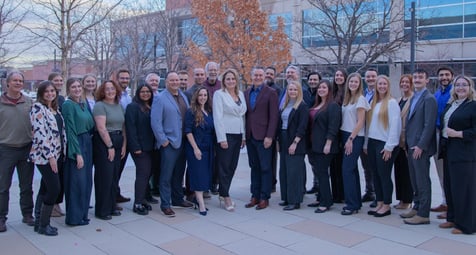
ERP Advisors Group only provides software advisory services. Our consultants only work on enterprise software selections and implementations. Therefore, they are experts in conducting software selections and know the pitfalls to avoid as they guide our clients to a successful go-live. You will find our consultants care deeply about your project and are vested as much as you are in making it a success. Ultimately, we will do just about anything to make sure you are a success!
ERP Advisors Group was founded by Shawn Windle in 2010. He helped develop the technology practice at the largest accounting firm in Denver from 2004 - 2010 by offering Needs Analysis and Selection projects. But Shawn saw that clients were struggling during their implementations, even though they selected the right software. The firm’s partners were too averse to the risk of losing tax and audit business from a risky implementation. Thus, ERP Advisors Group was born with the purpose to provide Client-Side Implementation Services.
We take responsibility for the decisions we help our clients make during the Selection phase by staying on for their implementation, ensuring they go live with their new software.
Download our free company brochure for more information about EAG.
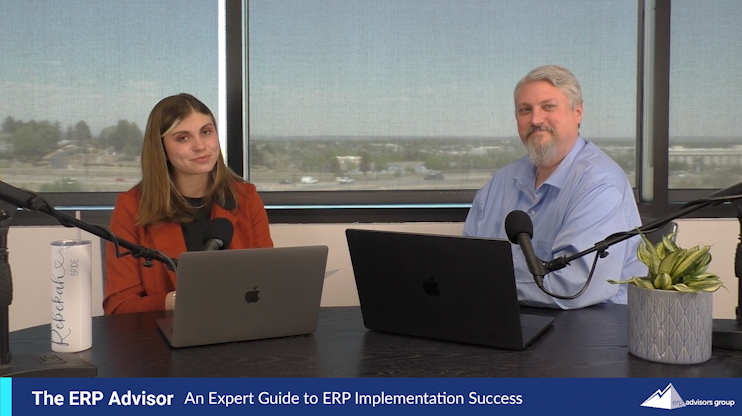
Juliette Welch: So Shawn, you were just at Oracle CloudWorld Conference in Las Vegas just at the beginning of this week, right? Yeah. How was it?
Shawn Windle: Was good. Yeah. This is the third conference I've been to in the last four weeks. So it's a lot of conferences. But I think a couple key things that came out of that, for sure, were a lot of excitement for Oracle and tons of support.
Juliette Welch: Yeah.
Shawn Windle: I talk to customers. I talk to prospective customers. I talk to people at Oracle, product people, salespeople, all kinds of people. And Oracle as a vendor really does have a global presence. I think we all know that. But man, when you talk to folks from the public sector to private companies, to public companies, Oracle's not going anywhere. Not to say there was ever a question about that, but that was a, that was solidified it. And it's good to get everybody back together to be able to talk about what's happening. I was super impressed with the commitment that Oracle made during COVID to getting some tools in place to help track different things, vaccines and help with product development, lifecycle with clinical trials. They put a lot of effort behind that. That was good to hear. Larry Ellison talked about that. And then even very tactically talking to some salespeople about their excitement for the Oracle Cloud apps, the ERP, the human capital management, enterprise performance management, supply chain management, other stuff. I really think that it's, they're really well positioned, I think, as is SAP with their RISE program, but I think they're really well positioned to kind of get customers from on-prem to these hybrid solutions to more cloud-based.
Juliette Welch: Do you think they are more committed right now than they were in the past?
Shawn Windle: Oh, good question. Yes.
Juliette Welch: Yes.
Shawn Windle: Yes.
Juliette Welch: Interesting.
Shawn Windle: Unequivocally. For instance, they've upgraded their data, their data centers. And when you think about this, when you get an enterprise app today on a subscription, right? It used to be you'd buy the app in a perpetual license. You pay a ton of money up front, and then you pay for maintenance every year, 20%, 25%. Now you pay the same amount each year. You pay a little, you pay much less than you would have with a perpetual license, but over the long term, you pay more. But there's a reason for that because they're handling all your hosting, they're handling your security, et cetera, et cetera. Even the application servers, the database servers, the web servers, all that stuff you had to buy before. You don't have to buy any of that. It comes with it, right? Security, data center power, cooling, backup, recovery, blah, blah, blah, all that stuff.
Juliette Welch: The attractiveness of the cloud.
Shawn Windle: The attractiveness of the cloud. And I think, again, Oracle as an organization has a unique differentiator in that they kind of own their cloud. They run their own data centers. They have the exo data storage devices, right? They have the bare metal machines, the machines that run the software and the environmental service, environmental software, not all of it, but certainly the database is Oracle Database. So you can see this like, it's sort of like the mainframe coming back. That's exactly what it is, that you just, all of this technology assets is just, somebody else handles that. And now you get to focus on solving business problems with your enterprise apps. So Oracle's really committed to I think being the leader in the cloud, and they've put a ton of money into R&D, even from the times that I left PeopleSoft, to now, you know, there's tons of money to rewrite a lot of these enterprise applications from the ground up. And I really, I talked to enough customers to see like, is this real? Right. It's been real, and they have tens of thousands of customers on their Cloud Fusion products, but it just, it's there. And I'm excited about that because, there's a gap in the market, especially for our mid-sized clients that I think Oracle can fit, that NetSuite can't, or that some of the other vendors can't. So super excited about that.
Juliette Welch: Yeah. So you've been to other Oracle conferences, whether it's SuiteWorld, what have you. What was different about CloudWorld?
Shawn Windle: Yeah, well, you know, the last like Oracle conference, like Oracle in conference I went to was OpenWorld, it used to be called in San Francisco. A while ago now.
Juliette Welch: That was before COVID, I believe.
Shawn Windle: Yeah. Definitely. Yeah. And I mean, they did a smart thing because everybody's still a little concerned about getting a ton of people in the same place. And I think it's smart. So they kind of broke out sort of the Oracle Cloud Infrastructure people at one of the major convention centers and then the enterprise apps people at another. So I was kind of hanging out with the enterprise apps people. But that's traditionally, you know, everybody's all together, right? So you hear the technical people, you hear the enterprise apps people. But yeah, I think they did a really good job of kind of breaking that out. But so that was one difference. But I think probably another big difference is I mean, everything was about the cloud, right? Like everything, right? The logos, like, they give out a sweatshirt, it sort of has a little bit of a cloud kind of thing on it. Like everything, like it's not like there's the on-prem business, but you have to remember again, especially in the Oracle e-business suite, PeopleSoft, JD Edwards space, these are very major organizations that have made major investments in their enterprise applications. and they can't change overnight. They just can't do it. For instance, one of the customers I talked to, without getting into specifics, runs the currencies for one of the largest countries in the world, we'll just say, right? And they're running Oracle. And they're like, yeah, we're not going to change until it really, really, really, really works because, you know, it's the financials for this organization. But this is big. I talked to another guy who couldn't tell me anything about his job because he works for a defense contractor who just does work with the DOD and they're running Oracle database. So, you know, but everybody that I talk to is either mid a migration. to a pure cloud or there's these intermediary steps that they have. They call it SaaS is kind of the final destination, hybrid solutions and all that stuff. So, I really got the sense that, Oracle can kind of be a hard company to work for or work with sometimes, to be honest with you. Oh, they increased my caps on my, or they increased my rates on my subscription now that my caps are done. And I didn't get more software and yet I got to pay more. I mean, you hear this from them as well. as other vendors, but usually more from Oracle. But I see that their commitment to doing the right things for customers is there. I see a really strong partner channel that can really help customers. They can roll up their sleeves and they get paid to really help customers go through that. Right. So, I mean, again, I think it was really good. You know, any issues that I saw, anything that popped out that was a little bit of an indicator, not really. There's, a, I can see from an end customer's perspective who's looking at the upgrade off of EBS, PeopleSoft, or JD Edwards, it's still not so clear what to do. But what I did see now is that Oracle's offering options that can make a lot of sense. So instead of being like, you're on this version, you need to go to this, right? Deltek, for instance, is like, if you're a vision customer on this version, you're going to go to Vantage Point. You don't like it? Find something else, right? Although they don't want to lose customers. But that is the path. Oracle has multiple paths that customers can take. They can take their on-prem instance and put it in Oracle's cloud infrastructure hosting environment, right? You get benefits now of being in a world-class data center.
Juliette Welch: Right.
Shawn Windle: But the app itself, you still have to, you know, you have to log into it as you would any three-tier client server kind of a solution. It's not cloud necessary. It's not a internet-based, although you can have internet-based user experiences now, UIs, to get into the app, but the app sits in the cloud. So what I'm saying is there's different stages, and they're very willing to work with customers to figure out what the right stage is. And I loved seeing that.
Juliette Welch: So the client can determine what path they want to take rather than being guided directly from them.
Shawn Windle: Which I think was a change from several years ago. I did notice that, so it was good to see.
Juliette Welch: Okay. So what are your takeaways from being at that conference?
Shawn Windle: There's certain hotels you want to stay at. I had to poke one more time. No, probably the big three were, I think Oracle as an organization is not just focused on, because remember, Oracle Inc. has, from an enterprise apps perspective, 10,000 customers. On Oracle Cloud Fusion, but then another 30,000 on NetSuite. So one of the big takeaways is they're looking at that 40,000 plus customer base as the customers that they're investing a ton in going forward, including some initiatives they just announced with JP Morgan. Okay. With making banking super streamlined, which was great to see. They're really committed to that customer base. Now, if you're not in that customer base and you're an Oracle customer, you're going to want to get into that customer base.
Juliette Welch: And do people know that?
Shawn Windle: Clearly.
Juliette Welch: Clearly.
Shawn Windle: Unequivocally. But again, we have options for how to get there, for sure.
Juliette Welch: Nice.
Shawn Windle: But I think Oracle's all in on that customer base to take them into the future. And I think that's a great path to be on. That's the first thing. I think the second thing, the initiative, the innovation, kind of new product development, I think Oracle has a good, kind of a sense of business process issues still. They're trying to solve real business problems. I love that. I really love that because that's what our clients are out doing this for. They're not doing it for technology, infrastructure, blah, blah, blah.
Juliette Welch: Spending millions and millions of dollars.
Shawn Windle: I mean, millions of dollars. And our clients are so busy. Staffing is tough. And yeah, if we can automate some of these key processes so our people can focus on better, more value-add things, that's great. I think Oracle's all in on that. I'd say the third thing is you know, customer or a partner channel. I think the partners are still trying to figure out, so how do we really make money in this whole thing? You know, because there's a lot of upgrades. There's migrations taking them to the cloud. I think that's all pretty clear. There's a lot of big four that was there. Then there's sort of that national, international tier of systems integrators. There's some, say, more North American focused, some other country focused systems integrators I talked to and they're kind of like, we have to offer everything now. We have to offer ERP, HCM, EPM, SCM, EIE, EIM, whatever, all these different kinds of apps. Right, And the analytics and business intelligence and the Oracle Cloud Infrastructure, that's pretty expensive. You have to have a lot of specialists. But that's sort of what I think Oracle is trying to say is like, look, here's this smorgasbord, the a la carte menu. You choose what you want when you want it. But it does put a lot of onus on the partners then that they have to keep up with those trends. They have to figure out and solve, okay, well, this customer wants to go HCM, but they don't want to go ERP. Well, how do the ERP and HCMs work together? So that is systems integration work. That's why they're called systems integrators, SIs, not just implementation partners. But I think it's hard. I think it's a hard environment for them. And so when customers are looking at these upgrades, they really have to look at their SI and make sure that they have the experience with what that path is that the customer wants to do. And that they don't just get stuck down a path because their SI told them to do it, but because it's the right thing for that company and the SI support.
Juliette Welch: Again, it's knowing your needs, right?
Shawn Windle: Knowing your needs and knowing the people that are going to do the work for you.
Juliette Welch: That's right. That's right. Well, thanks for sharing your feedback about CloudWorld. Appreciate it.
Shawn Windle: You bet. And thank you for your support in getting there. Yeah, you're welcome.
.png)
.png)